
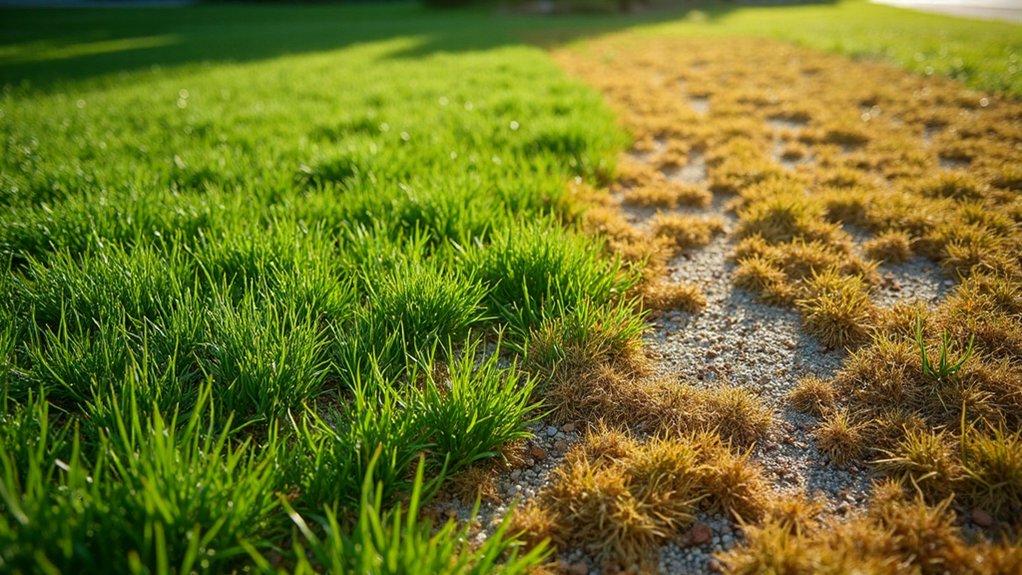
You’ve probably watched your neighbor’s lawn turn from lush green to patchy brown overnight, wondering what went wrong. The culprit isn’t always drought, pests, or disease—it’s often well-intentioned fertilization gone wrong. While you’re trying to nourish your grass, you might actually be poisoning it with common mistakes that even experienced homeowners make. These fertilization errors can transform your dream lawn into a costly nightmare, but they’re completely avoidable once you know what to watch for.
Key Takeaways
- Over-fertilizing causes fertilizer burn and dead spots by creating excessive nitrogen levels that literally burn grass blades.
- Using wrong fertilizer types creates nutrient imbalances; match N-P-K ratios to your specific grass and soil needs.
- Poor timing like fertilizing cool-season grass in summer or warm-season grass in winter causes stress and dormancy.
- Ignoring compacted soil and improper pH levels prevents nutrient uptake regardless of high-quality fertilizer applications.
- Inadequate watering after fertilizing allows salt accumulation and burns grass; dry fertilizer needs 0.5-1 inch water activation.
Over-Fertilizing Your Lawn
One of the most damaging mistakes you can make is applying too much fertilizer to your lawn. When you exceed the recommended amount, you’ll create fertilizer burn that causes dead spots throughout your grass. These high nitrogen levels literally burn the grass blades, leaving behind patches of damaged grass that weaken your entire lawn.
Over-fertilizing doesn’t just harm your current grass—it actually makes your lawn more vulnerable to disease and stress. You might think more fertilizer equals better results, but applying the wrong fertilizer or using excessive amounts creates the opposite effect. Always follow package instructions carefully, as manufacturers determine the precise recommended amount your grass needs. Remember, consistency and proper application will give you healthier results than overdoing it with heavy applications.
Using the Wrong Type of Fertilizer
While over-fertilizing can damage your lawn, selecting the wrong type of fertilizer creates equally serious problems that can leave your grass struggling to thrive. Different grass types have unique lawn needs, and applying fertilizer without understanding these requirements leads to poor results.
Applying the wrong fertilizer affects soil health by creating nutrient imbalances. You can’t achieve ideal growth by providing nutrients without considering your specific soil pH levels and grass type. A soil test reveals what your lawn actually needs versus what you think it needs.
Consider these critical factors when selecting the right type of fertilizer:
- Soil pH compatibility – Acidic vs. alkaline requirements vary by grass species
- Seasonal timing – Cool-season grasses need different feeding schedules than warm-season varieties
- Nutrient ratios – Nitrogen, phosphorus, and potassium percentages must match your lawn’s deficiencies
Poor Timing of Fertilizer Applications
When should you fertilize your lawn to maximize nutrient uptake and prevent grass damage? Timing fertilizer applications based on your lawn growth cycle and regional climate is essential for ideal lawn health. Fertilizing cool-season grasses during summer causes heat stress and dormancy, while fall applications support their natural growing period. Conversely, fertilizing warm-season grasses in late fall or winter encourages growth when they should be dormant, increasing winter damage susceptibility. You’ll worsen existing lawn stress by applying fertilizer during drought or extreme temperatures. Following a proper fertilizer schedule for your specific grass type guarantees effective nutrient availability when your lawn can actually use it. Poor timing creates patchy, unhealthy lawns regardless of fertilizer quality.
Ignoring Soil Health and Ph Levels
Many homeowners focus solely on fertilizer applications while brushing aside the foundation of lawn health: soil condition and pH levels. You’re wasting money on premium fertilizers if your compacted soil can’t absorb nutrients properly or your pH level prevents grass from accessing them.
Poor soil health creates a domino effect that undermines your entire lawn care routine. When soil becomes compacted, grass roots struggle to penetrate and expand, limiting nutrient uptake regardless of fertilizer quality.
Address these critical soil issues:
- Test your pH level annually to guarantee it’s between 6.0-7.0 for ideal grass growth
- Schedule regular aeration to break up compacted soil and improve water circulation
- Amend soil composition with organic matter to enhance nutrient retention and drainage
Prioritizing soil health transforms weak, patchy lawns into thriving landscapes.
Improper Watering After Fertilizing
Even after addressing soil health and pH balance, you can sabotage your fertilization efforts with poor watering practices. When you apply dry fertilizer without adequate water, excess salts accumulate and burn your grass. You’ll need 0.5-1 inch of water within hours to activate these nutrients properly.
Conversely, liquid fertilizer requires gentler watering—just 0.25-0.5 inches within 2-4 hours. Too much water washes away nutrients and creates harmful runoff that pollutes waterways. You’re fundamentally flushing your investment down the drain.
The key is timing and quantity. Water activates fertilizer nutrients, making them available for grass absorption. Skip this step or overdo it, and you’ll either starve your lawn or damage it. Proper watering transforms fertilizer application from potentially harmful to genuinely beneficial.
Frequently Asked Questions
Why Is My Grass Dying After Fertilizing?
You’re likely experiencing midsummer drought stress combined with improper application rates and insufficient water supply. Excessive thatch buildup, poor lawn mowing habits, and uneven fertilizer distribution create soil nutrient imbalances that stress your grass further.
What Is the Most Common Mistake Seen When Treating Lawns?
You’re making the over application of fertilizer mistake most often. You’re burning your grass by using too much, creating excessive growth, and causing nutrient runoff that damages your lawn’s health permanently.
How to Recover Over a Fertilized Lawn?
You’ll need to address nitrogen imbalance and soil pH fluctuation first. Water deeply to flush excess nutrients, then aerate to fix compaction problems. Avoid overwatering issues while your lawn recovers from nutrient toxicity.
What Part of Fertilizer Burns Lawns?
You’ve discovered lawn torture 101! Nitrogen excess from over application timing creates the burn, not phosphorus deficiency or potassium imbalance. Drought stress, compacted soil, and wrong fertilizer type worsen it, regardless of micronutrient depletion or soil pH issues.
Conclusion
You’ve learned the fertilization mistakes that can turn your green paradise into a patchy nightmare. Think of fertilizing like cooking – too much salt ruins the dish, wrong ingredients create disaster, and timing matters everything. By avoiding over-fertilizing, choosing the right type, timing applications correctly, testing your soil’s pH, and watering properly afterward, you’ll nurture a lawn that’s the envy of your neighborhood. Your grass will thank you.