
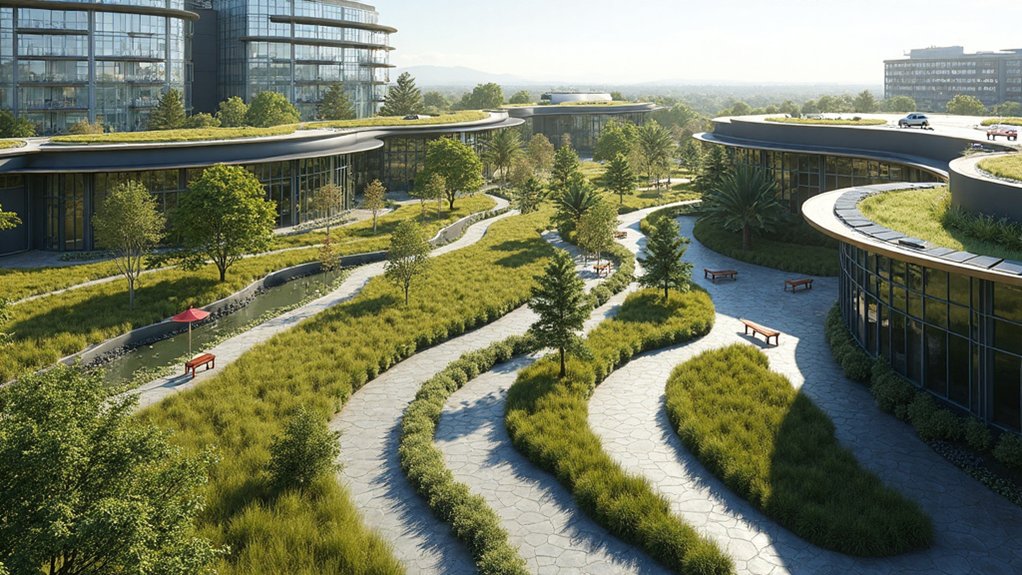
When Google’s Mountain View headquarters redesigned its outdoor spaces with native plant ecosystems and tech-enabled water management, the property’s valuation jumped 12% within two years. You’re likely wondering how commercial landscape design can deliver similar returns for your property in 2025. The answer lies in five strategic trends that smart property owners are implementing right now—each backed by data showing measurable increases in tenant retention, rental rates, and overall asset value that’ll transform your bottom line.
Key Takeaways
- Sustainable landscaping with native plants and smart irrigation reduces water usage by 40-70% while increasing property values up to 15%.
- Smart technology integration including automated irrigation and remote monitoring systems significantly reduces operational costs and demonstrates measurable sustainability metrics.
- Multi-functional outdoor spaces featuring workspaces, dining areas, and fitness amenities attract modern tenants seeking hybrid work environments.
- Climate-resilient design elements like drought-tolerant plants and stormwater management systems reduce maintenance costs by 30% annually.
- Biophilic features including green walls and indoor gardens increase property values by 7% while boosting employee productivity by 15%.
Sustainable Landscaping Practices Drive Long-Term Value
As businesses increasingly prioritize environmental responsibility, sustainable landscaping practices have emerged as one of the most effective ways to boost commercial property value while reducing operational costs. You’ll find that implementing smart irrigation systems and selecting native plants can reduce water usage by 40-70%, delivering significant long-term cost savings. These low-maintenance landscaping choices create biodiversity that strengthens your property’s ecosystem naturally.
Climate-resilient design protects your investment from extreme weather through advanced stormwater management systems and heat-tolerant plant selections. You can maximize limited space with vertical gardens that improve air quality while reducing energy costs. Property value increases up to 15% when you integrate these sustainable landscaping strategies, making environmental responsibility a smart financial decision for your commercial property.
Smart Technology Integration for Efficient Property Management
The digital revolution has transformed commercial landscape management into a precision-driven operation that delivers measurable returns on your property investment. Smart technology enables water usage reduction of 40-70% through soil moisture sensors that track conditions in real-time. App-controlled irrigation systems make automated adjustments based on actual plant needs, while remote plant monitoring gives you complete oversight from anywhere.
You’ll achieve significant cost savings through robotic mowers that eliminate manual labor and drone-based monitoring that identifies issues before they become expensive problems. These systems deliver substantial environmental benefits by optimizing resource consumption and reducing waste. Property managers who embrace this technology integration create more efficient operations while boosting property values through demonstrable sustainability metrics and reduced operational expenses.
Multi-Functional Outdoor Spaces Attract Modern Tenants
While traditional commercial landscapes once served purely aesthetic purposes, today’s successful properties transform outdoor areas into dynamic, multi-functional spaces that directly influence tenant retention and attraction. You’ll find that modern commercial properties increasingly feature outdoor workspaces with Wi-Fi connectivity and comfortable seating areas that enable productivity in fresh-air environments.
Creating outdoor spaces that combine dining, fitness, and leisure amenities addresses employees’ work-life balance needs effectively. Strategic integration of fire pits, outdoor kitchens, and adaptable furniture transforms your property into versatile social hubs. These functional outdoor meeting areas boost morale while providing team-building opportunities.
The hybrid work model‘s rise means you must offer appealing outdoor workspaces to attract and retain top talent, making multi-functional landscapes essential investments for property value enhancement.
Climate-Resilient Design Elements Reduce Maintenance Costs
Smart commercial property owners are discovering that climate-resilient landscape design isn’t just environmentally responsible—it’s financially strategic. By implementing drought-tolerant plants and advanced stormwater management systems, you’ll reduce maintenance costs by up to 30%. These sustainable solutions create long-term value while minimizing operational expenses.
Strategic design choices deliver measurable returns:
- Install permeable hardscaping like porous concrete to decrease stormwater runoff and prevent costly flood damage
- Position shade trees strategically to reduce cooling costs by 20% while combating the urban heat island effect
- Incorporate bioswales and rain gardens for multi-functional green infrastructure that manages water naturally
- Choose climate-resilient plantings that withstand extreme weather without constant replacement or intensive care
Your investment in sustainable landscape design pays dividends through reduced utility bills, lower repair costs, and enhanced property competitiveness.
Biophilic Features Create Premium Commercial Environments
Forward-thinking property developers are integrating biophilic design elements to transform commercial spaces into environments that naturally attract tenants and boost property values by up to 7%. You’ll find that incorporating green walls, indoor gardens, and natural materials creates premium environments that directly impact your bottom line. These biophilic features enhance employee productivity by 15% while reducing stress levels by 30%, making your property highly desirable for businesses prioritizing workforce well-being.
Water features and living landscapes don’t just improve customer experience—they position your property within the rapidly growing $36.4 billion biophilic design market. When you implement these sustainable practices, you’re creating spaces that command higher rents and attract quality tenants seeking nature-connected environments that support both employee satisfaction and business success.
Frequently Asked Questions
What Are the Trends in Landscape Design 2025?
You’ll see sustainable plant species and water-efficient irrigation systems dominating. Smart landscape technology, xeriscaping techniques, and pollinator-friendly gardens create low-maintenance designs. Multifunctional outdoor spaces incorporate biophilic principles with nature-inspired aesthetics and outdoor living amenities.
What Is the Future of Landscaping?
You’ll see landscaping evolve through smart irrigation systems, vertical gardening, and biophilic design principles. Expect sustainable plant selections, pollinator-friendly plantings, and water-efficient landscapes featuring native plant integration, edible landscaping, and climate-resilient designs requiring minimal maintenance.
What Are the 5 Basic Elements of Landscape Design?
You’ll master landscape design through five core elements: space planning, form creation, line definition, texture variation, and color schemes. These guide your plant selection, walkway designs, water features, lighting fixtures, and garden structures effectively.
What Is a Landscape Trend?
Trending transformations reflect your landscape design interpretation evolving over time. You’ll witness design adaptation blending landscape design sustainability with landscape design innovation, creating fresh landscape design aesthetics that merge landscape design functionality with cutting-edge landscape design technology integration.
Conclusion
You might think these landscape trends require massive upfront investments, but they’re actually smart financial moves. By implementing sustainable practices, smart technology, and multi-functional designs, you’ll reduce operating costs while attracting premium tenants. Your property’s value will increase up to 15%, maintenance expenses will drop considerably, and you’ll command higher rents. These aren’t just trendy features—they’re proven strategies that deliver measurable returns on your commercial real estate investment.