
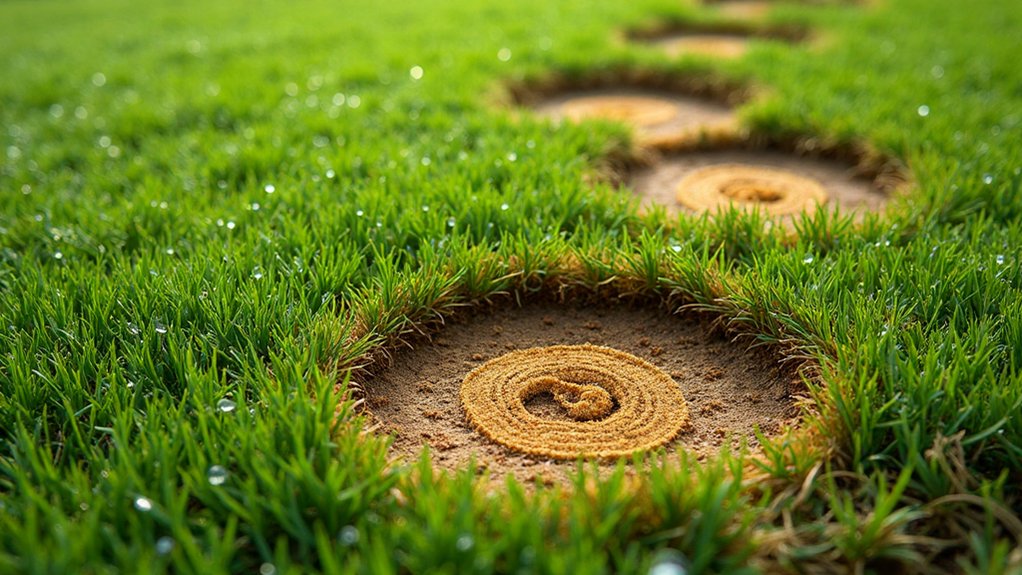
You’ve probably noticed those unsightly brown circles appearing in your lawn during humid summer months, wondering why your careful watering and fertilizing efforts seem to make the problem worse. What you’re witnessing is brown patch disease, and the culprit isn’t just the weather—it’s likely the thick layer of thatch beneath your grass that’s creating the perfect storm for fungal growth. Here’s why your lawn’s hidden enemy might be sabotaging your efforts.
Key Takeaways
- Dethatching removes the insulating organic layer that traps moisture and creates ideal conditions for Rhizoctonia solani fungus.
- Improved air circulation from dethatching eliminates the humid, stagnant environment that brown patch fungus requires to thrive.
- Enhanced drainage after dethatching prevents excessive moisture on grass blades, a primary trigger for brown patch development.
- Removing thatch eliminates the organic matter reservoir where brown patch fungus overwinters and initiates new infections.
- Dethatching combined with core aeration creates an environment hostile to fungal growth while promoting resilient turf.
Understanding Brown Patch Disease and Its Environmental Requirements
Brown patch disease strikes when three critical conditions align: high humidity, warm temperatures between 70-85°F, and excessive moisture on grass blades. This fungal disease, caused by Rhizoctonia solani, creates circular brown patches that can devastate your lawn during periods of high temperature and humid weather.
The fungus overwinters in your soil and thatch layer, remaining dormant until favorable conditions emerge. When temperatures rise and humidity increases, spores activate and spread rapidly across grass surfaces. Excessive thatch creates the perfect breeding ground, trapping moisture and reducing air circulation around grass crowns.
You’ll notice brown patch typically appears during summer’s peak heat when nighttime temperatures stay above 68°F. The disease thrives when grass remains wet for extended periods, making early morning watering and poor drainage major contributing factors to outbreaks.
The Role of Thatch in Creating Fungal Disease Conditions
Thatch buildup sets the stage for brown patch disaster by creating the exact conditions this destructive fungus craves. When thatch accumulates, it forms a thick insulating layer that traps moisture against your soil surface. This creates an ideal moist, humid environment where Rhizoctonia fungus thrives and spreads rapidly throughout your lawn.
The thatch layer prevents proper air circulation around grass crowns, keeping conditions perpetually damp and stagnant. You’re fundamentally creating a breeding ground for the pathogen that causes brown patch disease. As this organic matter continues building up over seasons, it becomes a reservoir where the fungus can overwinter and persist year after year.
This insulating layer doesn’t just harbor existing disease—it actively promotes new infections by maintaining the perfect fungal growing conditions your lawn can’t escape.
How Dethatching Improves Air Circulation and Drainage
When you remove excess thatch from your lawn, you’re immediately opening up critical airflow pathways that dramatically reduce brown patch conditions. Dethatching eliminates the thick layer of organic matter that traps moisture against your grass, creating the humid environment where fungus thrives. By using a vertical mower to break through this barrier, you’ll restore proper air circulation throughout your lawn’s canopy.
This process also dramatically improves drainage by allowing water to penetrate the soil surface rather than pooling above the thatch layer. With better airflow and drainage, your grass receives essential oxygen while excess moisture evaporates quickly. You’ll also notice increased sunlight penetration to the grass crowns, creating an environment that’s hostile to brown patch development while promoting healthier, more resilient turf.
Proper Dethatching Techniques and Timing for Disease Prevention
Although dethatching creates the foundation for disease prevention, you’ll achieve the best results by timing this process for early fall when temperatures drop and your grass enters its most vigorous growth period. This ideal time allows your lawn to recover quickly from the dethatching stress while cool temperatures reduce fungal growth risks.
You should dethatch when your thatch layer exceeds half an inch, typically requiring annual treatment or every 2-3 years depending on grass type. The process removes moisture-retaining organic matter that creates perfect conditions for disease development. After dethatching, improved air circulation reaches the soil surface, promoting healthier root systems. For maximum effectiveness, combine dethatching with core aeration to enhance drainage and create an environment where actively growing grass can resist brown patch and other fungal diseases.
Additional Cultural Practices That Work With Dethatching
Several complementary practices can amplify your dethatching efforts and create an even stronger defense against brown patch disease.
Combining aeration and dethatching creates ideal conditions for healthy grass growth while reducing fungal pressure. Here are four essential practices to implement alongside your dethatching routine:
- Maintain preferred mowing height – Keep grass taller during warm, humid periods to promote air circulation and reduce stress on your lawn.
- Avoid excessive nitrogen – Skip nitrogen fertilizer during peak disease season, as it encourages rapid, tender growth that’s vulnerable to infection.
- Conduct a soil test – Regular applications can vastly improve soil health when you know exactly what nutrients your lawn needs.
- Water wisely – Irrigate in early morning, keeping soil moist to prevent spread while allowing grass to dry before air temperatures rise, unlike poorly maintained lawns.
Monitoring Your Lawn’s Health After Dethatching
While dethatching creates excellent conditions for preventing brown patch disease, you’ll need to watch your lawn carefully during the recovery period. The process temporarily disrupts grass, making it vulnerable to rhizoctonia fungus infiltration. Monitor for circular brown patches, especially in areas where you’ve removed excessive thatch.
Check that improved airflow and sunlight penetration are reducing moisture levels as expected. Look for signs your grass is recovering well from the dethatching process. Identify any bare or thinned areas that need immediate attention.
If you spot problem zones, reseed them quickly to establish dense coverage. Weak or sparse grass provides openings for fungus establishment. Schedule weekly inspections during the first month post-dethatching, then monthly thereafter to guarantee your lawn maintains its newfound resistance to brown patch disease.
Frequently Asked Questions
How Do You Prevent Brown Patch Fungus?
You’ll prevent brown patch fungus through proper lawn aeration, proactive soil testing, timing fertilizer applications correctly, overseeding with disease-resistant grass, monitoring moisture levels, managing thatch buildup, and adjusting mowing heights for healthy growth.
Does Brown Patch Fungus Go Away?
No, brown patch won’t disappear naturally. You’ll need proper brown patch lawn treatment and control measures for eradication. Without brown patch lawn management, the fungus survives winter and returns, requiring active remedies for recovery.
How Do I Get Rid of Brown Patch Fungus on My Lawn Naturally?
You’ll naturally eliminate brown patch through organic soil amendments, natural fungicide applications, and improved aeration techniques. Focus on proper irrigation management, lawn mowing habits, and overseeding strategies while testing soil for biological control agents.
What Is the Brown Patch Fungal Infection?
Brown patch fungal infection affects cool season grass types, creating circular dead spots in your lawn. It thrives in poor soil drainage conditions with high shade and moisture levels, spreading rapidly through lawn thatch accumulation.
Conclusion
You’ll notice something remarkable happens when you dethatch just as your neighbor’s untreated lawn starts showing those telltale brown circles. While their grass struggles with fungal patches spreading across the yard, yours remains vibrant and healthy. It’s no coincidence that your proactive dethatching created the perfect conditions for disease resistance. You’ve disrupted the fungus’s habitat while they’re left wondering why their lawn looks so different from yours.