
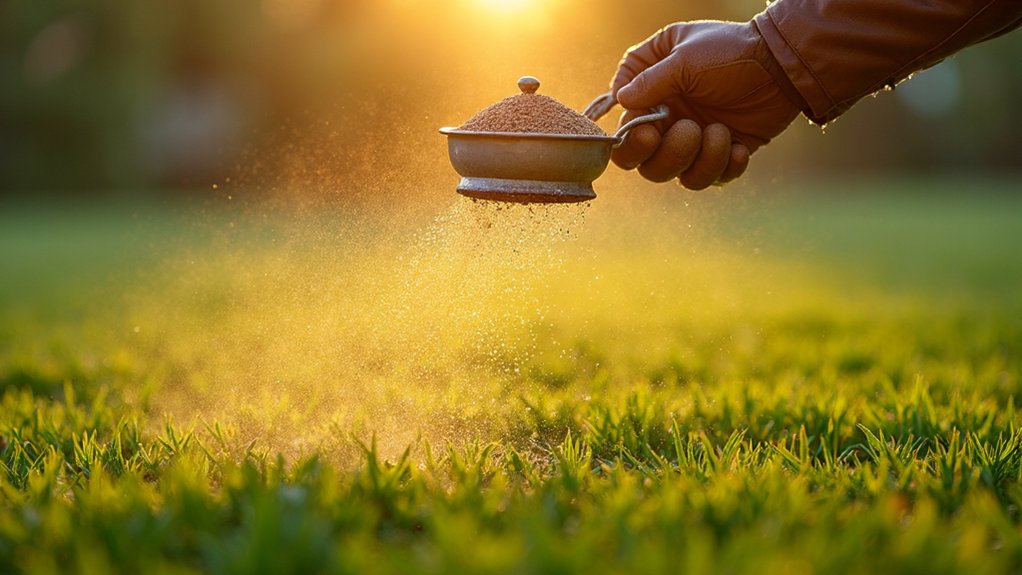
Like the old saying “timing is everything,” you’ll find this couldn’t be more true when it comes to fertilizing your lawn. You’ve probably noticed how some neighbors have lush, green grass while others struggle with patchy, burned spots—and the secret often isn’t what fertilizer they’re using, but when they’re applying it. The difference between a thriving lawn and a stressed one can come down to choosing the right few hours of the day.
Key Takeaways
- The optimal time to apply lawn fertilizer is between 4 PM and 6 PM when temperatures are cooler.
- Avoid midday fertilization as high temperatures and direct sunlight cause fertilizer burn and nutrient evaporation.
- Early morning application works but risks fertilizer burn if nutrients don’t absorb before temperatures rise.
- Evening dew activates fertilizer overnight, allowing maximum nutrient absorption while preventing grass stress.
- Never fertilize when temperatures exceed 85°F and avoid heavy rainfall that washes away nutrients.
Why Timing Matters for Lawn Fertilization
While many homeowners focus on what fertilizer to use, when you apply it can make the difference between a thriving lawn and damaged grass. The best time to fertilize depends on several critical factors that directly impact your lawn’s health and nutrient absorption.
Applying fertilizer during extreme heat or direct sunlight can burn your grass, causing irreversible damage. Instead, you’ll achieve better results by choosing the right day to fertilize when conditions support proper nutrient uptake. Cool temperatures and morning dew create ideal conditions for fertilizer absorption, allowing nutrients to penetrate the soil effectively.
Your grass type also determines optimal timing. Cool-season grass benefits from specific application windows, while warm-season grasses thrive under different conditions. Understanding these factors maximizes your fertilization efforts and produces maximum results.
Late Afternoon and Early Evening: The Optimal Window
The sweet spot for lawn fertilization occurs during late afternoon and early evening hours, typically between 4 PM and 6 PM. This timing represents the best time of day to fertilize your lawn because you’ll take advantage of cooler temperatures that prevent grass burn and nutrient stress. Unlike morning applications when dew might interfere, or mid-day treatments that risk heat damage, late afternoon timing allows ideal soil absorption.
During spring fertilization, these evening hours become particularly essential as your grass awakens from winter dormancy. The cooler temperatures help nutrients penetrate effectively without overwhelming stressed turf. You’ll also benefit from natural evening dew that activates the fertilizer overnight. This strategic timing prevents nutrient washaway while maximizing absorption, making your fertilization efforts noticeably more effective than applications during other parts of the day.
Morning Application: Pros and Cons
Although morning fertilization offers certain advantages, you’ll need to weigh them carefully against potential drawbacks. Early morning application lets you take advantage of cooler temperatures and morning dew, which help nutrients absorb into the soil more effectively. However, you’re racing against time before air temperatures rise and potentially cause fertilizer burn on your grass.
The key concern with morning fertilizer application is that nutrients might not fully absorb before the day’s heat arrives. This creates risk of burning your lawn or having the fertilizer wash away if you water too heavily. You’ll need to apply water carefully after morning fertilization to activate nutrients without overdoing it. Organic fertilizers reduce burn risk, but late afternoon remains the safer choice for most homeowners.
Avoiding Midday Fertilization
Four critical factors make midday the worst time to fertilize your lawn. First, high temperatures and direct sunlight cause fertilizer to evaporate before your grass can absorb nutrients effectively. Second, you’ll increase the risk of fertilizer burn that damages your lawn when it’s stressed from heat. Third, the fertilizer dries out quickly, preventing proper soil penetration before you can water it in sufficiently.
The best approach for lawn Care involves timing applications when grass is actively growing under ideal conditions. You should take advantage of cooler temperatures in early morning or late afternoon instead. This timing guarantees maximum nutrient absorption and reduces stress on your lawn. Even when applying weed control products, avoid midday heat. Choose cooler periods when your grass can better utilize the nutrients without heat-related damage.
Weather Considerations Before Applying Fertilizer
When should you check the weather forecast before fertilizing your lawn? You’ll want to examine several key factors before you apply lawn fertilizer to guarantee ideal results. First, avoid fertilizing when temperatures exceed 85°F, as excessive heat can damage your grass. Instead, choose times with cooler temperatures, typically during morning hours when direct sunlight isn’t as intense. Check for upcoming rainfall patterns—while slightly damp soil helps with nutrient absorption, heavy rain will wash away your fertilizer investment. Fertilizer helps your lawn thrive throughout the year, but proper timing makes all the difference for effective soil care. During growing season, monitor weather conditions closely and plan your fertilization schedule around favorable forecasts to maximize nutrient uptake and minimize waste.
Fertilizing Cool-Season Vs Warm-Season Grasses
Understanding your grass type fundamentally changes your fertilization approach, as cool-season and warm-season varieties operate on completely different growth cycles. Your cool-season lawn, including Kentucky Bluegrass and fescue, thrives with fertilization in early spring and fall when cooler temperatures support active growth. Apply fertilizer during morning or late afternoon hours to prevent heat damage.
Warm-season grasses like bermuda and zoysia need different timing. Feed your lawn from late spring through summer during peak growing season. These varieties also benefit from morning and late afternoon applications, avoiding midday heat stress.
Timing your fertilization correctly means helping your lawn maximize nutrient uptake when it’s most receptive, leading to healthier growth and improved appearance regardless of grass type.
Pre-Application Preparation and Watering Guidelines
Before you spread a single granule of fertilizer, proper preparation sets the foundation for ideal nutrient absorption and prevents common application mistakes. Water your lawn 1-2 days beforehand, ensuring your lawn has moist but not saturated soil. Mow to recommended height several days prior as part of essential lawn care activities. Take advantage of cooler temperatures during spring and fall when your lawn is ready for prime growth.
Never fertilize before heavy rainfall, which washes away nutrients from granular fertilizers. Apply during early morning or late afternoon when cooler conditions prevent evaporation and burning. After application, lightly water the area to help nutrients penetrate the soil, providing nutrients directly to grass roots for best results.
Common Timing Mistakes to Avoid
Even experienced gardeners can sabotage their fertilization efforts by making critical timing errors that waste money and harm their lawns. You’ll transform your lawn into a stressed, patchy mess if you need to apply fertilizer during midday heat when burn risks peak. Heavy rain will wash the fertilizer away before roots absorb nutrients, so avoid fertilizing before storms. Don’t fertilize cool-season grasses during summer’s extreme temperatures when they’re dormant and not ready to accept nutrients. Wet grass from morning dew creates uneven distribution, preventing proper coverage. Mowing immediately before application disrupts even spreading. Follow these expert tips: fertilize two to four times a year during ideal weather conditions when grass actively grows.
Frequently Asked Questions
Is It Better to Fertilize Your Lawn in the Morning or Evening?
You’ll achieve better results with early morning hours or late afternoon timing. Lawn care experts recommend avoiding midday applications due to heat stress. Evening fertilizing promotes overnight absorption when soil moisture levels are ideal and weather conditions are cooler.
When Not to Apply Lawn Fertilizer?
Wondering when fertilizing backfires? Avoid summer heat and dormant periods when applying fertilizer. Monitor weather forecasts for heavy rain, consider soil composition, evaluate nutrient needs, adjust for grass type, and focus on fall application while considering environmental impact.
Is It Better to Put Fertilizer on Wet or Dry Grass?
You’ll achieve better nutrient absorption efficiency by applying fertilizer to dry grass, then watering it in. This timing guarantees ideal soil temperature conditions and prevents clumping, maximizing environmental impact while promoting healthy grass growth.
Conclusion
Your lawn’s future hangs in the balance with every fertilizer application. You’ve learned the secrets—that pivotal 4-6 PM window, the morning dew advantage, the midday dangers lurking in direct sunlight. But here’s what separates successful lawn care from disaster: you must resist the urge to rush. One wrong timing decision could undo months of careful cultivation. The question isn’t whether you’ll fertilize—it’s whether you’ll choose the moment that transforms your grass into perfection.