
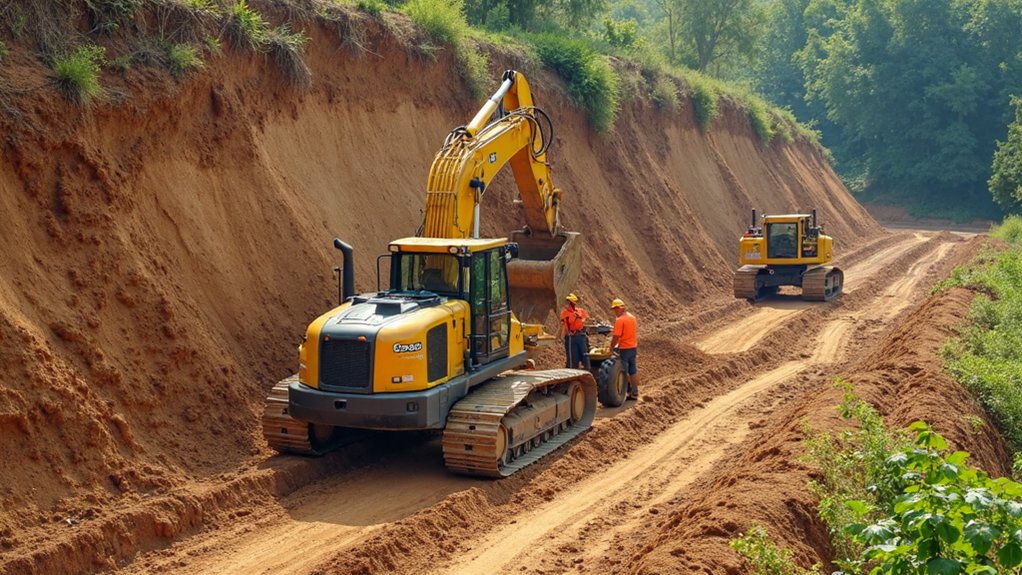
Your property’s grading system acts like a silent guardian, working around the clock to shield your home from water’s destructive forces. Yet this guardian can weaken without proper care, leaving you vulnerable to costly foundation damage and structural problems. You’ve invested significant time and money into creating the perfect slope for drainage, but that investment won’t protect itself. The question isn’t whether your grading will need maintenance—it’s whether you’ll catch the warning signs before minor issues become major headaches.
Key Takeaways
- Schedule twice-yearly inspections in spring and fall to check for erosion, soil displacement, and drainage system effectiveness.
- Maintain proper grading slopes by adding topsoil and regrading areas where settlement or erosion has occurred.
- Clear gutters and downspouts regularly, ensuring water channels 5-10 feet away from your foundation to prevent damage.
- Address standing water and soil compaction immediately using aerators and drainage improvements to prevent structural issues.
- Install erosion control measures like vegetation and mats in problem areas to preserve your grading investment long-term.
Understanding Your Property’s Drainage System
Before you can effectively maintain your property’s slopes, you’ll need to understand how your entire drainage system works together. Your grading creates the foundation for effective water flow patterns across your landscape. Proper slope directs water away from your home’s foundation through gutters, downspouts, and drainage pipes working in harmony.
Downspouts should channel water at least 5-10 feet from your foundation to prevent water damage. French drains and swales complement your proper grading by managing subsurface water flow beneath the soil surface. These drainage systems must account for your specific soil conditions, which affect water absorption and runoff rates.
Regular inspections guarantee your directing water away strategy remains effective. Understanding these interconnected components helps you identify potential problems before they compromise your foundation or create costly water damage issues.
Seasonal Inspection Schedule for Optimal Performance
Your drainage system’s effectiveness depends on consistent monitoring throughout the year. Implement twice-yearly inspections during spring and fall to identify potential issues before severe weather strikes your property. These seasonal checkups allow you to assess how water flows across your slope and prevent foundation damage.
During inspections, clear gutters and downspouts of debris to maintain proper drainage flow. Check for erosion signs, soil displacement, or settling that could create problems with your grading system. Monitor problematic areas after heavy rainfall to guarantee water moves away from your home effectively.
Schedule professional evaluations every one to two years for expert assessment of your property’s drainage systems. Regular maintenance prevents costly repairs and protects your grading investment long-term.
Identifying Early Warning Signs of Drainage Failure
When drainage systems begin to fail, they’ll broadcast clear distress signals that demand your immediate attention. Standing water that persists for days after rainfall indicates grading issues or low spots requiring correction. You’ll notice visible erosion forming small channels, signaling your current system isn’t effectively managing water runoff. Soil compaction creates spongy, waterlogged ground that feels unstable underfoot, while excess water causes plant distress through yellowing leaves and stunted growth.
Watch for pooling near the foundation, which can lead to serious structural problems. Cracks in your foundation, basement moisture, or peeling exterior paint all indicate improper drainage has already caused damage. These drainage problems demand immediate erosion control measures and system repairs. Addressing these warning signs quickly is essential for preventing water damage and protecting your home’s structural integrity.
Essential Tools and Materials for Routine Maintenance
Addressing drainage problems effectively requires having the right equipment on hand before issues escalate. You’ll need basic tools like a shovel for moving soil, a rake for smoothing surfaces, and a wheelbarrow for transporting materials efficiently. Measuring devices help you maintain proper slope angles and identify problem areas accurately.
Keep topsoil and gravel readily available to address soil erosion quickly before it worsens. Regular maintenance involves clearing debris from drainage swales, culverts, and downspout extensions to prevent costly blockages. A garden hose helps test water flow patterns, while a soil aerator breaks up compacted areas that cause pooling.
Having these materials stored and accessible guarantees you can tackle minor issues immediately, preventing them from becoming major drainage failures that require expensive professional intervention.
Addressing Erosion and Soil Settlement Issues
Even with proper initial grading and regular maintenance, erosion and soil settlement will gradually alter your property’s drainage patterns over time. Regular inspections help you identify soil erosion patterns and settlement issues before they compromise your grading’s effectiveness. Address soil erosion by installing erosion control mats, planting vegetation with deep root systems, and strategically placing rocks or landscape timbers to stabilize affected areas.
Monitoring for soil settlement around your foundation, walkways, and hardscaping is vital for maintaining proper drainage. When settlement occurs, you’ll need regrading or soil addition to reestablish the intended slope and prevent water pooling. Don’t hesitate to seek professional consultation from a landscaper or contractor—they’ll guarantee proper identification and remediation of these problems, preserving your grading investment’s long-term effectiveness.
Cleaning and Maintaining Drainage Components
While effective slope grading directs water away from your home, your drainage components must remain clean and functional to complete the water management system. You’ll need to regularly clear debris from gutters, downspouts, and drainage inlets to prevent clogs and blockages that compromise proper drainage. Inspect your drainage systems for cracks, breaks, or obstructions that could impede water flow down your graded slopes.
Use a garden hose to flush drainage components and verify water moves properly away from your foundation. Prune vegetation that’s growing over drainage elements, as it can create blockages and reduce system efficiency. Schedule professional inspections every one to two years to identify potential issues before they compromise your grading investment and water management capabilities.
When to Call Professionals for Major Repairs
Certain slope problems exceed the scope of routine maintenance and demand professional intervention. When you notice severe foundation cracks, extensive erosion, or major water intrusion, you’ll need professional inspection to assess your property’s structural integrity. These complex grading problems require professional expertise and specialized equipment that DIY approaches can’t match.
Attempting major grading repairs yourself often leads to costlier damage and compromised structural solutions. Professionals possess the knowledge to implement proper regrading, install drainage systems, and perform foundation repairs while ensuring compliance with local building codes. They’ll also handle necessary permits and provide warranties that protect your investment.
Don’t risk your property’s safety with amateur fixes. Contact qualified contractors when facing significant slope issues that threaten your home’s stability.
Long-Term Strategies for Preserving Your Investment
Although slope maintenance requires ongoing attention, implementing strategic long-term practices will safeguard your property value and prevent costly emergency repairs. Maintaining proper grading requires consistent monitoring through regular inspections of your yard’s slope and drainage systems. You’ll need to clear debris from gutters and channels to guarantee effective drainage throughout seasons. Address settling or erosion promptly to maintain intended water flow patterns.
Grading or drainage improvements work best when you consider your specific soil type and sloped areas. Aerating compacted soil and overseeding enhances water absorption naturally. Native plants offer exceptional long-term benefits for stability. Their deep roots penetrate soil layers, creating natural reinforcement that prevents erosion while requiring minimal maintenance. This all-encompassing approach transforms reactive repairs into proactive investment protection, ensuring your grading system performs reliably for years.
Frequently Asked Questions
How Much Should I Budget Annually for Slope Maintenance Costs?
You’ll need cost estimation through professional consultation for effective budget planning. Annual slope maintenance typically requires 2-5% of initial grading costs, covering vegetation management, drainage inspection, erosion prevention, and slope monitoring activities.
Does Homeowner’s Insurance Cover Slope Failure or Drainage System Repairs?
Your homeowner’s insurance typically won’t cover slope failure or drainage repairs like French drain installations, retaining wall inspections, or geo technical engineering services, since they’re considered maintenance issues requiring erosion control measures.
Can I Install Additional Drainage Myself or Do I Need Permits?
You can install DIY drainage like gutter downspout extensions and surface water diversion yourself. However, underground drainage pipes, French drain installation, and major yard grading enhancement typically require permits and professional drainage inspection beforehand.
How Does Landscaping Affect My Property’s Existing Drainage and Grading System?
Your landscaping choices directly impact drainage through soil erosion prevention and surface water management. You’ll need landscape grading adjustments, proper slope stabilization techniques, and natural landscaping strategies to maintain your system’s effectiveness.
What’s the Typical Lifespan of Different Drainage System Components and Materials?
Like Rome’s aqueducts, your drainage system’s longevity depends on pipe material composition and maintenance scheduling. You’ll see gradual deterioration over decades, but unexpected failures require seasonal inspections and engineered solutions to prevent localized flooding issues.
Conclusion
You’ll protect your home’s foundation by maintaining proper slope drainage, but here’s what might surprise you: the EPA reports that poor drainage causes over $2.5 billion in foundation damage annually across the US. Don’t become part of that statistic. By following your seasonal inspection schedule, addressing erosion early, and knowing when to call professionals, you’re safeguarding one of your largest investments. Your proactive maintenance today prevents costly structural repairs tomorrow.