
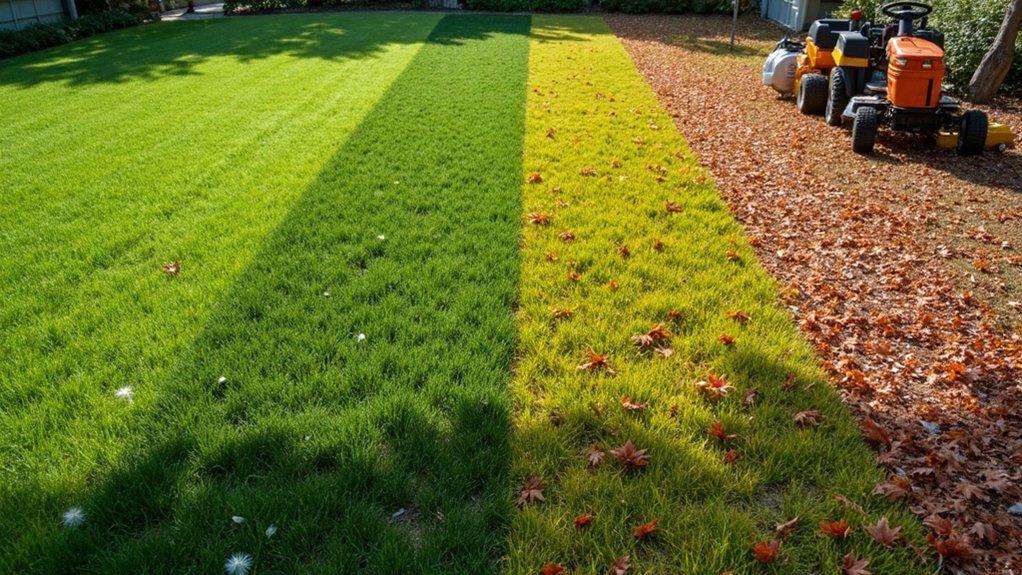
Picture the satisfying sight of freshly cut grass blades glistening with morning dew as you survey your perfectly maintained lawn. You’ve probably wondered why your neighbor’s yard looks magazine-ready while yours struggles through seasonal changes. The secret isn’t expensive equipment or professional services—it’s understanding how your mowing approach should shift with each season. Master these four distinct strategies, and you’ll transform your lawn from surviving to thriving year-round.
Key Takeaways
- Follow the one-third rule in spring by removing no more than one-third of grass blade height when mowing.
- Raise mower height to 3-4 inches during summer and mow during cooler morning or evening hours.
- Mow 1-2 inches shorter for final fall cuts and apply high-phosphorus fertilizer before winter dormancy.
- Avoid mowing frozen ground in winter and maintain 2-3 inch grass height for protection.
- Never mow wet grass in any season to prevent soil compaction and reduce disease risk.
Spring Mowing: Getting Your Lawn Ready for Growth Season
As winter’s grip loosens and grass begins its seasonal awakening, you’ll need to prepare both your mower and your approach for the critical spring growing period. Start by sharpening your mower blades and changing the oil before that first cut. When your lawn reaches 3-4 inches tall, it’s time to begin mowing. Follow the one-third rule—never remove more than a third of the blade height in a single session. This prevents stress and promotes healthy growth. Avoid mowing wet grass, which can cause soil compaction and disease issues. Mow frequently during spring’s rapid growth phase, and gradually raise your cutting height as temperatures climb in late spring to help your grass handle increasing heat stress.
Summer Mowing: Maintaining Height and Health During Peak Season
When summer heat arrives in full force, your mowing strategy must shift to protect your lawn from the season’s demanding conditions. Raise your mower height to 3-4 inches, allowing grass to develop deeper roots and retain more water during scorching summer days. Sharp mower blades are essential for clean cuts that won’t stress your lawn further.
Time your mowing carefully by cutting grass during cooler morning or evening hours when temperature drops reduce water evaporation. Never mow wet grass, as this causes soil compaction and spreads disease throughout your lawn.
Leave grass clippings where they fall instead of bagging them. These clippings decompose quickly, returning valuable nutrients to your soil while acting as natural mulch that helps retain moisture during hot summer weather.
Fall Mowing: Preparing Your Grass for Winter Dormancy
Fall’s cooler temperatures signal it’s time to adjust your mowing approach once again. You’ll want to mow your lawn 1-2 inches shorter than normal during your final cuts to reduce disease risk and insulate grass crowns through winter. This technique works for both cool-season grasses and warm-season grasses entering dormancy.
Don’t let fallen leaves accumulate on your Fall Lawn – use your lawn mower to mulch them or rake regularly to prevent grass suffocation. Apply high-phosphorus fertilizer instead of nitrogen fertilizer to strengthen root systems before winter arrives. Provide about one inch of water weekly if rainfall’s insufficient.
Avoid mowing when grass stops growing actively. These preparation steps will keep your lawn healthy through dormancy, ensuring vigorous spring recovery.
Winter Mowing: Essential Care During the Dormant Months
Once winter arrives and your grass enters full dormancy, your mowing routine shifts dramatically from the active growing seasons. Winter mowing requires careful attention to ground conditions and equipment maintenance to prevent damage while preparing for spring recovery.
During these dormant months, follow these essential practices:
- Avoid frozen ground mowing – Never operate your lawnmower when the ground is frozen, as this can severely damage grass crowns and roots.
- Maintain proper length – Continue mowing at a higher setting, keeping grass at 2-3 inches to protect against winter stress.
- Remove debris regularly – Clear leaves and twigs to prevent matting and suffocation of your grass underneath.
- Inspect for winter damage – Watch for snow mold and ice damage, addressing issues promptly.
Prepare your equipment through cleaning and sharpening blades for spring readiness.
Frequently Asked Questions
What Is the 1/3 Rule for Lawns?
You shouldn’t remove more than one-third of your grass blade’s height when mowing. This maintains ideal grass length, guarantees proper mowing frequency, and promotes healthy lawn height while supporting efficient lawn mowing schedules for ideal growth.
When Should You Not Mow Your Lawn in the Fall?
Like Goldilocks seeking “just right” conditions, you shouldn’t mow wet grass, during heavy rain, right before a freeze, when grass is dormant, or with dull blades—timing’s everything for fall lawn care success.
What Is the First Thing You Put on Your Lawn in the Spring?
You’ll want to apply pre emergent herbicide first on your spring lawn to prevent weeds from germinating. Then address soil issues, dethatch lawn, aerate lawn, fertilize lawn, and reseed bare spots.
When Should You Do Your Last Mow of the Season?
You should complete your last mow 4-6 weeks before frost, maintaining ideal mowing height of 2-3 inches for cool-season grass. After bagging clippings and managing leaves, focus on sharpening mower blades and preparing mower for storage.
Conclusion
You’ve now accessed the seasonal symphony of lawn care, where each cut becomes a note in nature’s grand composition. Your mower transforms into a conductor’s baton, orchestrating green harmony throughout the year. Remember, you’re not just cutting grass—you’re sculpting a living canvas that breathes with the seasons. Let your lawn dance through spring’s awakening, summer’s crescendo, fall’s gentle farewell, and winter’s peaceful slumber. Your dedication cultivates this emerald masterpiece year-round.