
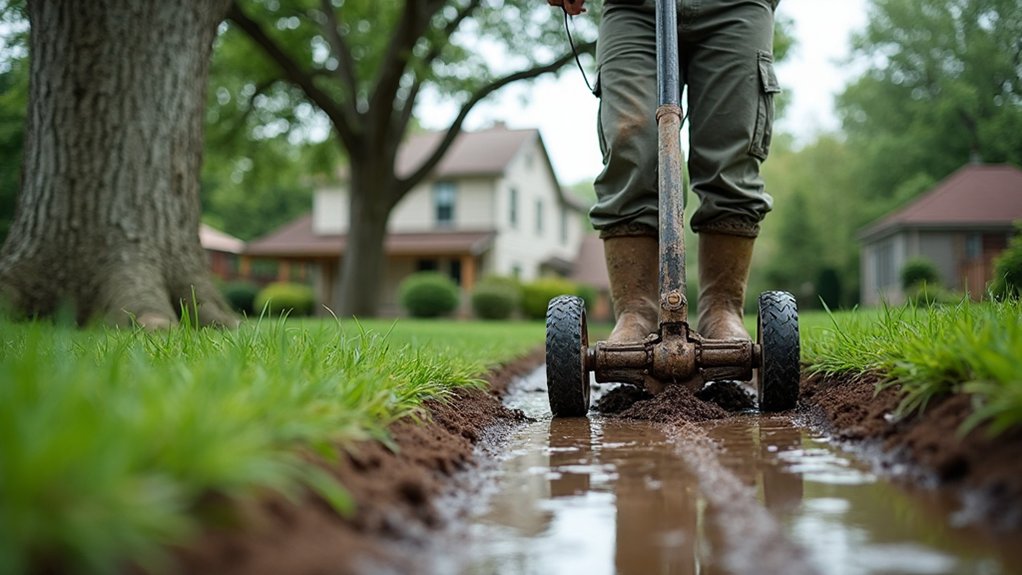
You’re likely among the 65% of St. Louis homeowners who’ve dealt with standing water on their property after heavy rains. The region’s notorious clay soil creates a perfect storm for drainage nightmares, turning your once-pristine lawn into a swampy mess that threatens both your landscape investment and your home’s foundation. While many assume this problem can’t be solved, there’s actually a systematic approach that addresses the root causes and transforms your waterlogged yard into something remarkable.
Key Takeaways
- Install French drains with perforated pipes and gravel to intercept underground moisture in persistent wet spots.
- Regrade lawn areas with minimum 1% slope to prevent standing water and ensure proper drainage.
- Plant water-tolerant grass varieties like tall fescue or perennial ryegrass that thrive in moisture-heavy conditions.
- Create bioswales as natural drainage channels to slow stormwater runoff and filter pollutants effectively.
- Amend dense clay soil with compost to improve water permeability and reduce waterlogged conditions.
Understanding Clay Soil and Drainage Challenges in St. Louis
When you step outside after a heavy rainstorm in St. Louis, you’ll likely notice standing water pooling across your lawn. This persistent problem stems from the region’s clay soil composition, which creates significant drainage challenges for homeowners throughout the suburbs. Clay soil’s dense structure severely limits water permeability, preventing proper absorption into the ground. Instead of draining naturally, water remains trapped on the surface, creating waterlogged conditions that damage your grass and promote unwanted moss growth.
The expansive nature of St. Louis clay compounds these drainage issues, as the soil swells when wet and contracts when dry. This cycle leads to compacted ground that further restricts water movement. Understanding these drainage challenges is essential before implementing effective drainage solutions that’ll transform your soggy lawn into healthy, thriving turf.
Professional Grading Solutions for Waterlogged Lawns
Professional grading can turn around your waterlogged lawn situation by strategically reshaping your property’s landscape to direct water away from problem areas. Certified landscapers evaluate your home and design customized solutions that address specific drainage problems affecting your property.
Effective grading requires these key elements:
- Minimum 1% slope – Guarantees proper drainage and prevents standing water around your home’s foundation
- Strategic regrading – Reshapes areas around trees, flowerbeds, and structures to promote water flow
- Erosion control – Prevents soil washout while maintaining effective water management
- Comprehensive approach – Combines grading with French drain system installation or swales for ideal results
This professional approach creates a reliable drainage system that protects your foundation while eliminating waterlogged conditions. Quality grading transforms problematic areas into functional Drainage Systems that work year-round.
French Drain Installation for Persistent Wet Spots
While grading addresses surface water flow, French drains tackle underground moisture that creates those stubborn wet patches in your yard. These systems use perforated pipes surrounded by gravel and landscape fabric to intercept water before it reaches the surface, preventing water accumulating in problem areas.
Effective backyard drainage requires customized French drain placement based on your property’s unique terrain and St. Louis’s climate patterns. Professional landscapers assess drainage issues to determine ideal locations and depths for maximum water management efficiency.
French drains integrate seamlessly with existing systems like sump pumps, creating thorough solutions for persistent moisture problems. This prevents soggy soil conditions that damage your lawn and threaten your foundation’s structural integrity. Proper installation by experienced professionals guarantees long-lasting performance and protects your home’s value.
Bioswales and Natural Water Management Systems
Beyond traditional drainage solutions, bioswales offer a natural approach to managing wet lawn problems that actually enhances your property’s environmental value. These shallow, vegetated channels slow and filter stormwater runoff while promoting groundwater recharge.
Bioswales provide significant environmental benefits through effective water management:
- Pollution removal – Filter up to 80% of sediment and 50-90% of heavy metals from runoff
- Nutrient reduction – Remove 40-50% of harmful nutrients before they reach waterways
- Wildlife habitat creation – Native plants attract local wildlife while requiring minimal maintenance
- Erosion control – Vegetated channels naturally prevent soil loss
Selecting Water-Tolerant Grass Varieties for Local Climate
After implementing natural drainage systems, choosing the right grass variety becomes your next strategic move for conquering wet lawn challenges in St. Louis suburbs. Three grass types excel in moisture-heavy conditions: tall fescue, Kentucky bluegrass, and perennial ryegrass.
Tall fescue stands as your most reliable option, developing deep roots that thrive in wet soil while creating dense, lush coverage. Kentucky bluegrass adapts to moderate moisture when you plant it in sunnier locations with better drainage. Perennial ryegrass offers quick germination and establishes hardy lawns that handle occasional flooding.
Success depends heavily on proper soil preparation. You’ll need to amend your existing soil with compost before seeding. This pivotal step guarantees your chosen grass variety can establish strong roots and effectively manage your wet lawn conditions throughout St. Louis’s variable climate patterns.
Preventing Foundation Damage Through Proper Lawn Drainage
When water accumulates around your home’s perimeter, it doesn’t just create unsightly puddles—it threatens your foundation’s structural integrity. St. Louis suburbs like Des Peres face unique drainage challenges that can lead to expensive water damage if ignored.
Proper lawn drainage safeguards your investment through several key strategies:
- French drains redirect standing water away from your foundation’s vulnerable areas
- Channel drains capture surface runoff before it reaches your home’s perimeter
- Professional grading guarantees water flows away from rather than toward your foundation
- Dry creek beds manage stormwater while adding aesthetic appeal to your landscape
Don’t wait until you notice sinking floors or wall cracks. Investing in exhaustive drainage solutions now prevents costly foundation repairs and protects your home’s long-term value in the competitive St. Louis market.
Frequently Asked Questions
How Much Does It Cost to Fix Drainage Issues in a Yard?
You’ll spend $3,000-$15,000 fixing yard drainage issues. Costs depend on drainage system installation complexity, soil permeability testing, yard grading assessment needs, subsurface drainage solutions required, surface runoff mitigation, and landscape design consultation requirements.
How to Fix a Poorly Draining Yard?
Your swampy nightmare needs aggressive intervention! Start with soil aeration techniques and lawn grading solutions. Install French drains for massive benefits, add drainage pipes, plant water-absorbing vegetation, and implement surface runoff mitigation strategies immediately.
How to Drain a Wet Area in a Yard?
You can drain wet yard areas by installing drainage tiles or creating a french drain. Consider swale installation, use permeable pavement, improve soil quality with amendments, and plant water-loving plants to naturally absorb excess moisture.
Who to Call for Standing Water in a Yard?
You’ll want qualified landscaping contractors or water management specialists for standing water issues. Professional yard drainage experts and lawn repair specialists offer drainage company expertise with proven lawn drainage solutions to eliminate pooling problems effectively.
Conclusion
You’ve planted the seeds of transformation, and now it’s time to watch your vision take root. Like a conductor orchestrating nature’s symphony, you’ll guide every raindrop to its proper place, turning your waterlogged battlefield into a emerald oasis. Don’t let another storm wash away your dreams—seize control of your landscape’s destiny. Your lawn isn’t just surviving the elements anymore; it’s dancing with them, creating harmony where chaos once reigned supreme.