
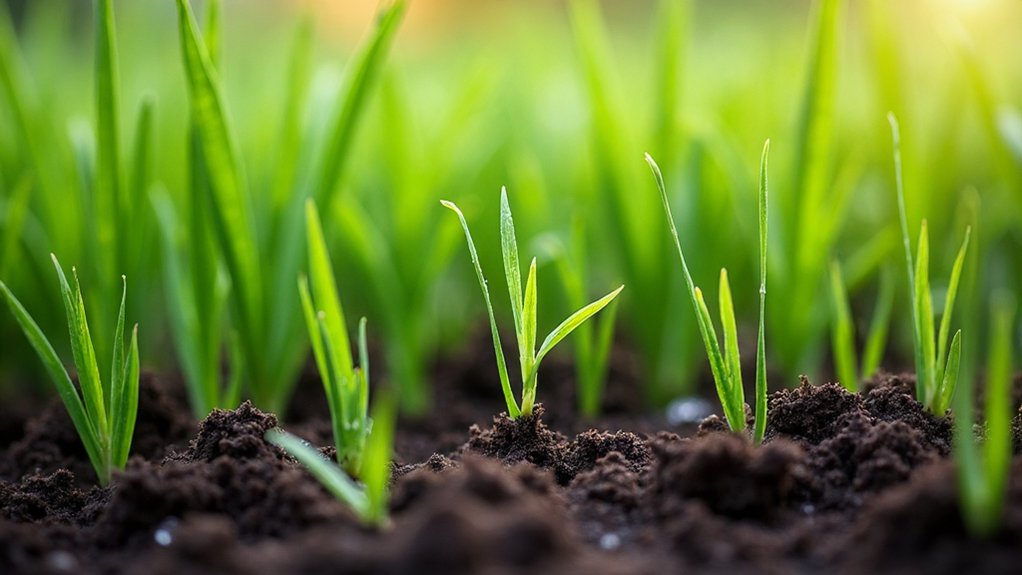
You probably don’t realize that your grass plants are fundamentally/inherently/intrinsically living on borrowed time, with most individual shoots surviving only 40-60 days before dying off naturally. This constant cellular turnover means your lawn is perpetually losing density, even when it appears healthy from the surface. Without regular overseeding to introduce fresh genetic material and fill emerging gaps, you’re watching a slow-motion ecological collapse unfold right beneath your feet, one blade at a time.
Key Takeaways
- Aging grass loses density and vigor over time, creating bare spots and weakening the lawn’s ability to compete with weeds.
- Fresh seed introduces improved, climate-adapted varieties with enhanced disease resistance and superior stress tolerance capabilities.
- New grass triggers regenerative cellular processes, replacing aging plant cells with younger, more efficient ones for better lawn health.
- Overseeding must align with seasonal growth cycles—fall for cool-season grasses, spring-summer for warm-season varieties.
- Direct seed-to-soil contact through mechanical slicing ensures proper germination and establishes strong, competitive root systems.
Understanding the Biology of Grass Growth and Density
Although grass plants possess natural mechanisms for spreading through underground rhizomes and above-ground tillers, these processes inevitably slow down as your lawn ages. Your existing turf gradually loses its density, creating thin areas and bare spots that compromise your lawn’s appearance and health. This natural decline occurs because older lawn grass becomes less vigorous and struggles to compete effectively with weeds and environmental stresses.
Overseeding directly addresses this biological reality by introducing new grass seed into your weakened turf. Fresh seedlings establish robust root systems and develop into healthy plants that fill gaps in your existing coverage. This lawn care practice doesn’t just restore density—it introduces improved grass varieties specifically adapted to your local climate and soil conditions, providing your aging lawn with renewed vigor and enhanced resilience.
How Overseeding Combats Lawn Deterioration at the Cellular Level
The cellular-level changes that occur during overseeding reveal why this practice produces such dramatic improvements in lawn health and appearance. When you introduce new seed to your existing lawn, you’re triggering regenerative processes that stimulate cellular activity throughout the grass plants. This fresh seed carries superior genetic traits that enhance disease resistance and environmental stress tolerance at the molecular level.
The germination process activates when soil temperatures reach ideal ranges, encouraging robust root development and denser growth patterns. Overseeding a lawn basically replaces aging, less vigorous cells with younger, more active ones that photosynthesize more efficiently. Your overseeding success depends on this cellular rejuvenation, which creates thicker turf density and fills bare patches through enhanced cellular division and root system expansion.
The Role of Seed-to-Soil Contact in Germination Success
Most successful overseeding projects depend on one critical factor that determines whether your grass seed transforms into thriving turf: direct contact between seed and soil. When seed germinates, it requires immediate access to moisture and nutrients from the ground. Seeds scattered on surface debris or thatch layers can’t establish the firm connection needed for root development.
Overseeding techniques that mechanically slice seeds into soil consistently outperform simple broadcasting methods. Light cultivation creates ideal conditions where nutrients to penetrate effectively, supporting rapid seedling growth. Seeds pressed directly against earth receive continuous moisture, preventing germination failure that plagues poorly contacted seeds.
Maintaining consistent soil moisture during germination maximizes this critical connection. Your healthy lawn depends on these perfectly positioned seeds establishing strong root systems through proper soil contact.
Why Timing Matters: Seasonal Growth Cycles and Grass Metabolism
When you synchronize overseeding with your grass’s natural growth cycles, you’ll dramatically improve germination rates and long-term turf health. Your lawn’s metabolism operates on distinct seasonal patterns that determine when seeds will thrive or struggle.
Cool-season grasses like fescue and ryegrass demand fall overseeding when soil temperatures trigger rapid germination. Their metabolic processes peak during cooler months, allowing seedlings to establish robust root systems before summer stress arrives.
Conversely, warm-season grasses including bermuda and zoysia require late spring to early summer timing. These varieties activate their seasonal growth during warmer periods, making this window ideal for successful establishment.
Proper timing aligns with active growth phases while minimizing weed competition. When you respect these natural cycles, you’re working with your grass’s biology rather than against it, ensuring maximum seed success.
Soil Preparation and Its Impact on Root Development
Before your grass seeds can develop into a thriving lawn, you’ll need to create the ideal foundation through strategic soil preparation. Aeration punches small holes throughout your yard, allowing air, water, and nutrients to penetrate deeply where developing roots need them most. You’ll also want to tackle dethatching, removing the excessive buildup that prevents seeds from making direct soil contact.
Compacted soils pose another challenge for root development. When you add a layer of quality topsoil or compost, you’re amending these problematic areas and providing essential nutrients that fuel early growth. This preparation work isn’t optional—it’s the scientific foundation that determines whether your overseeding efforts produce weak, struggling grass or a dense, healthy lawn with robust root systems.
The Competition Dynamic: New Grass vs. Weeds and Existing Turf
Once your soil preparation creates the ideal growing environment, your new grass seedlings face their first real test: competing for survival against established weeds and existing turf. Your seedlings must battle for sunlight, water, and nutrients against these established competitors.
However, overseeding gives you a strategic advantage. You’re introducing vigorous, improved grass varieties specifically designed to outcompete weeds and inferior existing turf. When you overseed bare or thinned areas, your new turfgrass encounters less competition, allowing easier establishment.
The ultimate goal isn’t just survival—it’s dominance. Healthy, dense turf created through successful overseeding will crowd out weeds and prevent future encroachment. Your proper preparation through dethatching and aerating enhances seed-to-soil contact, giving your new grass the competitive edge it needs to thrive.
Long-Term Benefits of Strategic Overseeding Programs
While individual overseeding sessions provide immediate improvements, implementing a strategic overseeding program delivers compounding benefits that transform your lawn’s long-term health and performance. You’ll create enhanced density and resilience that strengthens drought and disease resistance over successive seasons. By introducing new varieties like Tall Fescue for durability, Kentucky Bluegrass for recovery, and Perennial Ryegrass for quick establishment, you’re building genetic diversity that adapts to environmental changes.
Regular overseeding your lawn prevents costly renovations by continuously filling bare spots and maintaining uniform coverage. When combined with core aeration, you’ll improve soil health and nutrient uptake, creating vigorous root systems. This strategic approach transforms routine maintenance into long-term investment, ensuring your lawn withstands wear while developing superior resilience year after year.
Frequently Asked Questions
Does Overseeding Actually Work?
Yes, overseeding works when you follow proper overseeding preparation steps and timing considerations. You’ll see improved seed germination rates under ideal seeding conditions, delivering significant lawn health benefits like increased density and resilience.
What Happens if You Put Down Too Much Grass Seed When Overseeding?
High seed density reduces seed to soil contact, hindering seed germination. You’ll face intense seedling competition for nutrients and water, creating overseeding challenges like weak growth, disease susceptibility, and patchy results instead of improvement.
What Is the Purpose of Overseeding a Lawn?
When your lawn’s looking a bit under the weather, overseeding provides lawn health improvement through bare spot coverage, enhanced nutrient absorption, soil compaction reduction, and grass species diversification. You’re fundamentally, chiefly, principally giving your tired turf a fresh start.
Is It Okay to Overseed in October?
October’s actually an ideal seeding time for cool-season grasses. You’ll get excellent seed germination success with warm soil and favorable weather conditions. Proper soil preparation techniques maximize lawn rejuvenation benefits before winter dormancy sets in.
Conclusion
You’ve accessed nature’s secret weapon—overseeding isn’t just scattering hope, it’s orchestrating a symphony of renewal. Each seed you plant becomes a warrior in your lawn’s army, marching against time’s wear and weather’s wounds. You’re not merely maintaining grass; you’re conducting cellular resurrection, breathing life into tired turf. Your lawn’s destiny dances in your hands, and with strategic overseeding, you’ll watch winter’s weary whispers transform into spring’s triumphant chorus.