
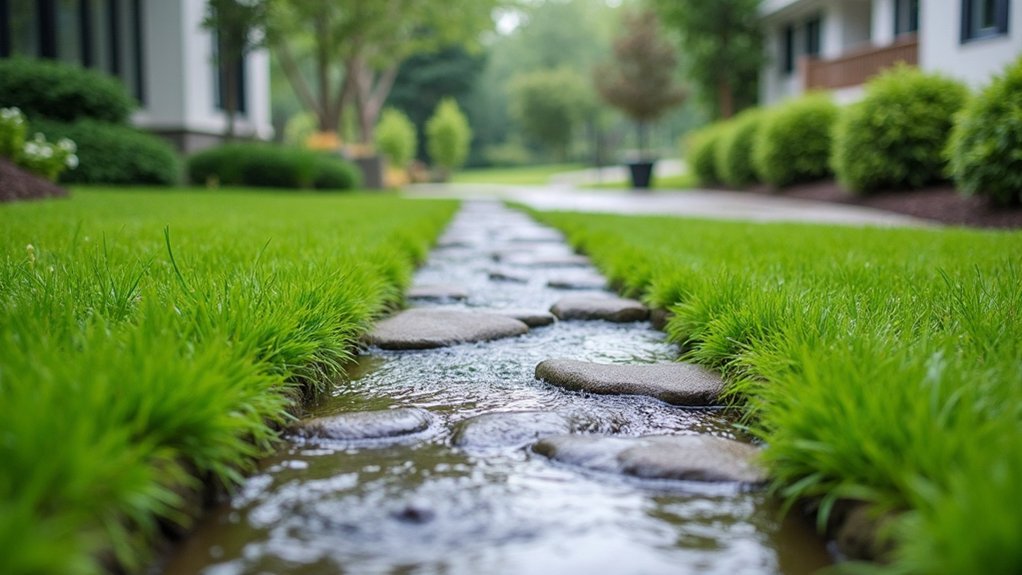
After Hurricane Harvey flooded thousands of Houston homes, many homeowners discovered their foundation problems weren’t just from the storm itself, but from years of poor drainage around their property. You’ve probably noticed water pooling in your yard after heavy rains, but you might not realize how this seemingly minor issue can lead to expensive foundation repairs, basement flooding, and structural damage. The solution lies in understanding how proper slope grading can transform your property’s water management system.
Key Takeaways
- Slope grading creates a 2-3% downward grade that directs water away from foundations and problem areas.
- Proper grading eliminates low spots where water naturally collects by redistributing soil to create consistent drainage patterns.
- Strategic soil placement forces water to flow toward designated drainage areas like storm drains or natural outlets.
- Grading reduces hydrostatic pressure against foundations by preventing moisture buildup that causes structural damage and flooding.
- Professional assessment identifies high and low points, then uses specialized equipment to establish optimal water flow directions.
Understanding the Dangers of Water Pooling in Your Yard
When water accumulates in your yard after rainfall or irrigation, it creates far more problems than just an unsightly puddle. Water pooling damages your lawn and plants by causing root rot, destroying healthy vegetation you’ve worked hard to cultivate. Standing water becomes a breeding ground for mosquitoes, turning your outdoor space into a pest-infested area that threatens your family’s health and comfort.
Poor drainage also leads to soil erosion around your property, undermining landscape stability and potentially causing expensive foundation damage. These muddy, hazardous areas diminish your yard’s aesthetic appeal while creating safety concerns. Without proper grading around your home, water damage becomes inevitable. Understanding these dangers highlights why effective drainage solutions are essential for protecting both your property’s value and your family’s well-being.
What Is Slope Grading and How Does It Work
Since water naturally flows downhill, slope grading harnesses this basic principle by reshaping your property’s terrain to channel water away from your home’s foundation. This yard grading technique involves creating a gentle slope that directs water away from your house at the proper grade—ideally 2-3 inches of drop per 10 feet, with 6 inches in the first 10 feet.
The process works by contouring the ground around your home’s perimeter, ensuring water flows toward drainage areas rather than pooling near your foundation. Proper slope grading will prevent structural damage by eliminating moisture buildup that can compromise your foundation’s integrity. Without adequate grading, water accumulates against your home, creating hydrostatic pressure and potential basement flooding. Professional assessment may be necessary to determine if your current grade effectively protects your property.
Identifying Signs Your Property Needs Better Drainage
Before investing in slope grading, you’ll want to recognize the warning signs that indicate your property has drainage issues. Watch for water pooling around your foundation after rain, as this signals inadequate water drainage. You’ll notice soggy soil where water collecting creates perfect conditions for excessive weed growth.
Poor water flow often causes foundation cracks from hydrostatic pressure buildup. When water tends to pool consistently in the same spots, it indicates your current grading isn’t directing water properly. Look for peeling exterior paint, mold, or mildew – these moisture problems stem from drainage problems.
Erosion patterns, sinkholes, or damaged landscaping reveal where water isn’t being directed away effectively. Recognizing these signs helps you determine when grading your yard becomes necessary for implementing proper drainage solutions.
Assessing Your Current Yard’s Water Flow Patterns
After recognizing these drainage warning signs, you’ll need to conduct a thorough assessment of how water moves across your property. Start by observing water flow during rainfall to identify high and low points where water pools or drains incorrectly. A poorly graded yard often shows clear patterns of problematic drainage.
Check areas around your home by placing a level on the ground to measure whether the slope flows away from your foundation. Note any spots where grading eliminates proper drainage, particularly where ground slopes toward your house instead of away from it.
You may need to add or remove soil to create proper drainage patterns. Focus on ensuring your yard slopes away from the foundation, preventing water infiltration that could cause structural damage.
Professional Grading Techniques for Effective Water Management
While DIY grading might seem straightforward, professional contractors bring specialized expertise that safeguards lasting water management solutions. They’ll analyze your property’s topography to identify areas where water naturally pools, then use precision leveling tools to establish the ideal 2-3% slope away from your foundation. Specialized equipment like skid steers and compact loaders efficiently move and compact soil to create proper water flow patterns.
Professional grading considers your specific soil conditions and drainage requirements. Contractors develop detailed site plans that direct water to designated areas such as French drains or dry wells, preventing future flooding issues. This all-encompassing approach secures your grading solution addresses both immediate standing water problems and long-term water management needs for your property.
DIY Methods to Improve Your Yard’s Slope and Drainage
Although professional grading delivers extensive results, you can handle many drainage issues yourself with the right approach and tools. Start by evaluating your yard’s slope using a level to identify problem areas where water pools. Create a minimum 2-3% grade to direct water away from your homes foundation by redistributing soil in low-lying spots.
Install French drains or surface drainage systems to capture excess water before it reaches your foundation. Guarantee gutters and downspouts effectively channel roof runoff away from your home. Improve your drainage system by amending clay soils with organic matter for better absorption. Strategic landscaping with rain gardens and swales can intercept surface runoff, prevent water accumulation, and drastically reduce the risk of foundation damage through proper water management.
Complementary Systems That Enhance Grading Effectiveness
Proper grading works best when you combine it with complementary drainage systems that address water management from multiple angles. French drains work alongside grading to channel water away from problem areas, while downspouts at least six feet from your foundation prevent pooling. New drainage installations like catch basins collect excess water where natural slopes can’t handle heavy rainfall.
A sump pump becomes essential in basements where grading guarantees surface water doesn’t overwhelm your home’s foundation. Well-graded yard surfaces direct water toward these systems work zones, creating efficient water flow patterns. Strategic placement of drainage tiles helps prevent erosion on steeper slopes where water moves rapidly. When combined properly, these complementary systems secure effective water management and desired drainage performance throughout your property.
Long-Term Maintenance for Optimal Water Drainage
Even the most expertly graded drainage system won’t maintain its effectiveness without consistent upkeep. Proper yard maintenance guarantees your investment in shaping the land continues preventing water accumulation. Grading is a fundamental foundation, but ongoing care determines long-term success.
Essential maintenance tasks include:
- Regular Gutter System Cleaning – Clear gutters and downspouts guarantee unobstructed water flow, allowing your slope toward drainage points to function properly.
- Grade Assessment – Drive a stake in the ground periodically to check if settling has affected your yard’s slope and improve grading when necessary.
- Landscaping Feature Care – Maintain berms, swales, and rain gardens to create the desired water management effectiveness.
- Surface Repair – Fix cracks and depressions promptly. Prevents water pooling that undermines your drainage system’s performance.
Consult landscaping professionals for all-encompassing maintenance strategies.
Frequently Asked Questions
How to Divert Water on a Sloped Yard?
You’ll control surface water runoff by installing French drain construction and implementing swale design strategies. Use landscape grading methods with permeable paving solutions while enhancing soil permeability to create effective stormwater management practices.
How to Absorb Standing Water in a Yard?
Coincidentally, you’ll need French drain construction and subsurface drainage pipes for proper absorption. Install rain garden design with swale creation techniques, add soil aeration methods, and redirect downspouts. Consider permeable pavement solutions for lasting results.
How to Improve Drainage on a Slope?
You’ll improve slope drainage through proper grading techniques, strategic downspout placement, and innovative drainage systems. Combine targeted soil amendments with careful vegetation selection for ideal slope stabilization, effective erosion control, and sustainable drainage solutions.
How Can the Amount of Water Play a Role in Slope Stability and Slope Failure?
While you might think water’s just surface runoff, you’re overlooking how water table levels and pore water pressures critically affect soil saturation effects, creating seepage forces that compromise slope geometry considerations and trigger erosion processes leading to catastrophic failure.
Conclusion
You’ve seen the theory proven true throughout your property assessment: water always follows the path of least resistance. When you create proper slope grading with that 2-3% grade away from your foundation, you’re simply giving water the easiest route to follow. You can’t fight gravity, but you can harness it. Your standing water problems disappear because you’ve worked with nature’s fundamental laws rather than against them.