
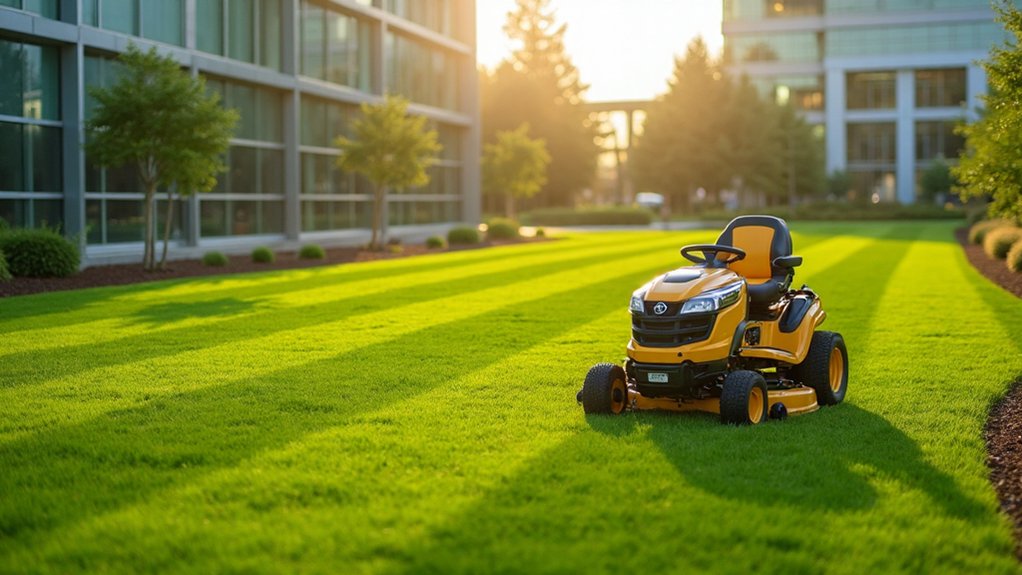
You’ve invested heavily in your commercial property’s interior, but what about the first impression visitors get before they even walk through your doors? Your lawn speaks volumes about your business standards and attention to detail. While it might seem straightforward, professional lawn mowing involves strategic timing, precise techniques, and specialized equipment that most property managers overlook. The difference between amateur maintenance and expert care can dramatically impact your bottom line in ways you haven’t considered.
Key Takeaways
- Maintain 2.5-3 inch mowing height and keep blades sharp for clean cuts that reduce weeds and promote healthy growth.
- Establish customized mowing schedules based on grass type, growing season patterns, weather conditions, and irrigation management practices.
- Alternate mowing directions between vertical, horizontal, and diagonal patterns to prevent soil compaction and ensure uniform grass development.
- Sharpen or replace mower blades every 20-25 hours of operation and schedule annual professional servicing for optimal equipment performance.
- Leave grass clippings as natural fertilizer and avoid mowing during dry conditions to protect soil health and turf quality.
Why Commercial Lawn Mowing Is Essential for Business Success
When potential customers approach your commercial property, the first impression they form often depends on your lawn’s condition. A well-maintained lawn creates a welcoming environment that enhances your business’s professional image and credibility. Your commercial property lawn directly impacts customer perceptions and employee morale, making it essential for success.
Regular commercial lawn mowing service guarantees your lawn remains healthy while preventing costly pest infestations and safety hazards. Professional commercial lawn care company expertise promotes healthy growth through proper cutting techniques and scheduling. Your lawn is an important investment that protects property value and demonstrates environmental responsibility.
Consistent commercial landscaping reflects your attention to detail and commitment to excellence. When you maintain a healthy lawn, you’re investing in your business’s reputation, customer attraction, and long-term profitability.
Establishing the Right Mowing Schedule for Commercial Properties
How often should you mow your commercial properties to maintain that pristine appearance customers expect? The answer depends on several critical factors that directly impact your lawn’s health and visual appeal.
A proper mowing schedule requires careful consideration of:
- Growing season patterns – Weekly mowing during peak growth periods guarantees an optimal appearance
- Type of grass – Different varieties have unique growth habits affecting mowing frequency
- Weather conditions – Adjust scheduling based on rainfall and temperature fluctuations
- Drought management – Avoid mowing during dry spells to prevent lawn damage
- Irrigation management – Coordinate watering with cutting schedules
Your professional lawn care company should establish customized timing that accounts for seasonal variations and proper mowing height adjustments. This strategic approach prevents stress while maintaining the polished look essential for commercial success.
Optimal Mowing Height and Cutting Techniques
Beyond establishing proper timing, the height at which you cut your commercial lawn directly determines its resilience and visual impact. Maintain a mowing height of 2.5 to 3 inches to reduce weed growth, prevent soil compaction, and encourage deeper root growth for better water retention. Always mow under dry conditions to protect soil health and achieve cleaner cuts. Leave grass clippings on your lawn—they’ll act as natural fertilizer and improve overall turf health. Keep your mower blades sharp for clean, even cuts that prevent damage and maintain professional appearance. Don’t stick rigidly to a predetermined mowing schedule; instead, assess your specific grass type and current lawn conditions to determine most suitable cutting frequency.
Equipment Maintenance and Blade Sharpening Best Practices
While sharp blades create the clean cuts essential for professional-looking lawns, dull equipment tears grass rather than cutting it, leaving your commercial property vulnerable to disease and brown, ragged edges that diminish curb appeal.
Effective equipment maintenance and blade sharpening best practices include:
- Inspect weekly – Check your mower blades for nicks, chips, or rounded edges that indicate it’s time to sharpen your mower
- Utilize sharp blades consistently – Replace or sharpen blades every 20-25 hours of operation to guarantee a clean cut
- Balance after sharpening – Properly balanced blades prevent damage to your mower’s engine and spindle assembly
- Store properly – Clean equipment thoroughly and store in dry conditions to prevent rust
- Professional servicing – Schedule annual tune-ups for inclusive equipment maintenance
Dull blades compromise proper mowing results, causing damage that affects your property’s professional appearance.
Directional Mowing Patterns to Prevent Soil Compaction
Sharp blades form just one part of achieving professional mowing results—your mowing patterns play an equally important role in maintaining healthy commercial lawns. Alternating directional mowing from vertical to horizontal to diagonal prevents soil compaction while promoting upright grass growth. This rotation distributes wear and tear evenly across the property, creating a uniform appearance that enhances visual appeal.
You’ll minimize ruts by varying your mowing direction each session, ensuring consistent nutrient distribution as clippings spread more evenly. This systematic approach prevents the lawn from developing permanent traffic patterns that compromise lawn health. When you change directions regularly, grass blades grow straighter and stronger, resulting in the professional-grade appearance commercial properties require for maintaining their pristine outdoor spaces.
Managing Grass Clippings for Lawn Health
When grass clippings accumulate excessively on your commercial property, they’ll smother the lawn underneath and create unsightly brown patches that detract from your business’s professional image.
Proper clipping management during mowing the lawn promotes healthy grass growth and maintains the health of your lawn. Here’s how to handle clippings effectively:
- Leave thin layers of clippings on the lawn to naturally decompose and fertilize the soil underneath
- Remove excessive clippings that form thick mats over grass blades
- Maintain a regular mowing schedule to prevent overwhelming accumulation
- Guarantee clippings are small enough to settle between grass blades
- Distribute clippings evenly across the surface
Regular mowing is essential because consistent cutting produces smaller clippings that decompose quickly. This approach will lead to healthier turf while reducing waste disposal costs for your commercial property.
Seasonal Mowing Considerations and Adaptations
As seasons change throughout the year, your commercial lawn’s growth patterns shift dramatically, requiring strategic adjustments to your mowing approach. You’ll need to modify both mowing height and mowing frequency based on your grass type and current conditions.
For cool-season grasses like Kentucky bluegrass, maintain 3-4 inches during summer heat stress, then lower to 2-3 inches in spring and fall. Warm-season grasses such as Bermuda require 1-2 inch heights during active growing seasons from late spring through early fall.
Avoid mowing during drought conditions or dormant periods to prevent lawn damage. Adjust your schedule according to weather conditions—increase frequency during rapid growth periods and reduce it when growth slows. This seasonal adaptation strategy guarantees robust lawn health year-round.
Selecting Professional Commercial Lawn Mowing Services
Managing these complex seasonal requirements yourself can quickly become overwhelming, especially when you’re running a business that demands your full attention. That’s where professional commercial lawn care services help transform your property maintenance approach.
When selecting the right landscaping partner for your commercial grass care needs, consider these essential factors:
- Equipment quality – Professional-grade mowers guarantee uniform cuts and healthy lawn results
- Maintenance schedule reliability – Consistent timing keeps your property looking pristine year-round
- Comprehensive service offerings – Look for fertilization, weed control, and pest management capabilities
- Commercial experience – Crews familiar with business property requirements deliver superior results
- Cost-effectiveness – Avoid equipment purchases and repairs while securing professional lawn appearance
The right commercial lawn service transforms your property’s curb appeal while freeing your time for core business activities.
Frequently Asked Questions
What Is the 1 3 Rule for Mowing?
You shouldn’t cut more than one-third of your grass blade height per mowing. This rule maintains consistent cutting height, requires regular mowing schedule adjustments, and supports proper lawn health assessment for ideal growth.
How Much to Charge per Acre for Commercial Mowing?
You’ll charge $75-125 per acre for commercial mowing, adjusting seasonal pricing based on grass growth monitoring, equipment maintenance costs, and lawn mowing frequency. Factor in crew scheduling logistics and commercial property assessment for accurate estimates.
How to Quote Commercial Lawn Mowing?
Picture pristine grass expanses awaiting your expertise. You’ll assess property size, calculate labor costs, research local rates, outline mowing schedule recommendations, include seasonal service adjustments, and develop weather contingency plans while negotiating fair client contract terms.
Which Is a Mowing Best Management Practice?
You’ll achieve ideal results by maintaining proper mowing height, leaving grass clippings as natural fertilizer, and maintaining mower blades regularly. Monitor soil moisture before mowing and adjust mowing patterns to prevent lawn damage while managing grass growth effectively.
Conclusion
You’ll transform your commercial property into a show-stopping masterpiece that’ll make competitors weep with envy! By implementing these game-changing mowing practices, you’re not just cutting grass—you’re crafting a green carpet so magnificent that clients will literally gasp in amazement. Your perfectly manicured lawn will become the talk of the entire business district, attracting customers like moths to a flame while skyrocketing your property’s value through the stratosphere!