
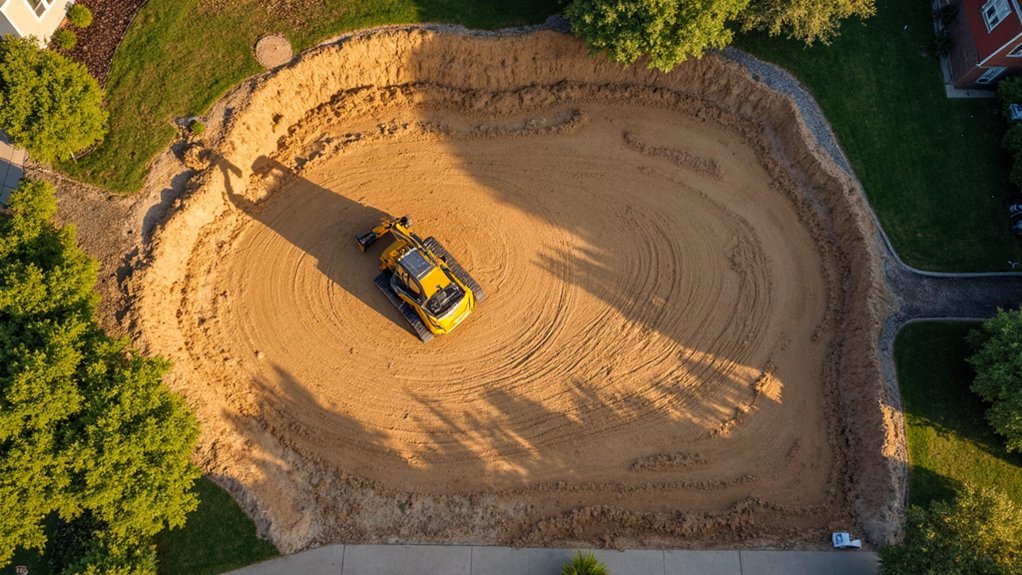
Like the old saying “timing is everything,” knowing when to schedule slope grading can mean the difference between a dry basement and a flooded foundation. You’ve probably noticed water pooling near your home after heavy rains, or maybe you’re planning new construction and wondering when grading fits into the timeline. The truth is, there’s both an art and science to timing these projects correctly, and making the wrong choice could cost you thousands in repairs down the road.
Key Takeaways
- Schedule rough grading after foundation backfilling but before installing exterior features and underground utilities.
- Plan grading work during late spring or early fall when soil conditions are optimal and weather is moderate.
- Address immediate grading needs when water pools near foundations, causing cracks, moisture issues, or continuous muddy areas.
- Avoid winter grading due to frozen ground and summer work that risks erosion from heavy rainfall.
- Establish proper drainage and vegetation before winter to ensure effective water flow away from your home.
Signs Your Property Needs Immediate Slope Grading
While proper slope grading might seem like a minor detail, ignoring the warning signs can lead to costly foundation repairs and water damage. You’ll know your property needs immediate attention when water pools near your foundation after rainfall. This standing water indicates your ground lacks adequate slope to direct moisture away from your home.
Look for foundation cracks or settling damage – these often signal improper drainage from insufficient grading around your house. If you’ve noticed mold or moisture in your basement, poor site grading could be the culprit. Visible erosion and soil washout across your property are clear indicators requiring professional intervention.
Continuously muddy or soggy lawn areas suggest your ground doesn’t maintain the recommended 5% slope away from your foundation.
Optimal Timing for Rough Grading During New Construction
When planning new construction, you’ll achieve the best results by scheduling rough grading immediately after foundation backfilling but before installing any exterior features. This timing allows underground utilities to be installed first while ensuring your house sits at the proper elevation. Land grading at this stage directs water away from your foundation and establishes correct slopes before patios, sidewalks, and landscaping take shape.
Delaying this critical step creates problems. If you install exterior elements first, they’ll likely end up at wrong elevations, requiring costly adjustments later. Poor timing also disrupts other trades’ work schedules. Home construction flows smoothly when rough grading happens in sequence. Even for smaller projects like studio cabins, coordinate land grading with your construction timeline to avoid repositioning completed work.
Seasonal Considerations for Residential Slope Grading Projects
Beyond coordinating with your construction timeline, choosing the right season for slope grading can make or break your project’s success. You’ll want to schedule your work during late spring or early fall when moderate weather creates ideal conditions for getting the ground right. These seasons offer favorable soil moisture levels that make it easier to create a gentle slope that directs water flow away from your home’s foundation.
Avoid winter grading when frozen ground prevents proper compaction and soil manipulation. Summer’s heavy rainfall increases erosion risks for freshly graded areas, while rapid soil drying can compromise your ability to slope away water effectively. Fall scheduling gives you the advantage of allowing newly graded areas to establish vegetation before winter, ensuring water continues flowing away from the foundation.
Coordinating Grading With Foundation and Utility Installation
Since grading affects every exterior element of your home construction, you’ll need to coordinate this work carefully within your project’s sequence. The right timing prevents costly mistakes and guarantees proper elevations around your house.
You should schedule grading immediately after foundation backfilling but before utility installation. This timing protects utility lines from damage while establishing correct elevations for exterior features.
Critical coordination steps include:
- Complete foundation backfilling first – This provides the base reference point for all grading work
- Grade before utilities go in – Prevents disruption to electrical, plumbing, and gas lines during excavation
- Establish elevations for exterior elements – Window wells, patios, and sidewalks need to be raised to proper heights based on final grade
Delaying grading disrupts other trades and creates elevation problems that are expensive to fix later.
When to Address Window Well Grading Issues
Window well grading problems demand immediate attention once you notice settlement or drainage issues around your foundation. Poor drainage can cause water to pool against basement windows, creating serious structural risks. Use a string level to check that window wells maintain 2-3 feet of clearance from surrounding grade elevation.
When existing wells can’t be raised safely, you’ll need taller replacements to prevent soil infiltration. Schedule this work before addressing other grading projects, as window wells must integrate properly with your overall drainage plan. Signs requiring immediate action include water accumulation, cracked well walls, or soil pressing within inches of your foundation windows. Address these drainage issues Around Your Home promptly to prevent costly water damage and foundation problems.
Scheduling Finish Grading Around Hardscaping Installation
Timing your finish grading work properly means waiting until after you’ve completed all hardscaping installations like patios, walkways, and driveways. This strategic sequencing prevents disrupting your completed outdoor structures and facilitates seamless integration between all elements.
Coordinating grading around hardscaping offers several critical benefits:
- Accurate elevation matching – You’ll achieve proper shifts between different surfaces without gaps or uneven connections
- Optimal water runoff direction – Grading can be precisely adjusted to direct moisture away from areas near the foundation
- Prevention of rework costs – You’ll avoid expensive corrections from improper grading that doesn’t align with hardscaping elevations
Following this sequence creates a cohesive string of exterior improvements that work together effectively, protecting your home’s foundation while maintaining proper drainage throughout your landscape.
Post-Settlement Grading for Established Homes
Even well-established homes with years of stable grading can develop drainage problems that require corrective action. Your finished grade can shift over time due to soil compaction, erosion, or landscaping changes, compromising water management around your property.
You should maintain a minimum 5% slope—6 inches of drop per 10 feet—directing runoff water away from your house. Regular inspections after heavy rains or landscape modifications help identify problems early.
The grading process for established homes often involves adding or removing soil and reshaping drainage features like swales. This work focuses on preventing water from pooling near your foundation, which can cause costly structural damage.
For major regrading projects, hire a professional contractor to guarantee proper execution and long-term effectiveness of your drainage system.
Emergency Grading Situations That Require Immediate Action
Certain grading emergencies demand swift intervention to protect your home from immediate water damage. When water pools against your foundation or flows toward your structure, you can’t wait for scheduled grading projects to address these critical issues.
Emergency Situations Requiring Immediate Action:
- Standing water near foundation walls – You’ll need rough grading to create proper drainage channels that direct water away from your home within 24-48 hours of heavy rainfall.
- Severe erosion creating uneven ground – When slopes become unstable and threaten your property’s structural integrity, emergency grading becomes essential for reducing the risk of foundation damage.
- Blocked drainage causing water backup – Immediate intervention prevents costly water infiltration that could compromise your home’s stability and lead to expensive repairs.
Planning Grading Projects Around Weather Patterns
While emergency situations demand immediate attention regardless of conditions, most grading projects benefit from strategic timing that aligns with favorable weather patterns. You’ll achieve ideal results by scheduling your grading work during dry seasons when soil moisture levels remain low. This timing prevents soil compaction issues that commonly occur during wet weather, ensuring the process of reshaping your landscape proceeds smoothly.
Spring and fall offer perfect windows for grading, providing moderate precipitation needed around your property for proper soil compaction. However, summer projects require careful moisture management to prevent erosion, especially in areas around foundations where water should be directed toward appropriate drainage points and away from the house. Always monitor local weather forecasts before beginning work to avoid disruptions from unexpected rainfall.
Long-Term Maintenance Schedule for Property Drainage
After completing your initial grading project, you’ll need to establish a systematic maintenance schedule that protects your investment and prevents costly drainage problems from developing over time. When done right, this proactive approach saves money and maintains proper water flow around your foundation.
Essential maintenance tasks include:
- Annual inspections – Check gutters, downspouts, and drainage paths for debris buildup that could redirect water toward your home
- Seasonal grading adjustments – Add screened topsoil or fill dirt to low spots and maintain the 5% slope extending at least six feet away from your foundation
- Professional assessments – Schedule landscaping projects every 3-5 years to evaluate drainage effectiveness and plan necessary improvements
Document all changes to track long-term trends and identify areas requiring attention before problems escalate.
Frequently Asked Questions
When Should You Regrade Your Yard?
You should regrade your yard every 5-10 years for seasonal yard maintenance and soil erosion prevention. Schedule professional landscape grading during dry seasons when you notice standing water, requiring proper drainage design over DIY regrading techniques.
What Is a Reasonable Grade for a Slope in a Yard?
Your yard’s ideal slope angle depends on critical factors—proper drainage system needs require 3-25% grades, while sloped landscape design for erosion prevention techniques demands careful grading considerations for safety beyond simple aesthetics.
How Much Does It Cost to Grade a Slope?
You’ll pay $500-$5,000 for slope grading depending on project size and complexity. Slope grading cost factors include equipment needs, labor requirements, and project timelines, while pricing structures vary between DIY and professional services.
How Much Does It Cost to Grade Land for a House?
You’ll pay $1,000-$10,000 for house land grading, including landscape excavation costs, topographic survey expenses, and slope stabilization techniques. Excavation equipment rentals reduce costs versus grading contractor hourly rates of $50.
Conclusion
You’ll protect your investment, prevent costly damage, and preserve your property’s value by scheduling slope grading at the right time. Don’t wait for water pooling, don’t ignore foundation settling, and don’t postpone necessary drainage work. Whether you’re building new, maintaining existing grades, or facing emergency situations, you’ll save money and avoid headaches by acting promptly. Time your grading projects strategically, coordinate with other construction phases, and maintain proper drainage year-round for lasting results.