
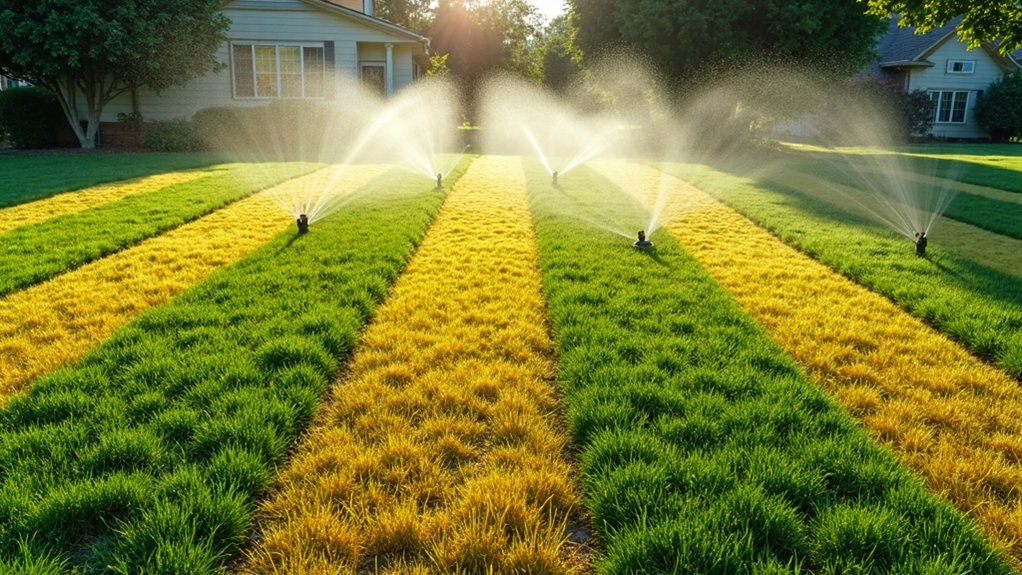
Picture a painter’s canvas where the brush runs dry in patches, leaving streaks of bare white amid vibrant colors—that’s exactly what happens when your irrigation system develops uneven water distribution. You’ll notice brown spots scattered across your once-lush lawn while other areas turn soggy from overwatering. These frustrating patterns don’t just appear overnight, and they’re costing you more than you realize. Understanding what’s causing this imbalance is your first step toward reclaiming that perfectly green landscape you’re after.
Key Takeaways
- Inspect and clean clogged sprinkler heads by removing debris from nozzles and replacing damaged components.
- Check water pressure levels and ensure the main water supply valve is fully open.
- Detect system leaks by looking for soggy soil, water pooling, and listening for hissing sounds.
- Adjust sprinkler head alignment, spacing, and rotation settings to ensure proper coverage patterns.
- Test system controller settings and examine each zone’s pressure levels for consistent operation.
Common Causes of Uneven Water Coverage
While your irrigation system may appear to function normally, uneven water coverage often stems from several identifiable issues that you can diagnose and fix yourself. Damaged sprinkler heads create weak spray patterns that don’t reach their intended zones. Misaligned sprinkler heads direct water away from designated areas, leaving dry patches while oversaturating others. Clogged sprinkler heads restrict water flow, causing uneven watering across your landscape. Low water pressure greatly impacts coverage consistency—you’ll notice certain areas receive inadequate irrigation. Check if valves are partially closed, as this reduces system pressure. Mineral deposits accumulate inside sprinkler components over time, blocking proper water distribution. Poor water pressure can result from multiple simultaneous zones operating or undersized pipes feeding your system.
Inspecting and Cleaning Clogged Sprinkler Heads
Since clogged sprinkler heads rank among the most frequent culprits behind poor irrigation performance, you’ll want to inspect them systematically across your entire system. Check each head for visible blockages and signs of wear that could affect water flow. Remove debris from nozzles using a thin wire or specialized cleaning tool.
Regularly inspect heads during operation to identify reduced water pressure or irregular spray patterns. You’ll notice clogged sprinkler heads often produce weak streams or completely blocked output, contributing to uneven water distribution. Clear any debris from filters and screens inside the head assembly. Replace damaged components that can’t be cleaned effectively.
Consistent system maintenance prevents most blockages and guarantees ideal sprinkler performance throughout your irrigation network.
Identifying and Fixing Water Pressure Problems
Water pressure issues affect nearly every irrigation system at some point, causing uneven coverage and poor plant health across your landscape. Low pressure can lead to weak spray patterns, while excessive pressure damages components. Start by checking your main water supply valve is fully open. Install a pressure regulator if readings exceed manufacturer specifications for your mechanical system.
Next, check for leaks along pipes and connections, as faulty valves can waste water and reduce overall pressure. Examine each zone systematically while your system operates. Look for broken or damaged sprinkler heads that create pressure drops. Replace worn components immediately.
If problems persist after these steps, contact professional help. Complex pressure issues often require specialized equipment and expertise beyond typical homeowner capabilities.
Detecting and Repairing System Leaks
Although pressure problems grab attention quickly, hidden leaks often cause more extensive damage to your irrigation system over time. You’ll need to perform a pressure test and conduct thorough visual inspection to identify problematic areas. Start by examining all connections, gaskets, and seals for signs of wear or damage.
Effective leak detection requires multiple approaches:
- Listen carefully – Use your ear or a listening device to detect the subtle hissing sounds of water escaping from buried pipes
- Watch for telltale signs – Look for unusually green patches, soggy soil, or water pooling where it shouldn’t be
- Apply detection dyes – Add colored dye to help trace water flow and pinpoint exact leak locations
Implement preventative maintenance through routine inspections and timely repairs to minimize future leaks and maintain system efficiency.
Adjusting Sprinkler Head Alignment and Spacing
Once you’ve addressed leaks in your irrigation system, proper sprinkler head alignment becomes your next priority for achieving uniform water coverage. Regularly inspect your sprinkler heads’ positioning to prevent uneven water distribution that creates dry spots or oversaturated areas.
Maintain ideal spacing between sprinkler heads, typically 30-50 feet apart depending on your system type. Fine-tune each head’s arc and rotation settings to customize water patterns for specific lawn areas. Don’t overlook replacement of damaged or worn heads, as they compromise consistent water distribution.
Check manufacturer guidelines for your specific sprinkler model’s optimal configuration requirements. When you’re unsure about proper alignment or spacing adjustments, consult a professional irrigation specialist who can guarantee your system delivers maximum efficiency and coverage.
Replacing Damaged or Worn Components
When sprinkler heads crack, nozzles clog, or valves begin leaking, you’ll need to replace these components to restore your system’s effectiveness. Damaged parts create uneven water distribution patterns that waste water and leave dry spots throughout your lawn.
Start by identifying which components need attention. Inspect sprinkler heads for cracks or worn spray patterns, check nozzles for clogs or irregular flow, and examine valves for leaks or pressure inconsistencies. Replace any damaged parts immediately to prevent further deterioration.
Consider upgrading to higher-quality components that’ll last longer and perform better:
- Premium sprinkler heads with adjustable arc settings and reinforced housings
- Self-cleaning nozzles that resist mineral buildup and maintain consistent flow rates
- Heavy-duty valves with corrosion-resistant materials and reliable sealing mechanisms
Regular replacement of worn components guarantees optimal water distribution and extends your irrigation system’s lifespan.
Upgrading to Smart Irrigation Controllers
While replacing damaged components fixes immediate problems, upgrading to smart irrigation controllers transforms your entire watering system into an intelligent, automated solution. These advanced controllers use real-time weather data and soil sensors to reduce water usage by up to 30%, delivering substantial long-term savings on your water bills.
You’ll gain remote access and monitoring capabilities, managing your system from anywhere through smartphone apps. Smart home integration enables seamless automation with your existing devices. The programmable schedules and customizable zones certify precise water distribution across different landscape areas, eliminating uneven watering patterns that plague traditional systems.
Beyond addressing current issues, you’re investing in environmental sustainability while creating a maintenance-free irrigation solution that adapts to changing conditions automatically.
Installing Soil Moisture Sensors for Precision Watering
Although smart controllers provide excellent automation, installing soil moisture sensors takes precision watering to the next level by delivering real-time data directly from your lawn’s root zone. These sensors monitor soil moisture levels continuously, enabling your irrigation systems to respond to your landscape’s actual water needs rather than operating on predetermined schedules.
Smart irrigation integration prevents water wastage by eliminating guesswork. Your irrigation controller receives precise readings, ensuring areas get only the water they need. This targeted approach promotes water conservation while preventing both drought stress and overwatering damage.
- Sensors detecting dry patches automatically triggering zone-specific watering cycles
- Moisture readings preventing sprinklers from activating during recent rainfall
- Real-time data showing which lawn sections water evenly versus problematic areas requiring adjustment
Professional System Evaluation and Maintenance
Professional irrigation technicians can spot underlying issues that most homeowners miss during routine inspections. They’ll examine your system controller settings, check the power source connections, and test each zone’s pressure levels. Regular maintenance by experts prevents costly repairs and guarantees your system delivers consistent water distribution throughout your landscape.
Consider consulting a professional annually, especially before peak watering seasons. They’ll calibrate sprinkler heads, replace worn components, and verify proper coverage patterns. Maintenance is essential for identifying problems like clogged nozzles, damaged pipes, or faulty valves that cause uneven watering.
You can’t always detect subtle pressure variations or controller malfunctions yourself. Professional evaluation certifies your efficient sprinkler system operates at peak performance, helping you ensure even coverage while reducing water waste and protecting your investment.
Frequently Asked Questions
What Is the Largest Cause of Sprinkler System Non-Uniformity?
Misaligned or clogged sprinkler heads cause the largest non-uniformity issues you’ll face. Blockages create pressure imbalance and flow rate variations, while wear and tear affects coverage patterns more than head spacing issues or improper nozzle selection.
Why Won’t My Sprinklers Pop up in One Zone?
Are your sprinklers stuck underground? You’re likely dealing with low water pressure, zone valve issues, or clogged filters. Check for broken pipes, control system errors, or soil compaction preventing proper pop-up action in that zone.
How to Adjust Sprinkler Head to Water Evenly?
Clean sprinkler nozzles and check for obstructions first. Level sprinkler heads, then adjust spray patterns by rotating heads. Guarantee proper pressure and reduce it if needed to prevent overspray and optimize water coverage.
What Are the Most Common Mistakes Made in Irrigation System Installation?
You’ll commonly encounter improper underground piping, inadequate water pressure, incorrect head spacing, poor sprinkler selection, insufficient zone capacity, unbalanced system design, sloping terrain challenges, and inefficient pump selection during installation.
Conclusion
You’ve traced the clues—cleaned those stubborn heads, balanced the pressure, sealed every leak. But as you stand in your yard at dawn, watching droplets catch the first rays of sunlight, you’ll notice something’s changed. The brown patches are disappearing. The water flows exactly where it should. Your landscape’s transformation has begun, and you’re the detective who solved the mystery. Now you’ll reap the rewards of your persistence.