
You’ve probably invested thousands in your patio or walkway, but here’s a sobering reality: poorly drained hardscapes can lose up to 40% of their structural integrity within just five years. Water doesn’t discriminate—it’ll find every weakness in your installation, from microscopic cracks to improper grading. While you can’t control the weather, you can absolutely control how water moves around and through your outdoor spaces. The question isn’t whether water damage will occur, but how prepared you’ll be when it does.
Key Takeaways
- Poor drainage causes water pooling that leads to cracking, shifting, and expensive repairs from freeze-thaw cycles.
- French drains intercept groundwater before it reaches foundations, preventing structural undermining in clay soil conditions.
- Proper grading with 1-2% slope directs surface water away from hardscaped areas and home foundations.
- Permeable paving allows water flow through surfaces but requires regular maintenance to prevent pore clogging.
- Strategic drainage planning during construction preserves both functionality and appearance of hardscape investments long-term.
Why Proper Drainage Is Critical for Hardscape Longevity
When water doesn’t have a proper escape route from your patio or walkway, it becomes a destructive force that can compromise your entire hardscape investment. Poor drainage allows water to pool around your structures, creating pressure that causes cracking, shifting, and settling. This standing water also erodes the soil beneath your hardscape, undermining its foundation and stability.
Effective drainage solutions prevent these costly problems by directing runoff away from your surfaces. When water can flow freely through proper drains and grading, your patio stays dry and structurally sound. Without adequate drainage, you’ll face expensive repairs as freeze-thaw cycles worsen existing damage. Protecting your hardscape investment starts with ensuring water moves away efficiently, preserving both functionality and appearance for years.
Common Water Damage Problems in Patios and Walkways
Understanding these drainage principles helps you recognize the warning signs before they become major issues. Poor drainage creates multiple problems that’ll damage your hardscape investment. You’ll notice water runoff carving channels through your landscape, causing soil erosion that undermines patio foundations and walkway stability. Without proper drainage, you’ll see water pooling near structures, creating slippery surfaces and promoting algae growth that deteriorates materials.
Your drainage system must effectively prevent water from pooling around your home’s foundation, where accumulation leads to cracks, flooding, and costly foundation damage. Standing water also suffocates plant roots, causing root rot in surrounding landscaping. Additionally, debris clogs drainage pipes when you’re not preventing water from pooling properly, creating a cycle of infrastructure problems that compound over time.
French Drain Systems for Subsurface Water Management
Although surface drainage solutions handle immediate water runoff, French drain systems tackle the more complex challenge of subsurface water management that threatens your patio and walkway foundations. These ideal drainage solutions consist of sloped trenches filled with perforated pipes, gravel, and geotextile fabric that intercept groundwater before it reaches your outdoor hardscape elements.
French drains prove especially effective when you’re dealing with persistent drainage issues on clay soil or sloped properties. The system guarantees water flows are directed away from vulnerable areas, eliminating standing water that can undermine structural integrity. Proper installation requires careful attention to slope gradients and protective fabric placement. You’ll achieve exemplary water management by integrating these systems during hardscape construction, protecting your investment while maintaining soil stability around patios and walkways.
Grading and Sloping Solutions for Surface Water Control
Building off subsurface drainage techniques, grading and sloping solutions tackle surface water control through strategic manipulation of your property’s topography. Proper grading establishes a 1-2% slope that directs surface water away from your home and hardscaped areas, preventing pooling water that threatens foundation protection. Through careful site assessment, you’ll reshape ground surfaces to create consistent water flow patterns that guide stormwater management effectively.
In Morgan Hill’s clay soil conditions, strategic grading becomes even more critical since water tends to sit on impermeable surfaces. You can combine grading with complementary drainage solutions like swales and rain gardens for thorough stormwater management. Understanding water behavior helps you implement precise grading techniques that optimize drainage performance while safeguarding your property’s structural integrity and hardscape investments.
Permeable Paving Materials and Installation Best Practices
While grading redirects surface water away from hardscaped areas, permeable paving materials offer an innovative approach that allows water to flow directly through your patio or walkway surface. Options like permeable pavers, porous concrete, gravel, and decomposed granite eliminate runoff while creating a consistently puddle-free surface.
Proper installation requires a 12-18 inch base layer of open-graded crushed stone that holds water as it infiltrates the soil. You’ll need a percolation test to determine the appropriate base depth for your site conditions.
Regular vacuum sweeping once or twice yearly prevents pore clogging from sediment and debris. This environmentally conscious solution helps you meet municipal requirements limiting impervious surface area while maintaining excellent drainage performance.
Channel Drains and Trench Systems for High-Traffic Areas
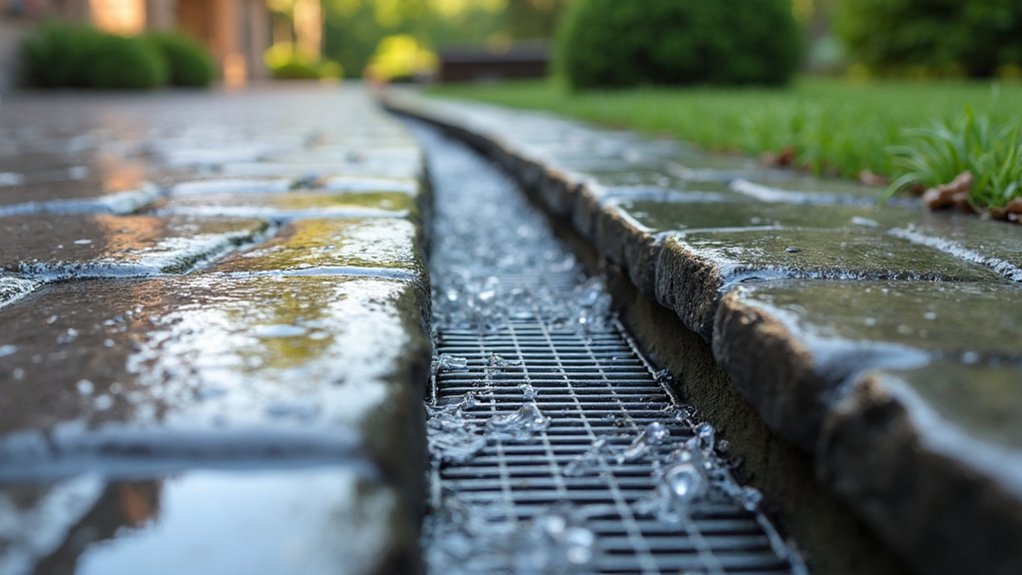
Channel drains and trench systems excel at managing heavy water flow in areas where permeable paving can’t handle the volume or foot traffic intensity. These solutions effectively collect and divert surface water runoff from high-traffic areas like patios, walkways, and driveways. When properly installed with appropriate grates, channel drains prevent puddling and slippery conditions while protecting your hardscaping from costly water damage.
Trench drain systems work differently, using sloped trenches filled with gravel and perforated pipes to intercept groundwater. This approach minimizes erosion and prevents foundation issues around your property. You’ll want to select drain materials and grate styles that complement your hardscape design for seamless integration. Remember, regular maintenance—particularly clearing debris from grates—ensures these systems continue functioning effectively for years.
Integrating Multiple Drainage Solutions for Maximum Protection
Single drainage solutions rarely provide complete protection against water damage, which is why combining multiple approaches creates the most robust defense for your patio and walkway areas. Strategic integration of various landscaping drainage solutions creates an extensive drain system that protects your foundation and retaining walls while preserving your outdoor space’s integrity.
Your multi-layered approach should include:
- French drains and catch basins to capture surface water before it reaches critical areas
- Permeable pavers that allow water to soak naturally into the ground
- Dry wells positioned to handle overflow during heavy rainfall events
- Graded slopes directing water away from structures and hardscaped surfaces
- Regular maintenance to identify early signs of water damage
This coordinated system will help prevent costly repairs while maintaining your hardscape investment’s long-term value.
Frequently Asked Questions
How Much Does Professional Hardscape Drainage Installation Typically Cost?
You’ll spend $3,000-$8,000 for professional drainage installation, including French drain installation, trench drain pricing, and grading costs. Concrete pad drainage and catch basin requirements increase expenses, but reduce long-term hardscape maintenance costs substantially.
What Drainage Permits or Inspections Are Required for Patio Projects?
Over 40% of DIY drainage projects fail inspections! You’ll need permits for subsurface drainage systems and catch basin placement. Municipal inspection processes vary, but most require drainage slope recommendations meeting local drainage code requirements before final approval.
How Often Should Existing Drainage Systems Be Cleaned and Maintained?
You should perform seasonal cleaning and routine inspections twice yearly. Check for clogged gutters, pooling water, and surface erosion. Maintain sump pumps, adjust grading, clean downspout extensions, and inspect splash blocks regularly.
Can I Retrofit Drainage Solutions to My Existing Patio or Walkway?
70% of patio water damage stems from inadequate slope issues. You can retrofit French drain alternatives, permeable pavers benefits, surface channel options, and catch basin placement around existing hardscapes using proper drainage materials and waterproof membrane advantages.
What Warranty Coverage Applies to Hardscape Drainage System Installations?
You’ll receive material warranties covering drainage components plus installation guarantees from contractors. Professional drainage expertise safeguards code compliance, while proper drainage project planning affects system performance. Maintenance requirements and drainage system lifespan determine long-term warranty coverage effectiveness.
Conclusion
You’ve built your hardscape fortress, but water remains the silent enemy at the gates. Don’t let pooling tears erode your concrete dreams or cracking scars mark your investment’s face. Your drainage system is the shield that guards against nature’s persistent assault. When you’ve implemented proper grading, French drains, and permeable solutions, you’re not just moving water—you’re directing destiny. Protect your hardscape kingdom; let every drop flow toward victory, not defeat.