
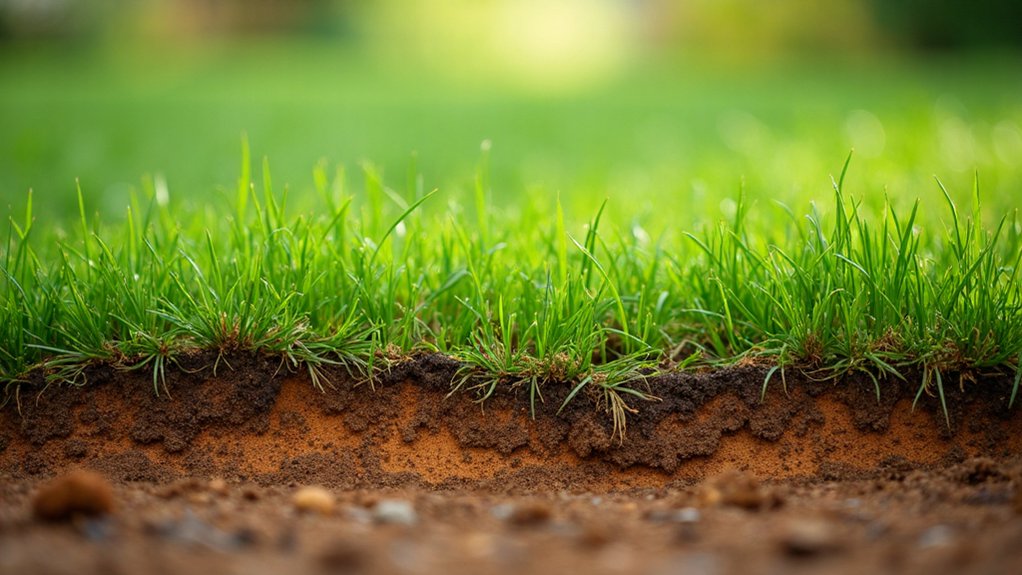
You’ve probably watched your neighbor scalp their lawn to a quarter-inch height, thinking they’re saving time between cuts. What they don’t realize is they’re actually weakening their grass’s root system and inviting a host of problems that’ll plague their yard all season long. If you’re making similar mistakes with your mowing routine, you’re unknowingly setting yourself up for brown patches, weed invasions, and costly lawn repairs.
Key Takeaways
- Cutting grass too short (scalping) weakens the lawn and makes it vulnerable to weeds, heat, and drought stress.
- Using dull mower blades tears grass instead of cutting cleanly, making it susceptible to disease and slow recovery.
- Mowing wet grass creates uneven cuts, clogs equipment, and spreads fungal diseases across the lawn.
- Following the same mowing pattern repeatedly causes soil compaction, rutting, and uneven grass blade growth.
- Improper mowing frequency either stresses grass through over-cutting or causes lower blades to thin from shading.
Cutting Your Grass Too Short
One of the most damaging mistakes you can make is cutting your grass too short, a practice known as scalping. When you remove more than one-third of your grass blade’s height during mowing, you’ll put excessive stress on your lawn and inhibit proper root development. This weakens your grass, making it vulnerable to weeds, heat, and drought.
Set your mower to maintain ideal height: 2.5-3.5 inches for cool-season grass and 1-2 inches for warm-season varieties. During extreme heat or drought, raise the height even more to help your lawn tolerate environmental stresses. The extra blade length protects soil from direct sunlight and allows for better photosynthesis. Leave clippings on your lawn when possible—they’ll decompose and provide natural nutrients for healthier growth.
Using Dull Mower Blades
Beyond cutting height, the condition of your mower blades greatly impacts your lawn’s health and appearance. Dull mower blades tear and shred grass instead of making clean cuts, creating frayed grass that turns brown at the tips. This damaged grass needs more time to recover and becomes susceptible to disease, undermining the health of your lawn.
When you mow your lawn with a sharp mower, you’ll notice cleaner cuts that cause the grass to heal quickly and maintain its vibrant appearance. Regular blade sharpening, typically 3-4 times per season, will benefit your lawn immensely. Sharp blades also reduce engine strain during lawn mowing, improving your mower’s efficiency. This simple maintenance step is essential for achieving the lush green lawn you want.
Mowing Wet Grass
While it might seem convenient to mow after a rain shower or early morning dew, cutting wet grass creates numerous problems that can damage both your lawn and equipment. When grass is wet, it clumps together and clogs your mower, potentially causing expensive damage. These wet clumps also create an uneven cut that leaves your lawn looking patchy and unprofessional.
Mowing wet grass increases your risk of slipping, especially on slopes. The wet conditions also spread fungal diseases across your lawn as you cut. Even if you sharpen your mower blade regularly and set the ideal height, you won’t achieve clean cuts when mowing wet grass blades.
Wait until your lawn dries completely before you mow. This guarantees your grass blades get cut cleanly at the proper mowing height.
Maintaining the Same Mowing Pattern
Many homeowners fall into the habit of mowing their lawn the same way every time, creating straight lines in the exact same direction week after week. This common mistake causes grass blades to lean and develop an uneven, bent appearance. When you maintain the same pattern repeatedly, you’re not providing proper care for your lawn’s overall health.
Changing your mowing direction every time prevents soil compaction and rut formation that damages any type of grass, including grasses like Kentucky bluegrass. Varying your pattern encourages upright growth and strengthens the root system. Whether you’re dealing with grass clippings or ensuring you don’t cut grass too short, alternating directions with a sharp mower blade promotes a healthy lawn with uniform appearance and better resilience.
Ignoring Proper Mowing Frequency
Another critical error that undermines lawn health is ignoring proper mowing frequency. When you mow your grass too infrequently, it grows excessively tall, causing lower blades to thin and become shaded. Conversely, mowing too often will stress the grass, weakening root development and increasing vulnerability to disease and drought.
Your mowing frequency should align with your specific grass type and grass growth rate. Most lawns require cutting weekly to monthly, depending on seasonal conditions. You’ll need to make seasonal mowing adjustments since growth rates fluctuate throughout the year.
Maintaining consistent, appropriate timing guarantees you’re cutting at the ideal mowing height for your variety. This balanced approach promotes healthy root systems, enhances lawn appearance, and maintains overall lawn health without causing unnecessary stress to your grass.
Frequently Asked Questions
What Is the Most Common Mistake Seen When Treating Lawns?
Like a gardener’s Achilles’ heel, you’re probably cutting your grass too short. This scalping creates incorrect mowing heights, triggering excessive weed growth, compacted soil conditions, and poor drainage management that’ll devastate your lawn’s health.
What Is the 1/3 Rule for Lawns?
The 1/3 rule means you shouldn’t cut more than one-third of your grass blade length per mowing. Make cutting height adjustments gradually with sharp mower blade maintenance to avoid stressing your lawn and weakening roots.
Why Does My Grass Look Bad After Cutting?
You’re likely cutting too short or using dull mower blades. Improper mowing patterns, overwatering issues, and insufficient mowing frequency also cause problems. Poor soil nutrition and excessive thatch buildup make grass look unhealthy after cutting.
What Mistakes Do Homeowners Typically Make When Mowing the Lawn?
Don’t put the cart before the horse! You’re probably using dull mower blades, cutting grass too short, mowing wet conditions, skipping sharpening, following same patterns, or mowing during hot sun instead of proper intervals.
Conclusion
You’ve mastered the art of lawn destruction. By scalping your grass, wielding dull blades like a medieval executioner, mowing in monsoons, creating tire ruts deeper than your neighbor’s judgment, and treating mowing frequency like a suggestion, you’ve transformed your yard into a botanical wasteland. But hey, at least you’re consistent! Your grass doesn’t stand a chance against your dedication to doing everything wrong. Bravo, lawn assassin.