
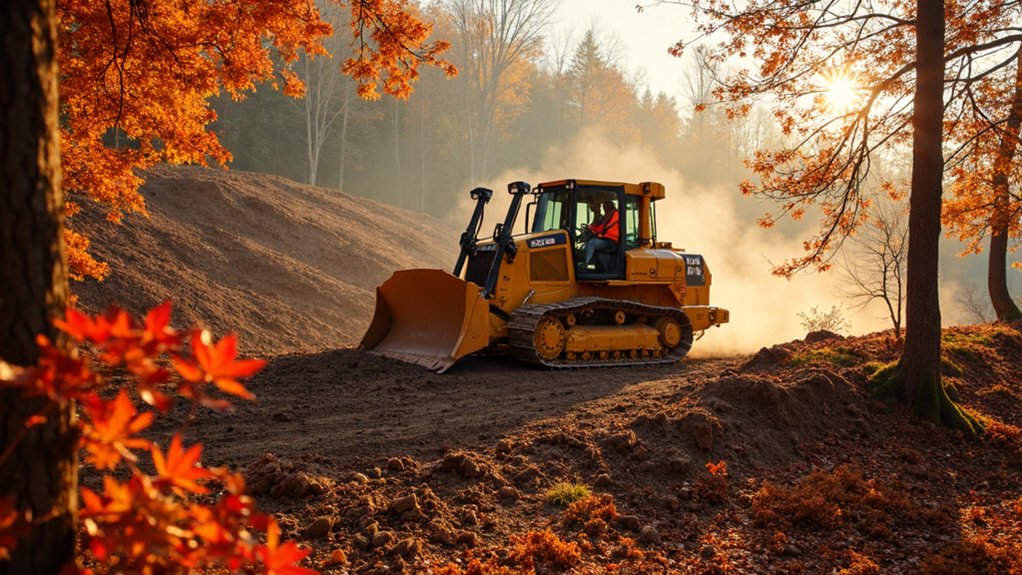
You’ve probably noticed that fall brings cooler temperatures and drier conditions—two factors that make it the ideal season for slope grading projects. While most property owners think spring is the time for land preparation, you’re actually missing out on significant advantages by waiting. Fall’s unique combination of weather patterns, soil conditions, and timing creates opportunities that simply don’t exist during other seasons, and understanding these benefits could transform your next project’s success.
Key Takeaways
- Milder fall temperatures and drier conditions create ideal working environments for grading operations without stressing soil.
- Cooler weather allows efficient clearing of overgrowth and debris before winter, establishing clean foundations for grading work.
- Fall timing enables soil preparation that sets up successful spring construction and landscaping projects when weather warms.
- Problem areas like depressions and drainage issues can be addressed before winter freeze compromises soil workability.
- Autumn grading avoids competition with busy spring season, allowing focus on planting and decorative work later.
Why Fall Is the Best Time for Land Preparation in Georgia
As summer’s intense heat begins to fade, fall emerges as Georgia’s prime season for land preparation projects. You’ll find that milder temperatures and drier conditions create perfect working environments for addressing your property’s needs. The cooler weather reduces stress on soil conditions, making it easier to tackle problem areas that developed during summer months.
Fall landscaping preparation becomes essential as you clear overgrowth and stabilize your terrain before winter arrives. Heavy rains can create significant drainage issues if your land isn’t properly graded beforehand. By completing slope work now, you’re preventing erosion and water problems that could damage your property.
This strategic timing also sets you up for successful spring construction or landscaping projects, ensuring your soil is ready when warmer weather returns.
Clear Overgrown Vegetation and Debris
Before you can begin any slope grading work, you’ll need to tackle the overgrown vegetation and debris that’s accumulated across your property. Fall’s cooler temperatures make this the ideal time to start clearing without the exhausting heat of summer.
This essential preparation involves several key steps:
- Clear weeds and brush from property borders and building sites to remove fire hazards and overgrowth
- Remove dead trees and limbs along with storm debris to prime your land for new development
- Mulch cleared vegetation to enrich soil or enable easy debris removal from the site
- Reduce pest habitats by eliminating overgrowth that keeps your landscape untidy
Efficient debris removal creates the clean foundation you need for successful slope grading and future landscaping projects.
Conduct Essential Land Grading
Once you’ve cleared the debris and vegetation, you can focus on the critical work of conducting essential land grading across your property. Fall presents the ideal time for this preparation since you’re likely planning new landscaping projects before Fall Planting season arrives. Start by marking utility lines to avoid costly damage during grading operations. Use GPS and laser-guided technology to achieve precise elevation changes that’ll improve drainage around your home’s foundation. Create gentle slopes and swales to direct water runaway from structures effectively. Work with your existing soil conditions while they’re still manageable before winter freeze sets in. Whether you’re preparing areas for future pools, concrete installations, or simply leveling uneven terrain, proper grading establishes the foundation for successful spring projects.
Address Problem Areas Before Winter
While your essential grading work creates the foundation for future projects, you’ll need to tackle specific problem areas that could worsen during winter’s harsh conditions. Fall’s cooler weather provides an excellent time to address these issues without the stress of summer’s heat on both you and your landscape design.
Focus on these critical problem areas:
- Depressions and sinkholes near foundations or driveways that need stabilization
- Low-lying areas where water collects, creating drainage problems and potential flooding
- Washed-out gravel surfaces on driveways and pathways requiring restoration
- Erosion-exposed areas where root growth or pipes have become vulnerable
Using appropriate fill materials and Bobcat attachments, you can effectively resolve these drainage issues before winter arrives, protecting your property’s infrastructure and maintaining safe access routes.
Prepare for Spring Projects
Beyond addressing immediate problem areas, your fall grading work sets the stage for ambitious spring projects that require proper foundation preparation. When warmer temperatures arrive, you’ll skip the lengthy foundation work and jump straight into exciting elements like landscaping, pool installation, or construction projects. This Perfect Time approach means you’re not competing with busy nurseries and garden centers for contractor availability during peak season.
Fall’s ideal conditions provide the Best Time for land clearing and grading using modern Bobcat equipment, ensuring efficient completion before winter sets in. Your customized solutions address local soil conditions, drainage requirements, and seasonal challenges specific to your site. With professional fall preparation handling the heavy lifting, you’ll focus entirely on planting and decorative touches when spring returns. Contact us today to start planning your fall grading project.
Cooler Temperatures and Reduced Stress
As autumn’s cooler temperatures arrive, your newly graded landscape experiences drastically less stress than it would during summer’s scorching heat. This gentler environment allows new plants to take advantage of ideal growing conditions before the colder months arrive.
Your landscape benefits from autumn’s unique advantages:
- Reduced heat stress – Plants focus energy on root development rather than surviving intense temperatures
- Consistent soil moisture – Less evaporation means more stable hydration for plant establishment
- Lower pest activity – Fewer aphids, beetles, and fungal infections threaten vulnerable seedlings
- Ideal temperature balance – Cool air combined with warm soil creates perfect growing season conditions
This combination gives your new plants a better chance to establish strong root systems, ensuring they’ll thrive when spring returns to your newly graded slope.
Optimal Soil Conditions
Fall’s moderate climate doesn’t just benefit your plants—it creates the perfect soil environment for grading work. You’ll find that autumn’s cooler temperatures and increased rainfall produce soil that’s neither too dry nor too wet, making it exceptionally workable for digging and grading projects. These milder temperatures preserve the warm soil conditions from summer, allowing strong roots to establish quickly as air temperatures drop.
If you’re planning a new landscape or construction project, fall is the time to take advantage of predictable rainfall patterns that maintain consistent moisture levels. The soil’s ideal workability means it’s time to start your grading projects without fighting against bone-dry summer conditions or waterlogged spring ground. Reduced pest activity further guarantees your landscaping success.
Identifying Drainage Issues
Before you break ground on any slope grading project, you’ll need to walk your property and pinpoint exactly where water isn’t flowing as it should. Guarantee you complete this assessment before winter sets in, as proper drainage prevents costly soil erosion and foundation damage.
Start your evaluation by focusing on these key areas:
- Pooling zones – Look for depressed spots where water collects after rainfall
- Soil composition – Test both topsoil and subsoil to understand drainage characteristics
- Flow patterns – Note that water moves differently through clay versus sand or loam
- Underground utilities – Check for buried lines before any excavation begins
Understanding your soil’s organic matter content and drainage capabilities will help improve your grading strategy and secure long-term success.
Measuring the Slope
Once you’ve identified your drainage problems, you’ll need to measure the actual slope to determine whether it meets proper grading standards. Start by driving stakes at the high and low points of your drainage slope, then tie a taut string between them at the same level from the ground. Measure the drop from high to low point, aiming for at least 12 inches per 50 feet. This measurement’s vital for determining necessary alterations to your slope. As days grow shorter and cooler, autumn’s soft ground makes this process easier than summer’s hard-packed soil. Taking these measurements now gives you a head start on planning maintenance services and protecting your trees and shrubs for next year’s beautiful lawn.
Altering the Slope
How do you transform your measured slope into an effective drainage system? Start by removing soil from the lower point and adding it to the higher elevation areas. You’ll want to choose soil that matches your existing ground for consistency.
Here’s your action plan:
- Remove excess soil from low points and redistribute to higher areas
- Maintain at least 12 inches of drop per 50 feet for proper water flow
- Clear away dead leaves and debris before beginning work
- Guarantee consistent soil type throughout the altered areas
Once you’ve established the proper grade, you can enhance the slope’s stability by planting perennials that’ll establish strong root systems. Consider adding flowers and trees strategically for erosion control. Finish with a layer of mulch to protect the newly graded surface.
Frequently Asked Questions
Is It Okay to Landscape in the Fall?
Yes, you’ll find fall’s excellent for landscaping! You can optimize landscape timing with proper soil preparation, smart plant selection, and effective erosion control. Fall’s ideal conditions support various grading techniques, ensuring your projects succeed beautifully.
What Is the Grade of Land?
Land grade refers to your property’s slope percentage, determining water drainage patterns and soil composition stability. You’ll need proper terrain contours for erosion control and slope stability, ensuring effective runoff management across your landscape.
Conclusion
You’ve laid the groundwork like a master chess player positioning pieces for victory. While autumn’s golden curtain falls, you’re setting the stage for spring’s grand performance. Your land won’t sleep through winter—it’ll rest in perfect preparation. Come spring’s first warm breath, you’ll watch your vision unfold effortlessly. The soil you’ve sculpted today becomes tomorrow’s canvas, ready for whatever masterpiece you’re planning to create on your perfectly graded landscape.