
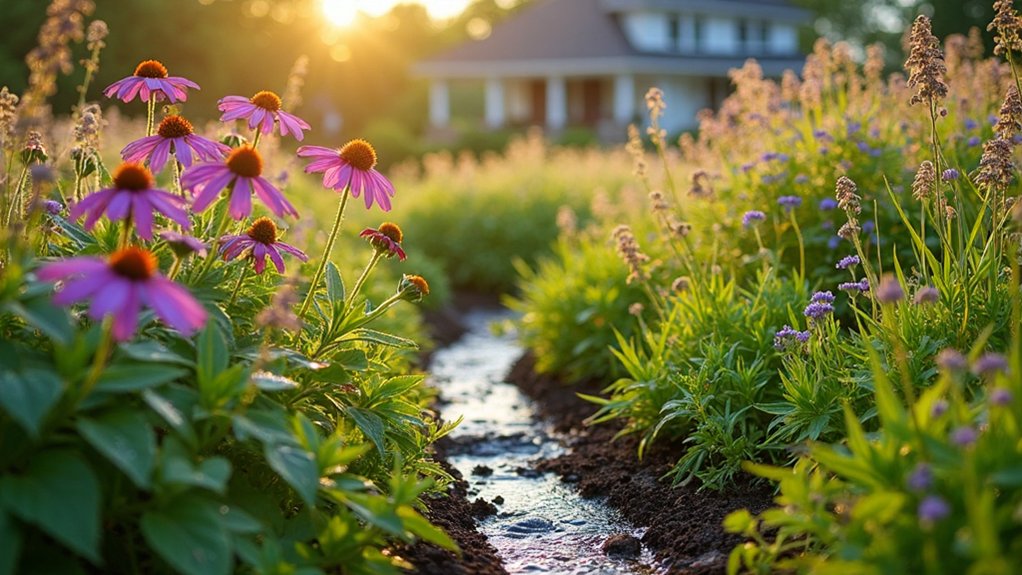
You might be surprised to learn that a typical St. Louis suburban lot generates over 1,000 gallons of stormwater runoff during a single inch of rainfall. That’s enough water to fill a small hot tub, and it’s carrying pollutants directly into our local waterways. But there’s a simple solution hiding in plain sight that can transform your property’s drainage problems into an environmental asset. Native rain gardens aren’t just trendy landscaping—they’re powerful tools that’ll change how you think about managing water on your property.
Key Takeaways
- Rain gardens capture stormwater runoff and use native plants to naturally filter pollutants before water infiltrates soil.
- Select moisture-loving plants for wet zones and drought-tolerant natives for areas with variable water levels in gardens.
- Size rain gardens to handle one inch of runoff from roofs and driveways with proper grading and overflow outlets.
- Native grasses with deep root systems provide excellent soil stabilization while requiring minimal long-term maintenance compared to turf.
- Metropolitan St. Louis Sewer District and local watershed groups offer cost-share programs to help fund rainscaping projects.
Understanding Rain Gardens and Their Benefits
When stormwater rushes off rooftops, driveways, and other impervious surfaces, it picks up pollutants and overwhelms drainage systems—but rain gardens offer an elegant solution. These strategically designed landscape depressions capture and slow water flow, allowing it to infiltrate soil within 48 hours. Your rain garden acts as a natural filter, using native plants with deep root systems to clean water and reduce pollution before it reaches streams.
This botanical approach provides multiple benefits beyond stormwater management. You’ll enjoy aesthetic appeal while supporting local ecosystems with indigenous species perfectly adapted to St. Louis conditions. Rain gardens serve as an exhaustive, extensive, or detailed guide to sustainable landscaping, reducing infrastructure costs while protecting clean water resources. They’re cost-effective alternatives that transform problematic drainage into environmental assets.
Selecting the Right Native Plants for St. Louis Rain Gardens
Creating a successful rain garden depends heavily on choosing native plants that can handle St. Louis’s variable moisture conditions. You’ll need to assess your site’s specific soil, moisture levels, and sunlight exposure before selecting plants.
For Missouri rain gardens, consider these three plant categories:
- Moisture-loving plants like blue flag iris, swamp milkweed, and cardinal flower for areas that stay wet longer
- Drought-tolerant options such as purple coneflower and butterfly milkweed for variable moisture zones
- Native grasses like switchgrass and prairie dropseed that provide deep root systems for soil stabilization
You’ll create the most effective rain garden by combining plants with different heights, bloom times, and textures. This variety not only enhances visual appeal but also maximizes ecological benefits while ensuring your garden functions properly throughout Missouri’s changing seasons.
Design and Installation Considerations
Before you break ground on your St. Louis rain garden, you’ll need careful planning to guarantee effective stormwater management. Size your rain garden to capture the first inch of runoff from impervious surfaces, making it 6-12 inches deep. Evaluate your site’s sun exposure, soil type, and drainage patterns—these characteristics directly influence plant selection and garden placement.
Proper grading creates gentle slopes that direct water flow while preventing erosion. Install an overflow outlet to handle heavy rainfall events safely. Prepare your soil by amending clay-heavy St. Louis soil with compost to improve infiltration.
During installation, position native plants according to their water tolerance zones. Plants requiring more moisture go in the deepest areas, while drought-tolerant species occupy higher elevations. Plan for ongoing maintenance accessibility when finalizing your design.
Maintenance and Long-Term Care
Most St. Louis area rain gardens require minimal upkeep once your native plants establish themselves. You’ll need consistent weeding, mulching, and pruning to maintain both visual appeal and proper drainage functionality.
Your essential maintenance tasks include:
- Annual mulching – Apply 2-4 inches of shredded hardwood mulch to suppress weeds, retain moisture, and improve soil health
- Regular plant care – Trim or divide native plants annually, removing dead growth through pruning
- Drainage monitoring – Check for clogging or erosion issues that compromise water flow
You should conduct seasonal inspection of your rain garden, especially after major storms. This guarantees ideal performance and identifies problems early. Native plants typically need minimal maintenance compared to traditional landscaping, making your rain garden both environmentally beneficial and low-maintenance once established.
Cost-Share Programs and Financial Incentives
Since rain garden installation involves upfront costs, several financial assistance programs in the St. Louis area can help offset your expenses. The Metropolitan St. Louis Sewer District offers grants for rainscaping projects that reduce stormwater runoff and improve water quality. You’ll find the Deer Creek Watershed Alliance provides their Rainscaping Cost-Share Program specifically designed to help homeowners install rain gardens and other green infrastructure practices.
These programs recognize rain gardens’ value in stormwater management and ecosystem services. You can quantify your rain garden’s monetary benefits through reduced stormwater management costs and pollution filtering. The US EPA Region supports these initiatives, while local foundations like the Mabel Dorn Reeder Foundation may provide additional funding opportunities. Contact your local Department to explore available incentive programs for implementing natural drainage solutions.
Frequently Asked Questions
What Is a Landscape That Soaks up Water?
You’ll find water retaining landscapes with porous surfaces effectively manage stormwater absorption. These green infrastructure systems feature permeable pavement, bioswale installations, and water filtering plants that enhance soil permeability while promoting groundwater recharge naturally.
Do Native Plants Help With Flooding?
Yes, native plants markedly help with flooding through runoff water reduction and flood prevention strategies. You’ll find their deep roots increase groundwater replenishment while requiring minimal native plant maintenance, making them excellent sustainable landscaping practices for climate change adaptation.
Do Rain Gardens Help With Flooding?
Studies show rain gardens reduce stormwater runoff by 30-50%. You’ll enhance water absorption rates and gain green infrastructure benefits through effective stormwater mitigation. They’re proven flood prevention strategies that improve soil quality impacts considerably.
What Plants to Use in a Rain Garden?
You’ll want drought tolerant perennials with water absorbing root systems like purple coneflower and little bluestem. Choose pollinator friendly species considering sun exposure requirements for low maintenance garden design with seasonal color variations.
Conclusion
You’ll absolutely revolutionize your property’s drainage disasters while becoming the neighborhood’s environmental superhero! These native plant powerhouses will transform your soggy yard catastrophes into stunning ecological masterpieces that’ll make your neighbors green with envy. Don’t let another torrential downpour turn your landscape into a muddy nightmare – you’ll create the ultimate stormwater-slaying sanctuary that saves money, saves the planet, and saves your sanity all at once!