
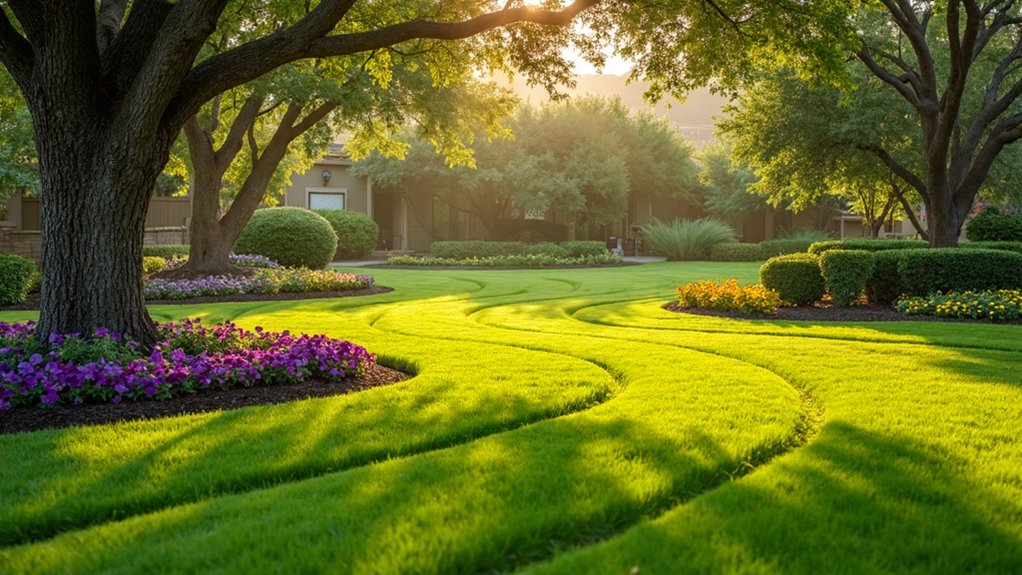
You’ve probably noticed how professional landscapes maintain perfect grass lines around every tree and flower bed, while your own yard looks like you’ve been mowing with a blindfold on. The secret isn’t expensive equipment or years of training—it’s understanding a few key techniques that transform chaotic lawn care into precision work. Master these methods, and you’ll protect your valuable plants while creating those crisp, magazine-worthy edges that make neighbors wonder what you’re doing differently.
Key Takeaways
- Maintain 2-3 inch clearance around tree trunks and landscaping features to prevent damage to bark and roots.
- Use string trimmers or push mowers near delicate areas like flower beds for better precision and control.
- Set mower blade height to 3-4 inches around trees to avoid cutting roots and damaging low-hanging branches.
- Avoid running mowers directly over flower beds, landscape rocks, irrigation lines, and other sensitive landscaping elements.
- Apply organic mulch around trees’ drip lines while keeping mulch away from trunk bases to protect root systems.
Pre-Mowing Preparation and Safety Checks
Before you fire up your mower and tackle the lawn around trees and landscaping features, you’ll need to complete several critical preparation steps that protect both your equipment and your outdoor investment. Start by thoroughly inspecting your yard for debris, rocks, or toys that could damage lawn mowers or create safety hazards. Check your mower blades for sharpness and verify everything’s working properly before starting. Walk through your lawn to identify exposed tree roots that you’ll need to avoid during mowing, as hitting them damages both the tree and your equipment. Map out flower beds and other delicate landscaping features requiring careful navigation. Finally, gear up with essential personal protective equipment including sturdy shoes, gloves, and eye protection for safe operation.
Proper Mowing Techniques Around Tree Trunks
When mowing around tree trunks, you’ll protect your trees’ health and longevity by maintaining proper distance and using the right techniques. Never mow too close to the tree trunk, as this damages bark and exposes trees to pests and diseases. Set your lawn mower height to 3-4 inches to prevent smothering roots with short grass clippings. Use a mulching blade to distribute clippings evenly rather than creating piles around the tree.
Consider switching to a string trimmer when working around the trunk for better control. Apply 2-4 inches of organic mulch around the tree’s drip line, but keep mulch several inches away from the trunk itself. Avoid piling mulch against bark, which restricts air circulation and invites problems.
Navigating Exposed Roots Without Damage
Exposed tree roots present one of the most challenging obstacles you’ll encounter while mowing, but several protective strategies can keep both your equipment and trees safe. Add a 2-3 inch layer of organic mulch around the tree base, keeping it several inches from the trunk to protect vulnerable roots. You can gently grade soil around exposed areas and plant groundcover to conceal them naturally. Create edging with stones or bricks to prevent your mower from getting too close during lawn maintenance. Raise your mower deck height when traversing these areas to avoid cutting into protruding roots. For severely exposed roots, consider installing a raised garden bed or retaining wall as a permanent landscaping solution that eliminates mowing challenges entirely.
Mowing Near Flower Beds and Delicate Plants
Flower beds call for a gentler approach than standard lawn mowing, as delicate stems and foliage can easily suffer damage from standard mowing equipment. You’ll want to use a push mower or string trimmer to carefully edge around your flower beds and plant groupings. Raise your mower deck to the highest setting when working near these areas to prevent scalping delicate plants.
Avoid riding mowers near flower beds since their wider decks and greater weight can compact soil and tear up your landscape design. After mowing, gently sweep grass clippings off flower petals and leaves to prevent smothering. Consider installing landscape edging or mulched borders around beds to create defined, mower-friendly boundaries that keep your tree landscaping and plants protected while making future maintenance easier.
Using String Trimmers for Precision Edging
String trimmers excel at creating precise edges where traditional mowers can’t reach, making them your go-to tool for the detailed work around trees, flower beds, and other landscaping features.
When working around tree canopies, maintain proper distance from the base of the tree to avoid damaging bark. Keep the mulch around your tree intact by trimming at the correct angle. String trimmers help define clean bed edges between grass and groundcover, preventing encroachment around the tree’s root zone.
For flower bed perimeters, use steady movements to create uniform borders that enhance visual appeal. Proper technique prevents damage to delicate plant stems while maintaining well-defined boundaries. Regular precision edging around tree bases and landscaping features reduces overall maintenance time while keeping your yard looking professionally maintained.
Adjusting Mower Height for Different Landscape Areas
While string trimmers handle precision work, your mower’s height adjustment becomes pivotal for protecting different landscape elements throughout your yard. Raise your mower to 3-4 inches when landscaping around trees to avoid damaging shallow tree roots that extend beyond the trunk. This height also works perfectly around flowerbeds, preventing scalping of delicate plants.
For open lawn areas, you can lower the setting to 1-2 inches for that crisp, manicured look. Make sure you adjust to 2-3 inches along landscape borders for clean, even cuts. This consistent height also promotes healthy grass growth in general areas.
Smart yard work means adapting your approach based on what you’re mowing around. Consider landscaping ideas like keeping mulch in place around a tree while maintaining proper mower clearance for effective lawn care.
Managing Grass Clippings Around Landscaping Features
After you finish mowing around your landscaping features, proper clippings management becomes essential for maintaining plant health and yard appearance. You’ll want to collect grass clippings near trees, flowers, and ornamental grasses to prevent smothering delicate plants. Use a mulching mower to finely chop clippings and leave them on open lawn areas where they’ll decompose naturally.
Sweep clippings off walkways and patios immediately to maintain cleanliness. Never pile clippings around the tree’s base, creating a dangerous “Mulch Volcano” effect that promotes rot and pest problems. Instead, dispose of collected clippings through composting or municipal pickup.
Perennials include many species that benefit from proper mulch like wood chips, shredded bark, or pine straw rather than grass clippings. Native Plants particularly thrive when surrounded by appropriate organic materials instead of accumulated lawn debris.
Maintaining Equipment for Clean Cuts Near Obstacles
Sharp mower blades make all the difference when maneuvering tight spaces around trees, flower beds, and decorative elements. Dull blades tear grass instead of cutting cleanly, creating brown, ragged edges that detract from your landscaping design and curb appeal. You’ll want to sharpen blades at least twice per season to make mowing around obstacles more effective.
Regular maintenance extends beyond blade sharpness. Check your mower deck height frequently to avoid cutting grass more than two inches deep near planting beds and around the tree’s root zone. Clean debris from under the deck after each use, and inspect belts and filters monthly. Well-maintained equipment helps you keep your yard looking professional while protecting the right plants you’ve carefully positioned throughout your landscape.
Post-Mowing Cleanup and Landscape Protection
Once you’ve finished mowing around your landscaping features, it’s time to clean up the aftermath that inevitably accumulates near trees, flower beds, and decorative elements. Remove grass clippings from around shade trees and raised beds to prevent smothering plants. Use a leaf blower to clear debris from retaining walls without damaging delicate landscape design features.
Inspect your front yard for any mower damage to plant stems or exposed roots, addressing issues immediately. Apply fresh organic mulch like wood chips around trees and flower beds, maintaining proper depth while keeping it away from trunks. Professional landscaping services recommend 2-3 inches of mulch for ideal plant health. Finally, reseed bare spots to maintain your lawn’s appearance and protect the overall integrity of your landscape investment.
Frequently Asked Questions
What Is the Rule of 3 in Landscaping?
The rule of 3 requires you’ll mulch three times your tree’s trunk diameter. You’ll maintain proper mulch depth requirements of 2-4 inches while keeping material away from bark to prevent decay and promote healthy growth.
Should You Cut Grass Around Trees?
Ironically, “protecting” trees by cutting grass right up to their trunks actually harms them. You shouldn’t mow directly around trees—instead, create mulched circles for root zone protection, preventing soil compaction while maintaining proper tree health impacts.
What Is the Best Thing to Put Around the Base of a Tree?
You’ll want 2-4 inches of organic mulch around your tree’s base for ideal root protection and water retention. Guarantee proper tree circle size while avoiding bark damage, improving weed control, preventing soil compaction, and maintaining air circulation.
Is Mowing Included in Landscaping?
Want thorough property care? Yes, you’ll find mowing included in most landscaping services alongside mulching methods, edging techniques, seasonal maintenance schedules, and drought tolerant landscaping solutions for complete outdoor transformation.
Conclusion
You’ve mastered the delicate dance between efficiency and precision—but will your landscape thank you tomorrow? By maintaining proper clearances, adjusting techniques around obstacles, and using the right tools for each situation, you’re not just cutting grass; you’re sculpting a masterpiece. Your attention to detail today guarantees thriving trees, flourishing flowers, and a lawn that’ll be the envy of every neighbor who rushes through their weekend chores.