
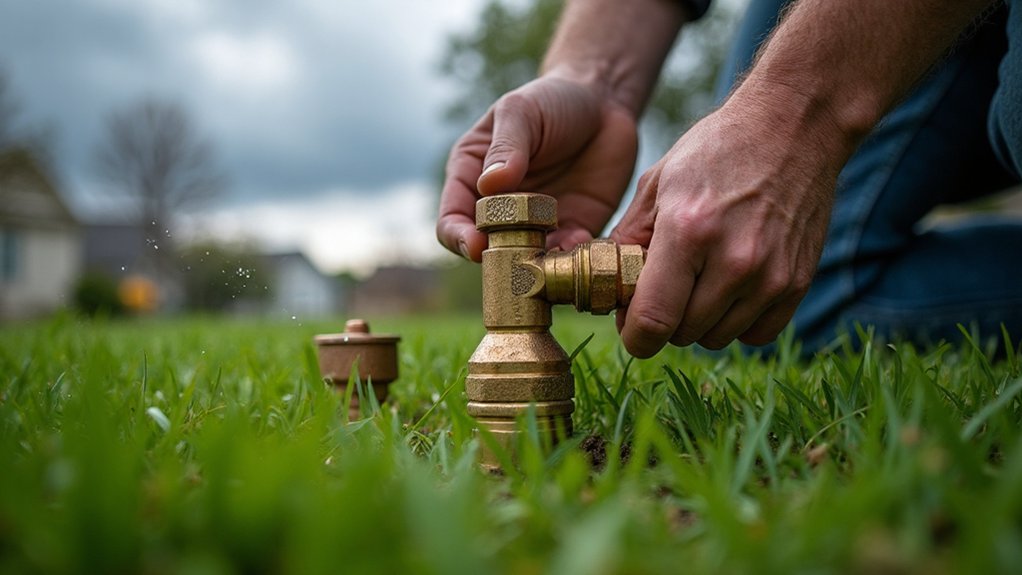
Missouri’s weather doesn’t follow the rules, and neither should your irrigation approach. You’ve likely experienced those jarring temperature swings—from 70 degrees one day to freezing the next—that can wreak havoc on unprepared systems. Your St. Louis property faces unique challenges that standard irrigation advice simply can’t address. While most homeowners focus on basic seasonal maintenance, there’s a critical sequence of preparation steps that’ll determine whether your system survives Missouri’s notorious weather patterns intact.
Key Takeaways
- Install smart controllers that automatically adjust watering schedules based on temperature fluctuations and weather conditions.
- Schedule professional winterization services to prevent freeze damage during Missouri’s unpredictable cold snaps.
- Conduct annual backflow prevention device testing by certified professionals to ensure system compliance and safety.
- Perform regular seasonal maintenance inspections to identify and address potential issues before weather extremes occur.
- Design systems with zone-specific controls to accommodate varying soil types, sun exposure, and microclimates across your property.
Understanding Missouri’s Seasonal Temperature Fluctuations
While many regions experience gradual seasonal changes, Missouri’s weather patterns can shift dramatically within hours, creating unique challenges for your irrigation system. You’ll face temperature swings from summer highs in the 90s to winter lows well below freezing. In St. Louis, daily temperature fluctuations can exceed 40 degrees, making it difficult to predict when protective measures are needed.
When temperatures start dropping in late fall, you must act quickly to winterize your system. The winter months bring frequent sub-freezing conditions and potential snowfall from November through March. These rapid shifts between warm and cold weather mean you can’t rely on gradual seasonal alterations. Instead, you need to monitor forecasts closely and prepare for sudden freezing temperatures that could damage unprotected irrigation components.
Essential Fall Watering Guidelines for St. Louis Lawns
As Missouri’s fall season approaches, you’ll need to adjust your watering strategy to match your lawn’s changing needs. Continue irrigating until temperatures consistently reach the low 30s and ground freezing begins. Your lawn sprinkler system should gradually reduce water output as temperatures drop to prevent overwatering, which causes serious lawn damage.
Cool-season grasses dominant in St. Louis require increased fall irrigation to develop deep root systems before winter. Evaluate your soil’s absorption rate to determine ideal watering frequency. An automated irrigation system with smart controllers adjusts schedules based on weather data, preventing waste and overwatering.
Monitor water pressure regularly during fall operation, as temperature fluctuations affect system performance. Before hard freezes arrive, you’ll need to winterize your sprinkler system to prevent costly pipe damage from expanding ice.
Signs Your Property Needs a Professional Irrigation System
Your lawn’s condition reveals whether you’re ready to upgrade from manual watering to a professional irrigation system. If you’re noticing uneven or patchy growth across your property, it’s likely due to inconsistent water distribution that a sprinkler system can fix. Properties with varying soil types or sun exposure require customized designs for ideal coverage.
You’ll also benefit from professional installation if you’re spending excessive time manually watering or if your lawn shows browning and wilting during Missouri’s hot, dry periods. High-traffic areas that struggle to recover need targeted irrigation zones for revitalization.
System professionals can install proper backflow device protection while designing zones that address your specific lawn challenges, saving you time while conserving water through automated, efficient coverage.
Optimal Timing for Irrigation System Installation
When should you schedule your irrigation system installation to maximize its effectiveness? Fall emerges as the ideal time for installing your sprinkler system in St. Louis. This timing guarantees your lawn sprinklers are ready for the upcoming growing season without stressing dormant grass during winter months.
Fall installation offers several advantages. You’ll avoid disrupting your lawn during active growth periods, and the necessary digging won’t interfere with winter parties or outdoor events. Professional irrigation companies can efficiently handle the complete process, from mapping your property’s layout to selecting appropriate components for Missouri’s climate.
Make sure to schedule your installation early in the fall season. This strategic timing allows you to take full advantage of your new system throughout the following spring and summer, ensuring your lawn thrives despite Missouri’s unpredictable weather patterns.
Critical Steps in the Winterization Process
Once you’ve installed your irrigation system, protecting it from Missouri’s harsh winter conditions becomes your next priority. Start by shutting off your main water supply valve and draining the system completely. You’ll need an air compressor to blow out remaining water from pipes, valves, and sprinkler heads—this prevents costly freeze damage during winter seasons. Don’t forget to turn off your irrigation controller and switch it to winter mode.
Inspect your backflow preventer and other critical components for potential issues that could cause problems while your system’s dormant. These steps require proper pressure settings and technical knowledge. Consider hiring a professional irrigation company to handle the complete winterization process, ensuring your sprinkler system survives Missouri’s unpredictable weather patterns and functions perfectly when spring arrives.
Professional vs. DIY Winterization: Making the Right Choice
The decision between professional and DIY winterization carries significant financial consequences for your irrigation system’s longevity. When you attempt DIY winterization without proper pressure techniques, you’re risking expensive damage to your sprinkler systems. Burst pipes, broken valves, and system failures often result from improper drainage methods.
Professional winterization services eliminate these risks by ensuring your system’s completely drained and protected against Missouri’s freezing temperatures. Trained technicians identify potential issues before they become costly winter damage, safeguarding your investment.
While DIY approaches might seem cost-effective initially, the extensive repairs from improper winterization far exceed professional service costs. Lawn Sprinklers of St. Louis provides thorough winterization performed by experienced technicians who understand the specific requirements of local sprinkler systems, protecting your irrigation investment effectively.
Protecting Your System From Lightning and Storm Damage
Beyond winter preparation, Missouri’s severe weather patterns pose year-round threats to your irrigation system through lightning strikes and damaging storms. Your sprinkler system requires specific protection strategies to survive the St Louis area’s notorious thunderstorms and hail.
Storm protection involves multiple layers of defense:
- Install surge protectors on your controller to prevent electrical damage from power spikes
- Secure above-ground components like backflow preventers and valve boxes with proper anchoring
- Trim overhanging branches that could fall and damage sprinkler heads or piping during high winds
- Create drainage channels around equipment to prevent flooding damage
Different types of weather events require tailored protection approaches. Lightning can destroy electronic components instantly, while hail damages exposed sprinkler heads. Contact us for an extensive storm protection assessment that’ll safeguard your investment against Missouri’s unpredictable weather conditions.
Spring Activation and Maintenance Requirements
After Missouri’s harsh winter conditions subside, your irrigation system needs careful reactivation to guarantee peak performance throughout the growing season. Start by turning on your water supply and inspecting each sprinkler head to ascertain optimal coverage across your St. Louis property. Test the entire system thoroughly to identify any issues, then make necessary adjustments to damaged or misaligned sprinkler heads.
Set your timer controller to an appropriate watering schedule that matches spring’s growing demands. Perform a thorough inspection throughout your property, checking for leaks in pipes, fittings, and connections. Address any repairs immediately to prevent water waste and system damage.
Don’t forget Missouri’s legal requirements – you must have your backflow prevention device tested annually by a certified professional to protect the municipal water supply and keep us all safe.
Frequently Asked Questions
How to Prepare an Irrigation System for Hard Freeze?
You’ll need to drain excess water from your system completely, cover pipes with protective materials, insulate valves thoroughly, and install insulation around exposed components. Don’t skip winterizing steps—frozen pipes cause expensive damage.
When to Winterize a Sprinkler System in Missouri?
Don’t let Jack Frost catch you unprepared—you’ll need proper timing for ideal scheduling. Begin your winterizing protocol by mid-to-late fall, ensuring efficient drainage before Missouri’s temperatures consistently drop below freezing.
What Factors Should Be Considered Before Installing an Irrigation System?
You’ll need to evaluate your soil composition, assess water pressure requirements, strategically plan sprinkler head placement, and design proper irrigation zone planning. These factors guarantee your system operates efficiently and provides ideal coverage for your lawn.
How to Prepare an Irrigation Backflow for Freeze?
You’ll need professional assistance for winterizing components like draining water completely and installing insulated covers. Schedule this during your annual inspection and follow a proper maintenance schedule to prevent costly freeze damage.
Conclusion
You’ve invested thousands in a state-of-the-art irrigation system to combat Missouri’s chaotic weather, yet you’ll still find yourself standing in your yard with a garden hose during unexpected heat waves. Despite all your careful winterization and professional maintenance, Mother Nature doesn’t read irrigation manuals. Your sophisticated system sits dormant while you’re back to the basics – just like your neighbors who never bothered installing one in the first place.