
You might not realize that 70% of lawn damage actually occurs during winter months when you can’t see what’s happening beneath the snow. While spring’s arrival brings excitement about getting back outdoors, there’s a specific sequence of cleanup tasks that’ll determine whether your yard thrives or struggles all season long. Missing even one critical step in this process can set you back months in achieving that picture-perfect landscape you’re envisioning.
Key Takeaways
- Remove all fallen leaves, twigs, branches, and debris from your lawn and garden beds to create a clean foundation.
- Rake your lawn thoroughly to eliminate dead grass, check for snow mold damage, and prepare for the first mowing.
- Pull up dead annual plants by hand and clear weeds to make space for new plantings this season.
- Prune shrubs and trees by removing dead, damaged, or crossed branches with clean cuts above outward-facing buds.
- Prepare garden beds by gently raking mulch, checking soil moisture, and upgrading irrigation systems as needed.
Rake Your Lawn to Remove Dead Grass and Debris
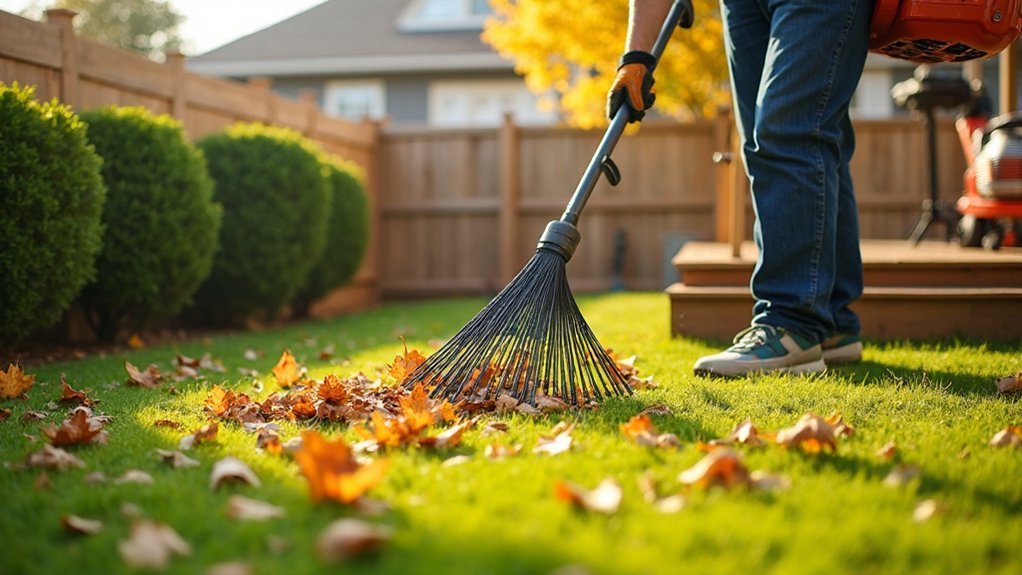
After winter’s harsh conditions, your lawn likely harbors a thick layer of dead grass, fallen leaves, and accumulated debris that’s suffocating new growth beneath. Raking removes this buildup and allows fresh grass to emerge in spring. You’ll want to examine your lawn for matted patches caused by snow mold, then remove the damaged grass so healthy shoots can sprout through.
This essential home maintenance task promotes better air, water, and nutrient circulation throughout your yard. Spring raking typically tops every homeowner’s seasonal checklist since it prepares your lawn for the growing season ahead. Once you’ve cleared the debris, you’ll easily assess any winter damage and get a cleaner workspace before bringing out your lawn mower for the first cut.
Clean up Winter Debris From Your Yard
Beyond clearing dead grass from your lawn, winter’s debris extends throughout your entire yard and demands meticulous removal. This comprehensive cleanup prevents damage to your property and creates an ideal system for spring growth.
Winter storms leave behind various materials that can block water drainage and restrict air circulation around plants. Broken branches pose safety hazards and can harbor pests or diseases. Accumulated leaves and organic matter create barriers that prevent proper water absorption and air flow to grass roots.
Complete your winter debris removal with these essential tasks:
- Remove fallen leaves, twigs, and accumulated organic debris
- Clear broken branches and limbs from trees
- Pick up surfaced rocks, stones, and foreign objects
- Dispose of all collected materials properly
This thorough cleanup establishes the foundation for a healthy, thriving yard.
Pull Up Dead Annual Plants
Once you’ve cleared winter debris, you’ll need to pull up dead annual plants that have outlived their growing season. This essential spring yard maintenance task creates space for new plantings while making your landscape look healthier and more vibrant.
You can easily pull up these dead annuals by hand in early spring when the soil is workable. Removing them allows better air, water, and nutrient circulation throughout your planting beds. This simple step is pivotal for preparing your garden for the upcoming growing season.
Taking time to clear out last year’s spent plants promotes new growth by eliminating competition for resources. Don’t skip this important task – your spring yard will thank you with more robust, healthy plants throughout the summer months.
Prune Shrubs and Remove Dead Branches
Next, you’ll want to prune your shrubs and remove dead branches to promote vigorous spring growth. Late winter and early spring are ideal times to tackle this essential maintenance task. After removing winter protection, examine your trees and shrubs carefully for damage from harsh weather conditions.
Focus your efforts on strategic cuts that’ll improve both health and appearance:
- Remove dead, damaged, or overgrown branches using sharp, clean pruning shears
- Cut away inward-facing and crossed branches that rub against each other
- Make clean cuts just above outward-facing buds or lateral branches
- Prune trees and shrubs before new growth begins for best results
Proper pruning techniques guarantee your landscape plants develop strong structure and abundant blooms throughout the growing season.
Straighten Up Your Planting Beds
After completing your pruning tasks, turn your attention to straightening up your planting beds to prepare them for the growing season ahead. Start by removing debris that accumulated during winter to promote new growth. Gently rake back mulch and pull any weeds that emerged. Check soil moisture before turning the soil—this improves air, water, and nutrient circulation essential for plant health.
Consider upgrading your irrigation system as part of this home improvement project. A well-maintained sprinkler system guarantees consistent water supply throughout the growing season. Inspect existing irrigation components for winter damage and replace any broken parts. Turn the soil only when it’s not too wet or dry. These straightening tasks reinvigorate your landscape and create ideal conditions for thriving plants.
Fertilize Your Lawn and Garden
With your planting beds now organized and ready, it’s time to nourish your lawn and garden with proper fertilization. Strategic timing makes all the difference—fertilize your lawn in early spring and late fall when grass actively grows. For warm-season grasses, adjust timing to match their growth patterns during warmer months.
Before applying any fertilizer, conduct a soil test to determine specific nutrient needs for both your lawn and garden areas. This prevents guesswork and guarantees suitable plant health.
- Use slow-release, balanced fertilizers formulated for your specific grass type and climate
- Apply fertilizer evenly at recommended rates to prevent over-fertilizing damage
- Time applications during active growth periods for maximum effectiveness
- Test soil regularly to customize nutrient blends for different planting areas
Inspect Driveways, Paths and Paver Patios
Winter’s harsh conditions can wreak havoc on your home’s hardscaping, making a thorough inspection of driveways, paths, and paver patios essential for spring maintenance. Take a time to carefully examine these surfaces for cracks, raised pavers, and other damage caused by freeze-thaw cycles and heavy precipitation.
Start by walking your entire driveway and pathways, looking for any cracks in asphalt or concrete that need immediate patching. These small repairs prevent water infiltration and more extensive damage later. Check paver patios for shifted or raised stones that could create tripping hazards.
Address these issues promptly as part of your annual maintenance routine. Consider using a pressure washer to clean surfaces thoroughly, which helps reveal hidden damage. Early intervention maintains both functionality and curb appeal while preventing costly repairs down the road. Proper home maintenance protects your investment.
Apply Pre-emergent Herbicides
While you’re addressing hardscaping issues, don’t overlook your lawn’s needs for the upcoming growing season. Apply pre-emergent herbicides in early spring to prevent damage from weeds and crabgrass throughout warm weather months. These herbicides create a soil barrier that stops weed seeds from germinating, providing you effective control that lasts from spring through late summer.
Timing is critical for success. Apply about two weeks before soil temperatures reach 55°F in your area:
- Warmer regions: Apply in March when soil begins warming
- Cooler regions: Apply in April or May based on local conditions
- Monitor soil temperature: Use a soil thermometer for accuracy
- Apply before germination: Herbicides won’t work on already-sprouted weeds
This proactive approach guarantees a healthier, weed-free lawn all season long.
Apply Post-emergent Herbicides for Weeds
Even after applying pre-emergent herbicides, some weeds will inevitably break through and establish themselves in your lawn. Post-emergent herbicides target these existing weeds effectively when applied during active growth periods in spring or early summer. Make sure to spot-treat severely infested areas with products that won’t harm surrounding grass.
Among your seasonal maintenance tasks, timing is paramount for post-emergent applications. Avoid treating during spring green-up periods when product labels advise against it. Take the time to read all herbicide instructions carefully before application. In warmer climates, you’ll need to apply treatments earlier than in cooler regions.
Clean or replace your sprayer equipment between different herbicide applications to prevent contamination. Focus on actively growing weeds for maximum effectiveness and better lawn health outcomes.
Plant Trees, Shrubs and Perennial Flowers
As spring temperatures stabilize and soil becomes workable, you’ll find ideal conditions for establishing trees, shrubs, and perennial flowers in your landscape. Early spring planting gives these hardy plants time to develop strong root systems before summer heat stresses your HVAC system and air conditioning units work overtime.
Unlike annuals that require waiting until after the last frost date, trees, shrubs, and perennials can handle cooler temperatures. This home improvement project requires strategic timing for success.
- Choose native species adapted to your climate zone
- Plant after soil thaws but before new growth begins
- Water thoroughly at planting and maintain consistent moisture
- Take a look at mature sizes when spacing plants
Proper timing guarantees your new landscape additions establish healthy root systems, creating long-term beauty and increasing property value through thoughtful garden planning.
Pressure Wash Hardscaping Features
Why let winter’s harsh effects diminish your outdoor living spaces when a thorough pressure washing can restore their original beauty? Add this essential task to your maintenance checklist to tackle moss-covered patios, decks, and other hardscaping structures that’ve accumulated winter grime and discoloration.
When selecting a pressure washer, guarantee your home’s wooden structures stay protected by using equipment with PSI under 1,200 to avoid damage. This home improvement practice not only maintains your hardscaping’s appearance but also extends the life of these outdoor surfaces.
Proper technique is pivotal for effective cleaning without causing harm. Pressure washing your hardscaping serves as a key spring preparation task, readying your outdoor spaces for the upcoming season and maximizing your investment in these important landscape features.
Check Sprinkler and Irrigation Systems
After restoring your hardscaping to its pristine condition, turn your attention to the irrigation system that’ll keep your newly cleaned outdoor spaces flourishing throughout the growing season.
Just like clothes dryers and water heaters require regular maintenance to prevent problems, your sprinkler system needs spring attention before issues develop. Neglected irrigation lines can become clogged with debris, similar to how unmaintained appliances can cause house fires when ignored.
- Test all zones manually – Run each section to verify proper operation and water pressure
- Inspect sprinkler heads – Replace any missing or damaged components that affect coverage
- Adjust spray patterns – Ensure optimal water distribution across all planted areas
- Clear blocked nozzles – Remove dirt and debris that restricts water flow
Inspect for Drainage Problems
Poor drainage can transform your beautiful yard into a waterlogged mess that damages plants, creates muddy eyesores, and threatens your home’s foundation. After heavy rainfall, walk your property to check for standing water that lingers more than 24 hours. Look for consistently soggy areas that signal blocked or inadequate drainage systems requiring attention.
Inspect your downspouts carefully to guarantee they’re directing water at least six feet away from your foundation. This home improvement task prevents costly damage to your home’s structural integrity. Check that ground slopes away from your house at a minimum two percent grade.
Consider installing french drains or additional drainage pipes in problem areas. Regular maintenance of existing drainage systems prevents minor issues from becoming expensive repairs that compromise your property’s value.
Reseed Bare Patches in Your Lawn
When bare patches mar your lawn’s appearance, swift action prevents weeds from colonizing these vulnerable spots and guarantees your grass maintains its thick, healthy coverage.
Fall represents the best time for reseeding since cooler soil temperatures promote easier germination. You’ll want to select grass seed that matches your climate and soil conditions—even in challenging regions like North Dakota, proper seed selection ascertains success.
This DIY home improvement task requires systematic preparation to Keep Your Home’s lawn looking pristine:
- Loosen the top soil layer and apply starter fertilizer
- Overseed at 1-2 lbs per 1,000 square feet for maximum coverage
- Gently rake seed into prepared soil surface
- Maintain consistent moisture for 2-4 weeks until establishment
Consistent watering during the establishment period creates the foundation for long-term lawn health.
Tune-Up Your Lawn Mower
Regular maintenance keeps your lawn mower performing at the pinnacle of efficiency throughout the growing season, preventing costly repairs and guaranteeing your grass receives the precise cut it needs for consummate health. Start by changing the oil, air filters, and spark plug to maintain ideal engine performance. These simple home repairs substantially extend your equipment’s lifespan while improving fuel efficiency.
Next, sharpen the mower blade for clean, even cuts that promote healthy grass growth. Check tire pressure and inflate as needed for better maneuverability across your yard. Don’t forget to inspect the undercarriage, removing accumulated grass clippings and debris that can impede performance. Finally, replace the battery if it’s not holding a proper charge to secure reliable starting power.
Frequently Asked Questions
What Is Included in a Yard Clean Up?
You’ll tackle several key tasks during yard cleanup: raking leaves from lawns and beds, removing weeds from garden areas, clearing debris like fallen branches, and pruning shrubs to maintain their shape and health throughout the seasons.
What Is the First Procedure for Cleaning up the Yard?
You’ll start by raking leaves and removing debris that’s accumulated over winter. This clears matted grass and thatch buildup. Next, you’ll prune trees and trim hedges to prepare your yard for healthy spring growth.
What Home Maintenance Should Be Done Yearly?
Seventy percent of foundation damage stems from poor drainage. You should inspect gutters annually, prune trees and shrubs, mulch garden beds, and reseed bare patches to maintain your property’s value and prevent costly repairs.
What Does Yard Spring Cleaning Consist Of?
You’ll start yard spring cleaning by removing fallen leaves and raking up debris from winter. Next, you’re tidying garden beds, pruning overgrown shrubs, and preparing your outdoor space for the growing season ahead.
Conclusion
You’ll find that completing these 15 essential yard cleanup tasks pays dividends throughout the growing season. According to the National Gardening Association, well-maintained yards can increase your property value by up to 15%. Don’t underestimate the power of consistent maintenance—it’s what separates thriving landscapes from struggling ones. Start with the basics like debris removal and lawn care, then work through each task systematically. Your yard’s transformation will speak for itself.