
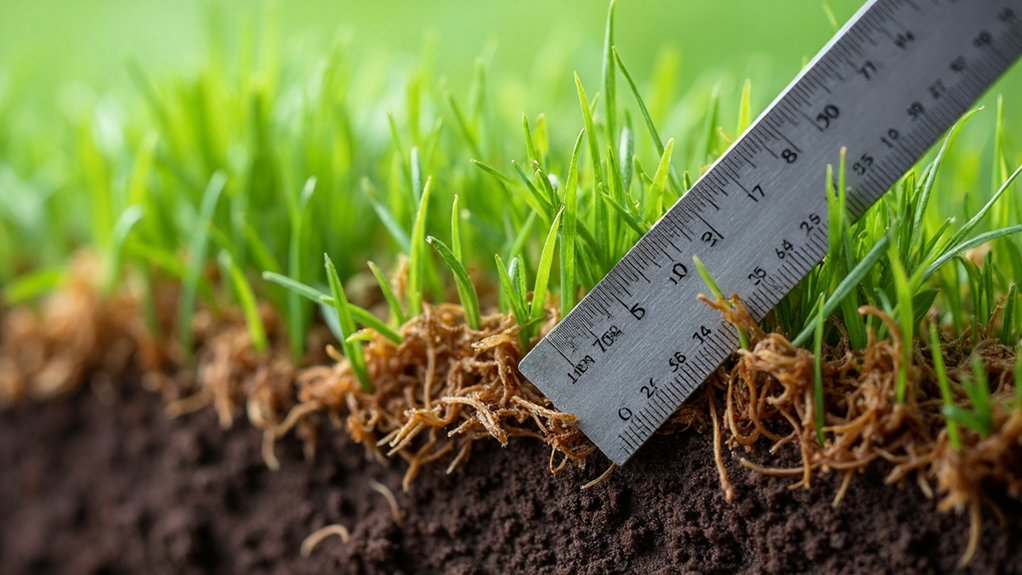
Have you ever wondered why your lush lawn suddenly feels spongy underfoot and struggles to absorb water? You’re likely dealing with excessive thatch buildup—that hidden layer of organic debris lurking between your grass blades and soil surface. While some thatch is beneficial, too much creates a barrier that starves your lawn of essential nutrients and moisture. Understanding how to measure thatch thickness will help you determine whether it’s time to call in the professionals or tackle the problem yourself.
Key Takeaways
- Cut a 2-inch deep soil plug to examine and measure the thatch layer thickness accurately.
- Thatch layers exceeding 1 inch require professional dethatching services to restore lawn health effectively.
- Optimal thatch thickness ranges between 0.25 and 0.5 inches for healthy grass growth and development.
- Spongy lawn texture, poor water absorption, and yellowing grass indicate excessive thatch buildup problems.
- Monitor thatch depth annually through soil sampling to determine when professional intervention is necessary.
What Is Lawn Thatch and Why Does It Matter
When you examine your lawn closely, you’ll notice a dense layer of dead and living plant material sitting right at the base of your grass—this is thatch. This organic layer consists of stems, roots, and debris that naturally accumulate over time. While a thin thatch layer under half an inch actually benefits your lawn by retaining moisture and protecting roots, excessive buildup creates serious problems.
When thatch exceeds one inch thick, it forms a barrier that blocks water, air, and nutrients from reaching the soil below. Your grass roots can’t access essential resources, leading to weak, unhealthy turf. Various factors contribute to thatch accumulation, including grass type, soil conditions, and lawn care products like fertilizers and pesticides. Understanding thatch thickness helps you determine when professional dethatching services become necessary for maintaining a healthy lawn.
Understanding the Ideal Thatch Layer Thickness
Your lawn’s ideal thatch layer sits between a quarter and half inch thick—thick enough to provide valuable benefits without creating problems. This thin thatch layer cushions your grass and retains moisture while allowing water, air, and nutrients to penetrate the soil effectively.
When your thatch layer exceeds one inch, it becomes problematic, blocking essential elements from reaching roots and creating compacted soils underneath. Managing thatch requires monitoring your lawn regularly through soil plug samples you can examine yourself.
Dethatching in the spring becomes necessary when measurements reveal excessive buildup. Professional thatch removal equipment is available at lawn and garden stores, though severe cases warrant expert intervention. Following soil test recommendations helps prevent future accumulation through proper fertilization and maintenance practices.
How to Measure Thatch Depth in Your Lawn
Measuring thatch depth requires nothing more than cutting a small plug from your lawn and examining it closely. Use a sharp knife to cut a 2-inch deep plug, then pull it from the ground. With a ruler, measure the thickness of the brown, fibrous layer between the soil surface and green vegetation—this is your thatch layer.
If you measure thatch at 1/2 inch or less, you’re in good shape. However, if you discover 1 inch or more of excessive thatch, it’s time for action. This buildup restricts water, air, and nutrients from reaching roots, compromising lawn health. Consider professional dethatching services using power rakes or vertical mowers for mechanical removal. Regular monitoring thatch annually helps you determine when professional dethatching becomes necessary for ideal results.
Signs Your Lawn Has Excessive Thatch Buildup
How can you tell if your lawn’s thatch layer has grown beyond the healthy 1/2-inch threshold? Several telltale signs indicate excessive thatch buildup that’s compromising your lawn health. You’ll notice yellowing or browning grass despite regular care, and your lawn will feel spongy underfoot. Water absorption becomes poor, creating puddles after irrigation. Mowing becomes difficult as your mower bounces on the thick thatch layer instead of cutting cleanly.
Even with consistent fertilization, your grass shows nutrient deficiencies because excessive thatch blocks nutrient uptake to grass roots. If you measure thatch and find it exceeds 3/4 inch, dethatching becomes necessary. A soil test can confirm nutrient blockage issues. These symptoms indicate your thatch buildup is preventing water, nutrients, and airflow from reaching roots, weakening your entire lawn.
Factors That Contribute to Thatch Accumulation
While some thatch naturally forms in healthy lawns, certain conditions accelerate accumulation beyond manageable levels. Excessive nitrogen fertilization and poor nutrient management create rapid grass growth that outpaces natural decomposition. Compacted soil restricts root development and limits beneficial microorganism activity essential for breaking down organic matter. When soil pH becomes too acidic, it further inhibits decomposition processes, requiring lawn aeration to improve conditions.
Grass varieties like Kentucky bluegrass produce fibrous tissue that’s particularly resistant to breakdown. Heavy pesticide use kills beneficial organisms that would normally decompose thatch buildup naturally. Poor mowing practices that leave thick grass clippings behind accelerate accumulation. When these factors combine, you’ll need professional lawn dethatching using power rakes or vertical mowers to restore lawn sustainability and proper growing conditions.
When to Schedule Professional Dethatching Services
When your thatch layer exceeds 1/2 to 3/4 inches thick, it’s time to call in professional dethatching services rather than attempting DIY removal. You can determine if your lawn needs intervention by taking a 2-inch soil plug to measure the thatch layer accurately. Professional lawn care experts have specialized equipment to handle thick thatch buildup effectively without damaging your grass.
Don’t ignore excessive thatch, as it blocks nutrients and air from reaching grass roots, leading to lawn decline and pest problems. Schedule dethatching services during the appropriate dethatching season – typically fall for cool-season grasses. This timing verifies your lawn recovers properly and maintains its health. Professional services ensure thorough removal while preserving your lawn’s integrity throughout the process.
Dethatching Methods and Equipment Options
Several dethatching methods exist to tackle thatch buildup, each requiring different equipment and offering varying levels of effectiveness. Power rakes and vertical mowers represent the most efficient options for severe thatch problems. Manual dethatching rakes work well for small areas or light thatch layers, though they’re labor-intensive. Rakes and vertical mowers cut through thatch using curved blades or rake-like tines that penetrate the soil surface. Power rakes are mower-like machines that pull thatch to the surface for easy removal. Equipment rental centers typically stock both power rakes and vertical mowers for weekend projects. However, if your lawn exceeds half an acre or the thatch layer measures over one inch thick, you should consider hiring professional services for ideal results and proper equipment handling.
Preventing Future Thatch Problems Through Proper Lawn Care
After successfully removing existing thatch, you’ll want to implement preventive measures that stop future buildup before it becomes problematic. Start with soil test recommendations to maintain proper pH balance and nutrient levels that support healthy grass growth. Add organic matter regularly to encourage beneficial microorganisms that naturally break down debris. Aerate your lawn annually to reduce compaction and improve root growth conditions.
Follow proper mowing practices by removing only one-third of blade height, preventing excess clippings from contributing to thatch problems. Establish consistent regular watering schedules rather than frequent shallow irrigation. Reduce pesticide applications that harm beneficial soil organisms essential for thatch maintenance. Consider overseeding with quality grass varieties that resist thatch accumulation. These proactive steps create an environment where removing thatch becomes unnecessary through natural decomposition processes.
Frequently Asked Questions
How Thick Should Lawn Thatch Be?
Your lawn’s ideal thatch depth should measure half an inch or less. Monitor thatch layer thickness regularly through density measurement. Excessive thatch accumulation above one inch requires management intervention to maintain suitable thatch height for healthy grass growth.
Does Dethatching Make Grass Thicker?
Think of dethatching as spring cleaning for your lawn! You’ll see thicker grass growth through improved soil aeration benefits and enhanced lawn thatch decomposition, allowing nutrients to reach roots more effectively than before dethatching treatment.
How to Deal With Thick Thatch?
You should dethatch in spring/fall using a dethatching rake, then aerate soil regularly and overseed to improve density. Avoid over-fertilizing, adjust mowing height, manage soil moisture, and monitor thatch buildup for better air circulation.
How to Measure Thatch Layer?
For thatch layer evaluation, you’ll slice a pie-shaped wedge using a spade, then measure the dark material between soil and grass blades. This thatch depth determination helps with thatch accumulation analysis and ideal thatch density assessment.
Conclusion
You’re literally standing on a battlefield where thatch can strangle your lawn’s dreams! Don’t let this silent assassin transform your emerald paradise into a suffocating wasteland. You’ve got the knowledge to detect when your grass is gasping for breath beneath mountains of debris. Take action before your lawn becomes an impenetrable fortress that repels every drop of water and nutrient. Your yard’s survival depends on your vigilance and decisive professional intervention.