
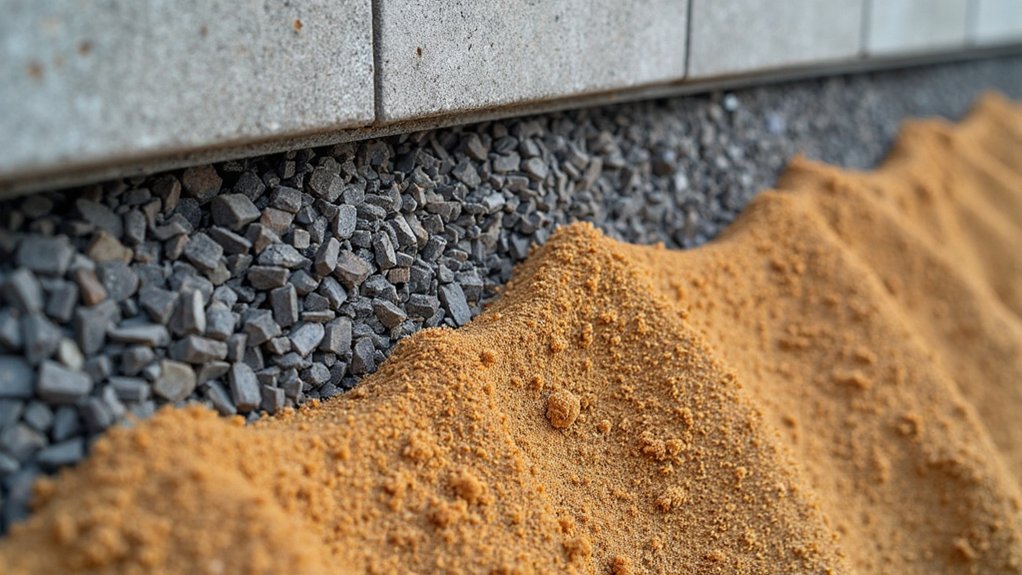
Picture water slowly seeping through cracks in your retaining wall, causing the structure to bow and eventually fail. You’re facing a costly repair that could’ve been prevented with the right backfill materials. The difference between a wall that lasts decades and one that crumbles within years often comes down to what you place behind it. Most homeowners don’t realize they’re making critical mistakes with their material choices—mistakes that’ll compromise their wall’s integrity before they even notice the warning signs.
Key Takeaways
- Well-graded gravel and crushed angular stone provide superior drainage and compaction compared to smooth river rock or rounded materials.
- Sand is more affordable than gravel but requires geotextile fabric and offers poorer drainage, increasing hydrostatic pressure risks.
- Install minimum 12-inch drainage stone layer behind wall with perforated pipe to prevent water buildup and structural failure.
- Avoid soft, organic, or clay-rich soils that retain water and compress poorly, compromising long-term wall stability.
- Angular materials like #57 stone or 3/4-inch crushed rock create better particle interlocking and structural support than rounded alternatives.
Understanding Backfill Material Requirements for Retaining Walls
Selecting the right backfill material determines whether your retaining wall stands strong for decades or fails within a few years. You’ll need materials that provide proper drainage while supporting the wall’s structural integrity through effective compaction.
Your backfill must allow water to flow freely behind the wall, preventing hydrostatic pressure buildup that causes failure. Gravel and crushed rock excel at this because their angular shapes create interconnected void spaces for water movement. You’ll also need materials that compact well under mechanical pressure, creating a stable foundation.
Avoid soft, organic, or clay-rich soils entirely—they retain water and compress poorly, leading to wall movement and eventual collapse. Instead, focus on granular materials like well-graded gravel that offer both drainage capabilities and reliable compaction characteristics for long-term retaining wall performance.
Gravel Types and Their Properties for Wall Backfill
Different gravel types offer varying performance characteristics that directly impact your retaining wall’s stability and longevity. Well graded gravel provides ideal compaction and drainage because its mixed particle sizes create fewer voids. You’ll find crushed angular stone offers superior interlocking properties compared to smooth river rock, which can shift more easily under pressure.
Pea gravel works well for drainage layers but shouldn’t be your primary granular backfill material due to its uniform size and tendency to migrate. Wall rock, typically ranging from ¾-inch to 2-inch diameter, delivers excellent structural support behind your retaining wall. When selecting gravel, prioritize angular particles over rounded ones for better mechanical stability. Clean gravel without fine particles guarantees proper water movement, preventing hydrostatic pressure buildup that could compromise your wall’s integrity.
Sand as a Backfill Option: Benefits and Limitations
Sand presents a more affordable alternative to gravel for retaining wall backfill, though it comes with distinct performance trade-offs you’ll need to ponder. While sand compacts effectively and costs less than gravel, it’s more vulnerable to erosion and doesn’t provide equivalent drainage capabilities. This backfill material can create water buildup behind your wall, potentially compromising structural integrity over time.
You’ll need to install geotextile fabric when using sand to prevent fine particle migration and maintain proper drainage. Most professionals recommend pairing sand backfill with drainage systems like perforated pipes and gravel to address water accumulation risks. Though sand can work for certain projects, gravel or crushed stone typically delivers superior long-term performance for your retaining wall investment.
Drainage Stone Specifications and Installation Guidelines
While sand and gravel serve as primary backfill materials, proper drainage stone installation determines your retaining wall’s long-term success. You’ll need angular, free-draining materials like #57 stone or 3/4 clean crushed rock as your base material. Install a minimum 12-inch layer of drainage stone behind your wall to eliminate water buildup and prevent destructive hydrostatic pressure.
Place perforated corrugated drainage pipe along the bottom of your stone layer to enhance water removal. This system diverts moisture away from the backfill behind your wall structure. Wrap both the drainage stone and pipe with landscape fabric to prevent fine soil particles from clogging your system.
Proper drainage installation and regular maintenance guarantee your wall’s stability and performance for years to come.
Base Material Selection for Stable Foundation Support
Building up from proper drainage, your retaining wall’s foundation demands equally careful attention to base material selection. You’ll need a well compacted base of at least 6 inches using crushed rock, paver base, or similar granular material. This foundation of the retaining wall structure provides essential stability for the entire system.
Taller walls require deeper bases buried below ground level to handle increased loads. You must compact your chosen base material thoroughly using a hand tamper or vibrating plate compactor, ensuring it’s solid and level before placing your first block course.
Poor base preparation leads to settlement, cracking, and structural failure. For specific site conditions and wall heights, consult a professional to determine appropriate material types and required depths for ideal performance.
Wall Rock Requirements for Hollow Block Systems
Once your base is properly prepared, you’ll need to select the right wall rock to fill the hollow cores of your retaining wall blocks. Angular materials are essential for creating maximum friction resistance and preventing movement within the cavities. Your best options include 3/4 crushed rock, #57 or #78 stone, crushed limestone, or Class I/II backfill material.
The angular shape of these materials creates interlocking between particles, adding critical weight and stability to your structure. Size and gradation matter greatly – oversized or poorly graded wall rock material reduces compaction effectiveness and compromises structural integrity.
Proper installation requires thorough compaction of each lift to safeguard your retaining wall can withstand lateral forces and maintain long-term performance and safety.
Drainage System Design and Perforated Pipe Installation
Behind every successful retaining wall lies an effective drainage system that prevents water from undermining your structure’s stability. Install a perforated pipe along the wall’s full length, wrapping it in a drainage sleeve to prevent sediment clogging. Position this pipe within a bed of gravel or crushed stone that extends at least 12 inches behind your wall, creating a free-draining medium that channels water effectively.
Angle the perforated pipe slightly downward, directing it toward a suitable outlet where water can exit safely. This prevents dangerous hydrostatic pressure buildup that could compromise your wall’s integrity. Complement your pipe system by drilling weep holes through the wall itself, providing additional pressure relief points. This thorough drainage approach guarantees your retaining wall remains stable and performs optimally for years.
Compaction Techniques for Different Backfill Materials
After establishing your drainage system, you’ll need to focus on properly compacting your backfill material to ascertain wall stability and prevent settling. The compaction technique depends on your material type. For granular backfill like gravel or crushed stone, use a vibratory plate compactor or hand tamping tool to achieve effective compaction. Cohesive soils such as clay or silt require different approaches—you’ll need a sheepsfoot roller or walk-behind compactor since these materials resist vibration-based methods. Sand-based backfill works well with vibratory plate compactors, but avoid over-compacting to preserve drainage capabilities. Always follow manufacturer recommendations for equipment and techniques specific to your backfill material to guarantee long-term wall performance and stability.
Where to Source Quality Backfill Materials
Where can you find the right backfill materials for your retaining wall project? You’ve got two main options: hardware stores and landscape supply companies. Hardware stores offer convenience with 0.5 cubic foot bags of crushed rock, making them ideal for smaller projects. However, they’re pricier per unit.
Landscape supply companies provide bulk quantities starting at 1/4 cubic yard minimum. They’re considerably more cost-effective for larger retaining wall projects requiring 5 cubic yards or more of backfill. Most offer delivery services, which is essential when you’re dealing with substantial amounts of material.
If you own a truck, buying directly from landscape supply companies delivers the best value. For projects under 5 cubic yards, hardware stores might be your most practical choice despite higher costs.
Common Backfill Mistakes and How to Avoid Them
Even with quality materials from the right suppliers, many retaining wall projects fail because of preventable backfill errors. You’ll compromise your wall’s stability if you use native soil that retains water or contains organic material. These materials create hydrostatic pressure and weaken your foundation.
Don’t place backfill directly against soft soil without proper compaction. This creates settlement issues that’ll damage your wall over time. You’re also making a critical error if you skip installing efficient drainage systems behind your wall.
Avoid mixing different backfill materials randomly, as this creates uneven settling. Never compact backfill in thick layers exceeding eight inches. Instead, compact in thin lifts and test moisture content regularly. These simple precautions prevent costly failures and guarantee your retaining wall performs as designed.
Frequently Asked Questions
What Is the Best Material to Fill Behind a Retaining Wall?
You’ll want compacted crushed stone as your best backfill material. Install perforated drain pipes with filter fabric layers after conducting soil composition analysis. Don’t forget effective waterproofing methods to guarantee your wall’s longevity and stability.
What Material Is Used to Backfill Retaining Walls?
You’ll want well-draining materials like crushed stone or gravel for soil compaction behind walls. Consider waterproof membranes, reinforcement options, and frost protection while managing hydrostatic pressure through proper drainage installation.
What Gravel Is Best for Drainage Behind Retaining Wall?
You’ll want #57 crushed stone gradation for ideal drainage behind retaining walls. Install drainage pipe placement at the base, add waterproofing membrane options, use proper soil compaction techniques, and include geotextile fabric selection for filtration.
Is Sand or Gravel Better for Retaining Wall?
You’ll find gravel outperforms sand considerably. While sand retains water, gravel excels in drainage efficiency and moisture management. Gravel’s superior soil compaction, load bearing capacity, and frost heave prevention make it your better choice.
Conclusion
You’ve now mastered the art of keeping tons of earth from sliding into your neighbor’s prized petunias. Who knew that choosing between gravel and sand could be as complex as selecting a fine wine? But hey, at least your retaining wall won’t judge you for cutting corners on drainage like your last relationship did. Follow these guidelines, and you’ll have a wall that’s more stable than most people’s life choices.