
Just as your home’s gutters channel rainwater away from your roof, a French drain acts as an underground highway system that redirects water before it can threaten your foundation. If you’re a St. Louis homeowner dealing with soggy basements, pooling water, or foundation concerns, you’ve likely heard this solution mentioned by contractors and neighbors alike. But understanding what French drains actually accomplish—and whether your property truly needs one—requires looking beyond the basic concept to examine the specific challenges your home faces.
Key Takeaways
- French drains use perforated pipes and gravel to capture and divert water away from foundations, preventing structural damage.
- Proper installation requires an 18-inch deep trench with 1% slope toward an exit point for continuous water flow.
- St. Louis clay soils and heavy rains make French drains essential for protecting foundations from water damage.
- Annual inspections and biennial pipe flushing prevent clogs and maintain efficient drainage system performance.
- Professional installation ensures proper slope calculations, quality materials, and long-term protection with warranties.
What Is a French Drain and Why Does Your Property Need One?
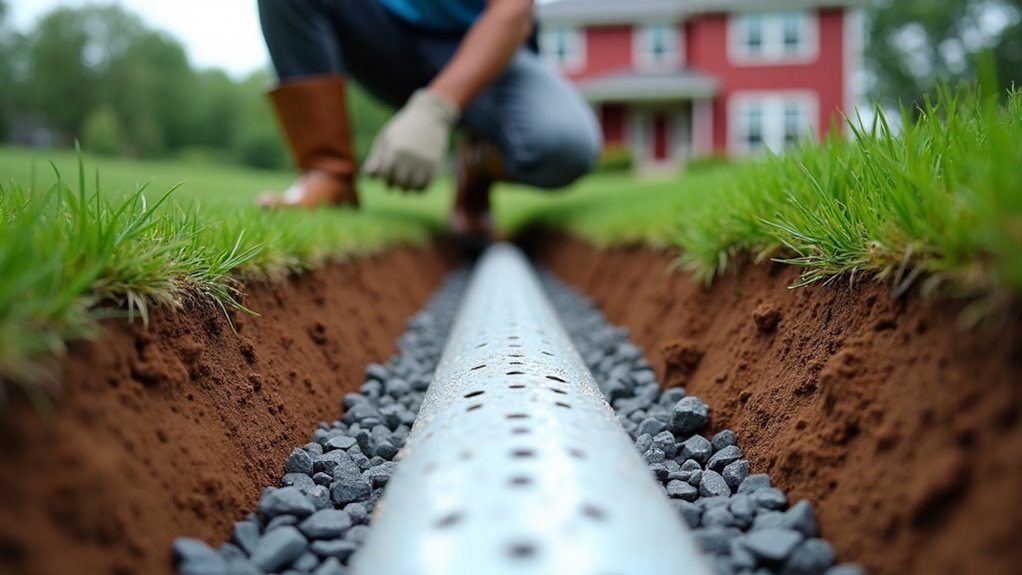
When water pools around your property’s foundation or creates soggy patches in your yard, a French drain offers an effective solution to redirect that excess moisture away from your home. This drainage system consists of a trench filled with gravel, rock, and a perforated pipe wrapped in geofabric that captures and diverts surface or groundwater.
French drains prevent water from ponding in your yard or seeping into your basement, protecting your foundation from potential damage caused by expanding clay soils. If your property sits on a slope where water erosion threatens your landscape, installing this drain system becomes even more pivotal. French drains provide a practical, cost-effective method for managing excess water while preserving your property’s structural integrity.
How French Drains Work to Protect St. Louis Homes
Understanding the mechanics behind French drains helps you appreciate why they’re so effective for St. Louis homes facing seasonal water challenges. Your French drain system works by intercepting water before it reaches your foundation, channeling it through a perforated pipe surrounded by gravel. This drainage solution creates a pathway of least resistance, directing water flow away from vulnerable areas where water accumulation typically causes problems.
The system’s 1% slope guarantees continuous water management, preventing any drainage problem from developing. In St Louis’s climate, where heavy rains and snowmelt create significant water damage risks, proper French drain installation becomes essential protection. The gravel layer filters debris while the geofabric liner prevents soil infiltration, maintaining your system’s long-term effectiveness against foundation threats and structural issues.
Step-by-Step French Drain Installation Process
Proper French drain installation requires careful planning and precise execution to safeguard your St. Louis home stays protected from water damage. You’ll need to identify where water accumulates and plan your drainage system’s exit point, ascertaining a 1% slope away from your foundation.
The installation process involves these key steps:
- Excavate the trench – Dig approximately 18 inches deep and 9-12 inches wide, sloping toward your exit point, then lay geofabric in the bottom.
- Install the drainage components – Place 2-3 inches of coarse gravel, position your pipe, and cover with more gravel.
- Complete the surface – Cover gravel with landscape fabric, then add topsoil and sod for a finished look.
Professional installation guarantees proper slope calculations and long-lasting protection.
Essential Maintenance Tips for Long-Term Performance
Three simple maintenance practices will keep your French drain system functioning effectively for decades in St. Louis. First, inspect your installed French drain annually for clogs or debris accumulation. Remove leaves, dirt, and sediment that can block the perforated pipe openings where water enters the system. Second, flush the drain pipe every two years using a garden hose to clear minor blockages and guarantee water can flow freely through the system. Third, protect the clean rock layer by avoiding heavy foot traffic or vehicle weight over the drainage area. Before any excavation near your property, always call 811 to locate utility lines. These preventive measures will help your system collect water efficiently and prevent costly drainage issues for a long time.
Key Benefits of Professional French Drain Installation
While DIY installation might seem cost-effective, professional French drain installation delivers critical advantages that safeguard your St. Louis property from water damage. Expert installers understand how French drain functions depend on precise slope calculations and proper pipe placement at the bottom of the trench.
Professional installation provides three key benefits:
- Proper System Design – Experienced contractors assess your specific area conditions and integrate drains with existing drainage solutions
- Quality Materials – High-grade components guarantee the system allows water to quickly flow away from your foundation for years
- Comprehensive Protection – Expert installation handles both surface water and subsurface moisture effectively
Installing a french drain requires specialized knowledge of St. Louis terrain and climate conditions. Professional installation includes warranties and maintenance programs, securing your investment delivers long-term protection and peak performance over time.
Choosing the Right French Drain Contractor in St. Louis
When selecting a French drain contractor in St. Louis, you’ll want to prioritize experience and expertise. Louis area contractors should demonstrate extensive knowledge of the region’s unique climate challenges and soil conditions. Louis residents need professionals who can assess your property’s specific drainage requirements and design customized solutions.
Make sure your chosen contractor has decades of industry experience and uses high-quality materials. They should help you avoid common installation mistakes through precise planning and meticulous assembly. A proper French drain typically requires trenches at least two feet deep and several inches wide to effectively channel water away from your property.
The system is used to prevent water damage and protect structural integrity. Choose contractors who navigate installation challenges seamlessly and provide long-term protection for your investment.
Frequently Asked Questions
How Much Does a French Drain Cost in St Louis?
You’ll pay $5,000-$15,000 for French drain installation in St. Louis. Labor costs estimates vary based on terrain impact analysis, drainage system components, and material quality importance, making professional installation advantages worth considering over DIY installation challenges.
What All Do I Need for a French Drain?
You’ll need drainage pipe material, gravel specifications, filter fabric, and proper trench depth guidelines. Consider pipe size requirements, slope factors, and maintenance access. While DIY installation’s possible, professional installation experts guarantee correct pitch and long-term performance.
What Are the Downsides of a French Drain?
You’ll face installation complexity, potential clogging, and ongoing expenses that many overlook. Limited water flow, drainage ineffectiveness, soil erosion risks, aesthetic concerns, and long-term maintenance create groundwater contamination worries you can’t ignore.
What’s the Average Cost to Put in a French Drain?
You’ll spend $3,000-$8,000 for French drain installation, with costs varying based on trench excavation method, drainage pipe size, and installation labor costs. Soil composition analysis and slope determination affect pricing too.
Conclusion
You’ve learned the essentials of French drain installation, from understanding how these systems protect your St. Louis home to selecting the right contractor. Remember, an ounce of prevention is worth a pound of cure—investing in proper installation and regular maintenance now will save you from expensive foundation repairs later. Don’t wait until water damage threatens your property’s value and structural integrity. Take action today to safeguard your home’s future.