
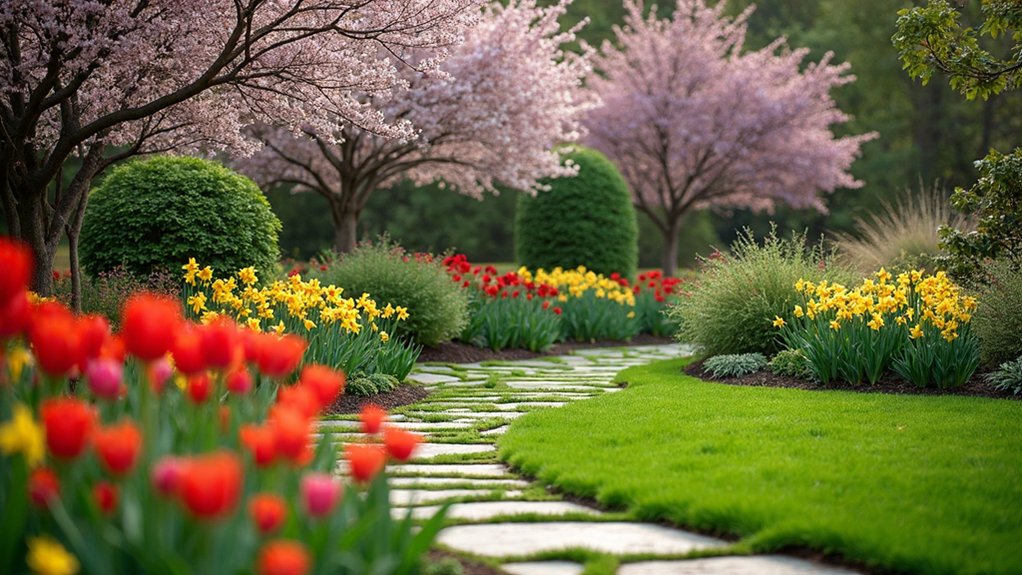
You’ve likely walked past that stunning Victorian home on Maple Street where something’s always blooming—daffodils in March, roses cascading through summer, fiery maples blazing in October, and sculptural evergreens anchoring the winter scene. This isn’t gardening luck or endless maintenance; it’s strategic landscape design that harnesses nature’s seasonal rhythms. Creating your own year-round color display requires understanding how different plants perform throughout the seasons and orchestrating their timing for maximum visual impact.
Key Takeaways
- Establish an evergreen framework with conifers and broadleaf plants to provide year-round structure and visual interest.
- Plant early spring bulbs and emerging perennials in layers to create continuous color displays after winter dormancy.
- Use heat-loving annuals and reliable perennials like coneflowers during summer’s peak growing season for extended blooms.
- Incorporate deciduous trees with fall foliage and late-blooming perennials to maintain vibrant colors through autumn.
- Feature plants with interesting bark, berries, and winter-blooming species to ensure landscape appeal during dormant months.
Building Your Garden’s Year-Round Framework
While flowering plants steal the spotlight with their seasonal bursts of color, your garden’s true backbone comes from the evergreen framework you establish. Evergreen trees and evergreen shrubs maintain their distinctive forms through all seasons, providing consistent visual interest when perennials go dormant. You’ll want to incorporate various types—conifers, broadleaf evergreens, and evergreen perennials—to create textural diversity within your framework.
Pair these permanent shrubs with seasonal bloomers that’ll deliver your desired color palette from spring through fall. Don’t overlook hardscaping elements like stone paths, boulders, and wooden structures that contribute changing textures throughout the seasons. Consider an inside-out design approach, focusing on views from your windows to maximize year-round interest and enjoyment of your landscape investment.
Spring Awakening: Early Season Blooms and Emerging Foliage
As winter’s grip loosens, your garden transforms into a tapestry of awakening color through early spring bulbs and emerging perennial foliage. Tulips, daffodils, and hyacinths create vibrant focal points while hostas unfurl their textural leaves. You’ll establish a continuous display of color by layering low-growing candytuft, creeping phlox, and dianthus throughout your beds.
Shade areas come alive with coral bells, lady’s mantle, and brunnera, adding subtle sophistication to darker corners. As spring progresses, baptisia and peonies prepare their spectacular late-season show while clematis vines climb trellises for vertical interest.
These plants form your garden’s foundation for year-round appeal. By selecting varieties that bloom sequentially, you’ll maintain bright displays from early March through May, ensuring your landscape never lacks visual impact during this critical awakening period.
Summer Symphony: Peak Growing Season Color Strategies
Once temperatures soar and daylight extends well into evening, your garden enters its most dynamic phase where heat-loving annuals steal the spotlight. Zinnias, marigolds, and lantana thrive in scorching conditions, delivering vibrant colors that intensify throughout summer. You’ll want to combine these with reliable perennials like coneflowers, black-eyed Susans, and daylilies that bloom for months without faltering.
Create lasting structure with heat-tolerant shrubs:
- Crape myrtles provide spectacular summer-long blooms in multiple colors
- Butterfly bushes attract pollinators while offering fragrant flower spikes
- Hydrangeas deliver bold statements in partially shaded areas
- Coleus in containers adds foliage interest and complements flowering plants
Maintain peak performance by deadheading spent blooms, watering consistently, and fertilizing regularly to keep your summer symphony playing strong.
Autumn Transformation: Fall Foliage and Late-Season Interest
When summer’s heat begins to wane, your landscape prepares for nature’s most spectacular color show as deciduous trees and shrubs ignite with brilliant reds, oranges, and yellows. This stunning autumn display transforms your garden into a living masterpiece of fall foliage.
Late-blooming perennials like chrysanthemums, asters, and sedums deliver important late-season interest, providing vibrant pops of color as temperatures drop. Ornamental grasses develop rich hues and dramatic seed heads, adding necessary texture and movement to your landscape’s seasonal changes.
Your evergreen shrubs and trees become the backbone during this shift, offering reliable structure and contrast to the colorful fall foliage. Careful planning with plants featuring extended bloom periods guarantees your garden maintains winter interest, creating a seamless flow from autumn’s peak into winter’s quiet beauty.
Winter Beauty: Structure, Bark, and Evergreen Elements
Winter strips away autumn’s fleeting brilliance to reveal your garden’s true architectural bones. Evergreen trees and shrubs like ‘Sky Pencil’ holly provide essential structure and form when deciduous plants sleep. You’ll discover that exfoliating bark from paperbark maple and ‘Radiance’ Abelia creates stunning texture against winter’s stark backdrop.
Consider these winter garden essentials:
- Structural elements – Evergreen specimens maintain your garden’s framework
- Bark interest – Trees with peeling bark add visual drama and texture
- Vibrant berry displays – Holly and mahonia provide seasonal color while feeding birds
- Early bloomers – Winter-blooming perennials like Mountain Snow™ Pieris extend your growing season
Strategic pruning and garden maintenance during dormant months strengthens your landscape’s foundation. This thoughtful approach guarantees year-round appeal that transcends seasonal limitations.
Plant Selection and Maintenance for Continuous Color
Creating continuous color throughout your garden requires strategic plant selection that choreographs blooms across three distinct seasons. You’ll want to choose early spring bloomers like crocuses and daffodils, followed by late spring and summer perennials such as peonies and delphiniums. Mix annuals and perennials strategically to create pops of color when gaps appear between bloom periods.
Incorporate evergreen trees and shrubs as your garden’s backbone, providing structure and color all year when flowering plants go dormant. These elements serve as focal points while adding essential color and texture to your landscape.
Regular deadheading encourages plants to bloom throughout the growing season. Apply 2-4 inches of organic mulch around plantings to retain moisture and suppress weeds, ensuring your carefully planned succession of blooms thrives continuously.
Frequently Asked Questions
What Is Seasonal Color in Landscaping?
You’ll create seasonal color coordination through strategic plant selection considerations, integrating flowering shrubs with annuals and perennials. Your bulb planting strategies, soil preparation techniques, and climate zone adaptations guarantee vibrant displays year-round.
What Is the Gardening 3 Year Rule?
Consider planting peonies: you’ll wait three years for full blooms. The gardening 3-year rule means perennial plant life cycles need time establishing roots before reaching maturity. Your flowering plant bloom sequence improves dramatically once plants settle into their garden layout planning.
What Landscaping Looks Good Year-Round?
You’ll create stunning year-round landscapes by combining hardy evergreen shrubs with seasonal perennial blooms, drought tolerant ground covers, and winter interest plants. Add low maintenance flowering trees and fragrant ornamental grasses for continuous beauty.
What Is the Rule of Three in Garden Design?
Like telegraph operators creating rhythmic patterns, you’ll group plants in threes for visual balance. This creates focal points through specimen plantings, establishes coordinated color schemes, and builds layered compositions with textural contrasts for harmonious garden design.
Conclusion
You’ve painted your garden’s masterpiece—a living canvas that dances through time’s endless waltz. Each season’s brushstroke adds its own magic: spring’s gentle whispers, summer’s bold crescendo, autumn’s fiery finale, and winter’s quiet strength. Your landscape now breathes with purpose, pulsing with color that never sleeps. You’ve created more than a garden; you’ve orchestrated nature’s symphony, where every plant plays its part in your year-round celebration of beauty.