
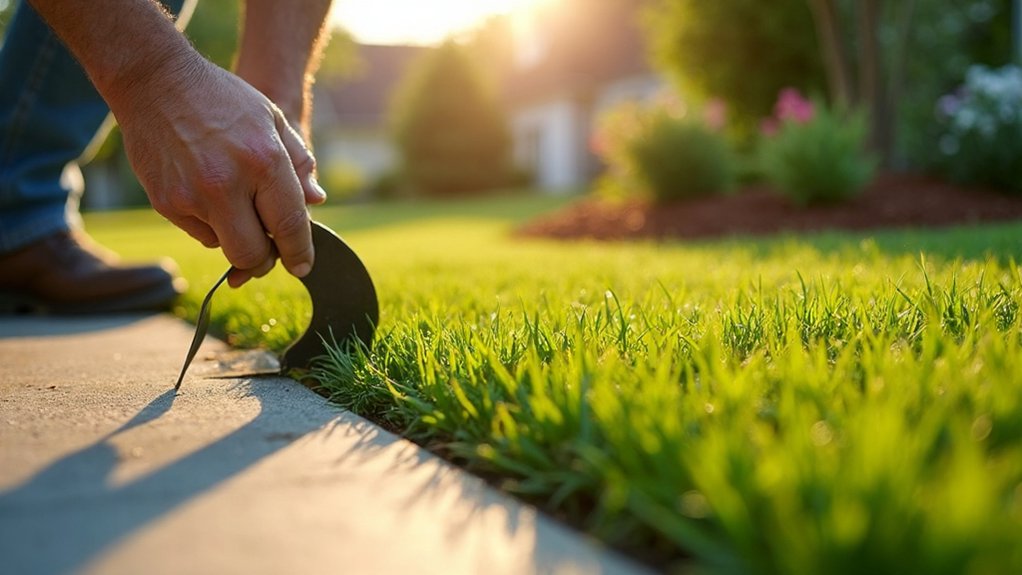
You’ve probably heard that professional-looking lawns require expensive landscaping services, but that theory crumbles when you master proper edging techniques. The crisp, defined lines that separate your grass from walkways and garden beds aren’t just aesthetic—they’re achievable with the right tools and know-how. Whether you’re wielding a simple manual edger or investing in motorized equipment, the difference between amateur and professional results often comes down to timing and technique that most homeowners overlook.
Key Takeaways
- Manual edgers offer precise control while gas-powered and electric options handle larger areas more efficiently.
- Plastic edging is affordable and flexible, while metal, stone, and concrete provide increasingly durable and professional appearances.
- Prepare by trimming grass and clearing debris, then use manual tools for straight edges before switching to power tools.
- Edge during active grass growth seasons to avoid damaging dormant grass and ensure clean, healthy cuts.
- Wear protective gear, maintain proper stance, and regularly remove clippings to ensure safety and professional results.
Why Edging Your Lawn Is Worth the Effort
While many homeowners focus on mowing and watering, they often overlook one of the most impactful lawn care practices: edging. Edging your lawn creates dramatic visual impact by establishing straight lines and defined borders between grass, walkways, and garden beds. This essential lawn maintenance technique instantly boosts your property’s curb appeal while adding style and organization to your landscape.
Edging keeps grass from invading flower beds and pathways, maintaining clean boundaries that make your outdoor space look professionally maintained. The process edging involves—whether using manual edging tools or powered equipment—transforms overgrown areas into crisp, manicured borders. Beyond aesthetics, proper lawn care through regular edging prevents root competition between grass and plants. Quality edging materials and consistent technique turn an ordinary yard into an extraordinary landscape that reflects pride in homeownership.
Manual vs. Motorized Edging Tools and Equipment
Once you’ve decided to make edging part of your lawn care routine, selecting the right tools becomes your next priority. Manual edger options like half-moon edger and spade tools require more physical effort but deliver precise edges with complete control. Power edgers offer substantially more speed and efficiency for larger areas. Gas-powered edger models tackle thick, overgrown grass effectively but produce noise and exhaust. Electric edger tools provide quieter operation, while cordless edger models offer excellent mobility without cord limitations for small to medium lawns. Stick edger tools consistently create cleaner, straighter lines compared to string trimmer alternatives, which can produce uneven results without careful technique. Your choice depends on lawn size, physical capabilities, and preferences for precision versus power and convenience.
Types of Lawn Edging Materials and Installation
Beyond choosing the right tools, you’ll need to select edging materials that complement your landscape design and installation preferences. Plastic lawn edging offers an inexpensive, flexible solution with interlocking pieces for straightforward installation around garden beds and flower beds. Metal options like aluminum or steel provide professional-looking clear borders that withstand corrosion while maintaining a straight line along driveways and walkways. Stone edging creates natural, rustic boundaries perfect for organic landscape designs, whether installed in-ground or as decorative barriers. Wood edging delivers warmth at lower costs and pairs beautifully with stone accents. For the ultimate perfect lawn, concrete edging provides maximum durability and permanence, allowing decorative elements like river rocks. Your lawn edger and sharp blades will work with any material choice.
Step-by-Step Lawn Edging Techniques
Five essential steps will transform your lawn’s appearance when you master proper edging techniques. First, prepare your lawn by trimming grass to uniform height and clearing debris from borders. Next, choose your edging style—natural, metal, stone, or plastic—based on your preferences.
Use a manual edger to establish a straight edge, pushing down firmly to cut through soil and grass roots for a clean edge. For larger areas, switch to power tools like a rotary edger, adjusting blade height while maintaining steady pace.
Complete the process by removing clippings and smoothing irregular spots. The best time to edge your lawn is when grass growth is active. Common mistakes to avoid include cutting too deep or rushing the process when using an edger to cut precise lines.
Maintenance and Safety Best Practices
While proper technique creates beautiful lawn edges, maintaining them requires consistent care and attention to safety protocols. Make sure you’re using the right tools for your outdoor space by regularly inspecting your equipment for lawn maintenance. Replace worn string trimmer lines to guarantee your tools for lawn edging perform optimally when you edge along borders throughout the growing season.
Always wear protective gear including gloves, safety glasses, and ear protection when using manual edging tools and techniques. Maintain a balanced stance and watch for uneven terrain to prevent accidents. After completing your edging work, remove all grass clippings and debris to preserve that professional look. Regular mowing combined with consistent maintenance of your tools and techniques will keep your equipment for lawn functioning properly and your edges crisp.
Frequently Asked Questions
What Are Common Mistakes When Edging?
You’ll create jagged edges using dull blades with improper blade angle. Rushing causes uneven edging lines and inconsistent edging depth. You’re damaging nearby plants, overexposing lawn edges, and neglecting debris removal while skipping adequate maintenance.
When’s the Best Time to Edge Your Lawn?
You’ll absolutely transform your lawn’s appearance! The ideal season for edging is spring when soil’s moist and grass grows actively. Follow seasonal guidelines by edging during favorable weather conditions, avoiding hot summer months when moisture’s scarce.
Is It Better to Edge a Lawn When Wet or Dry?
You’ll achieve better edge definition when soil moisture content is ideal—slightly moist but not soggy. This improves tool performance and labor efficiency while enhancing edge aesthetics and supporting lawn health better than dry conditions.
What Is the Best Tool for Trimming Lawn Edges?
You’ll find rotary lawn edgers and electric edging tools work best for most situations. Manual lawn edgers suit smaller yards, while gas powered edgers handle tough jobs. String trimmers work but dedicated landscape edging machines deliver cleaner results.
Conclusion
You’ll transform your yard from ordinary to absolutely jaw-dropping with proper edging techniques. Don’t let overgrown grass blur your landscape’s lines—crisp edges will make your lawn look like a million bucks. Remember to maintain your tools regularly and prioritize safety with every cut. Combined with consistent mowing, you’ll create outdoor spaces that’ll impress neighbors and boost your home’s value. Master these edging fundamentals, and you’ll enjoy professional-looking results that last all season long.