
You’ve probably heard that exterior drainage systems are the ultimate solution for wet basements, but is this claim actually true? While interior methods like sump pumps get water out after it’s already entered your home, exterior systems work differently—they prevent water from reaching your foundation walls in the first place. This fundamental difference in approach could mean the difference between a temporary fix and a permanent solution, but there’s more to ponder before you make this significant investment.
Key Takeaways
- Exterior drain tile systems use perforated pipes around foundations to collect and redirect groundwater before it reaches basement walls.
- French drains create gravel-filled trenches with pipes that intercept water during heavy rainfall, managing higher volumes than interior systems.
- Exterior waterproofing membranes on foundation walls combined with proper landscape grading provide superior long-term moisture protection.
- Professional installation requires extensive excavation but delivers decades of reliable performance with minimal maintenance compared to interior solutions.
- Quarterly inspections of drains and downspouts plus bi-annual grading reviews ensure optimal system performance and prevent water damage.
Understanding How Exterior Drainage Systems Prevent Water Intrusion
When groundwater builds up around your foundation, it creates relentless pressure that’ll eventually find its way into your basement through even the smallest cracks. Exterior drainage systems tackle this problem at its source by intercepting water before it reaches your home’s foundation walls.
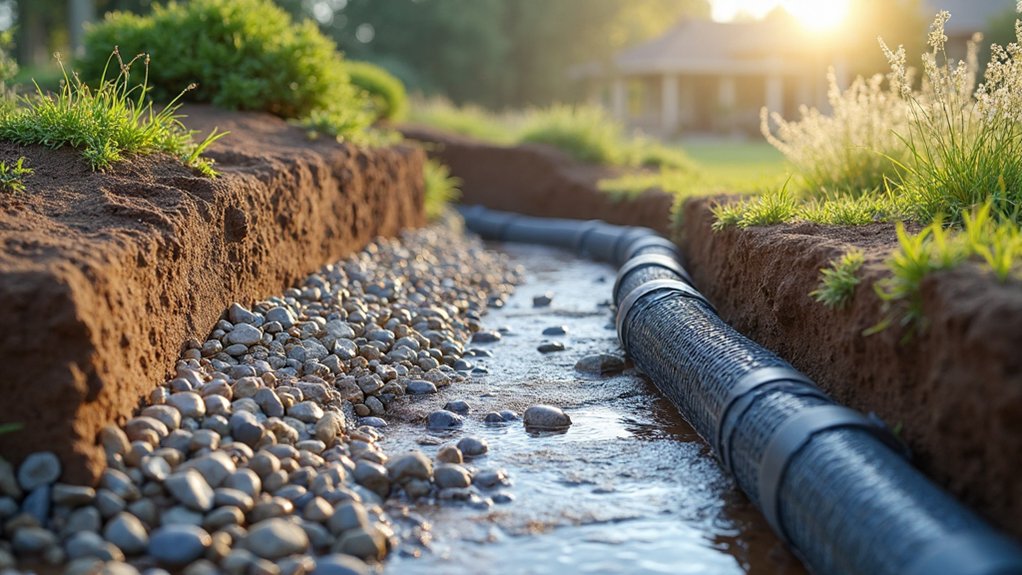
These systems work through two primary methods: drain tile systems and French drain system installations. Both use perforated pipes buried in the soil around your home’s perimeter to capture groundwater and redirect it away from vulnerable areas. The pipes collect water that would otherwise accumulate against your foundation, substantially reducing hydrostatic pressure.
Types of Exterior Basement Drainage Solutions
Building on these fundamental drainage principles, you’ll find several exterior solutions available to protect your basement from water intrusion. Exterior drainage systems include drain tile installations that place perforated pipes around the foundation to collect groundwater and channel it away. French drains create gravel-filled trenches with pipes that intercept water before it reaches your basement walls.
Exterior waterproofing membranes applied directly to foundation walls form protective barriers against moisture. You can also implement landscape grading techniques that slope water away from your home, combined with properly positioned downspouts that direct roof runoff to safe distances.
While exterior systems typically cost more than interior alternatives, exterior basement waterproofing solutions often provide superior long-term protection by addressing water problems at their source.
Benefits of Choosing Exterior Over Interior Drainage Methods
While interior drainage methods can address existing water problems, exterior systems offer distinct advantages that make them the superior choice for long-term basement protection. Exterior drainage systems provide an all-encompassing solution by intercepting water intrusion before it reaches your foundation walls. French drains excel at managing higher water volumes during heavy rainfall compared to interior sump pump systems.
You’ll also see financial benefits beyond just protection. These systems increase your home’s resale value by demonstrating you’ve tackled basement moisture problems with a thorough approach. While the upfront investment is higher, exterior drainage creates a long-term solution that lasts decades with minimal maintenance. This prevents costly water damage and expensive mold remediation, ultimately saving you money over time.
Installation Process for Exterior Drainage Systems
Installing exterior drainage systems calls for careful planning and methodical execution that transforms your property’s water management capabilities. You’ll need professional contractors who’ll excavate around your basement walls, removing landscaping and concrete as necessary. This extensive process requires heavy equipment to reach your foundation’s floor level.
The installation follows these critical steps:
- Excavation – Workers dig trenches around your basement perimeter, exposing foundation walls completely
- System Installation – Perforated pipes are positioned with proper slope toward your sump pump or drainage outlet
- Backfilling – Gravel surrounds the pipes before soil replacement, creating effective water collection
Your contractor will waterproof exposed foundation surfaces and guarantee proper grading directs water away from your home. This thorough approach relieves hydrostatic pressure against basement walls, keeping your basements permanently dry.
Cost Analysis and Budget Planning for Exterior Solutions
Breaking down the financial investment for exterior drainage solutions requires understanding that these extensive systems typically start at $10,000 and can escalate substantially based on your property’s unique challenges. Your budget planning must account for extensive excavation costs, which drive up expenses greatly. Professional installation typically costs 2-3 times more than DIY approaches, but hiring a professional guarantees proper waterproof membrane integration and long-term warranties for your water problems.
Your cost analysis should factor in soil type, climate conditions, and water table depth, as these variables dramatically impact final pricing. Larger basements require more materials and labor for effective drainage around the foundation perimeter. Don’t forget additional expenses like landscaping repairs, permits, and potential utility relocations. These full-fledged systems address serious water issues but demand substantial upfront investment for lasting results.
Maintenance Requirements for Long-Term System Performance
Most exterior drainage systems will fail prematurely without consistent maintenance, making your ongoing commitment just as important as the initial installation investment. Regular maintenance protects your investment and guarantees optimal performance for decades.
Your maintenance schedule should include these critical tasks:
- Quarterly inspections – Check downspouts and French drains for clogging from debris, leaves, and sediment buildup that restricts water flow.
- Annual testing – Test sump pumps by pouring water into the pit, verify proper operation, and clear any obstructions around the intake.
- Bi-annual landscaping review – Maintain proper grading around your foundation, address soil erosion, and ensure gutters direct water away effectively.
Additionally, you’ll need to reapply exterior waterproofing coatings every 5-10 years and immediately repair foundation cracks to preserve your exterior drainage systems’ integrity.
Frequently Asked Questions
What Is the Best Way to Waterproof a Basement From the Outside?
You’ll need exterior foundation excavation for waterproofing membrane application and French drain installation. Add subterranean drainage pipes with underground downspout diversion for hydrostatic pressure mitigation. These basement damp proofing techniques provide effective basement water management.
What Is the Best Drainage System for a Basement?
You’ll want a perimeter drainage tiles system with French drain installation and proper sump pump setup. Don’t forget slope grading corrections, downspout extensions, and below floor drainage systems for thorough protection.
How Do I Permanently Remove Moisture From My Basement?
Don’t put the cart before the horse—first repair foundation cracks and install below grade waterproofing. Then add french drain installation, proper soil grading, downspout extensions, and sump pump installation for permanent moisture removal.
Is Exterior Waterproofing Worth It?
Exterior waterproofing’s worth depends on your basement condition assessment. If you’re facing severe water issues, exterior foundation repair with waterproofing membranes, drainage pipe systems, and proper grading justifies the investment.
Conclusion
You’ve now got the blueprint to build your foundation’s fortress against water intrusion. Like Noah preparing for the flood, investing in exterior drainage systems means you’re thinking ahead rather than bailing out later. Your basement won’t become an unwanted swimming pool, and you’ll sleep soundly knowing you’ve chosen the gold standard of water management. Don’t wait for the storm—your home’s ark needs proper drainage before the rains come.