
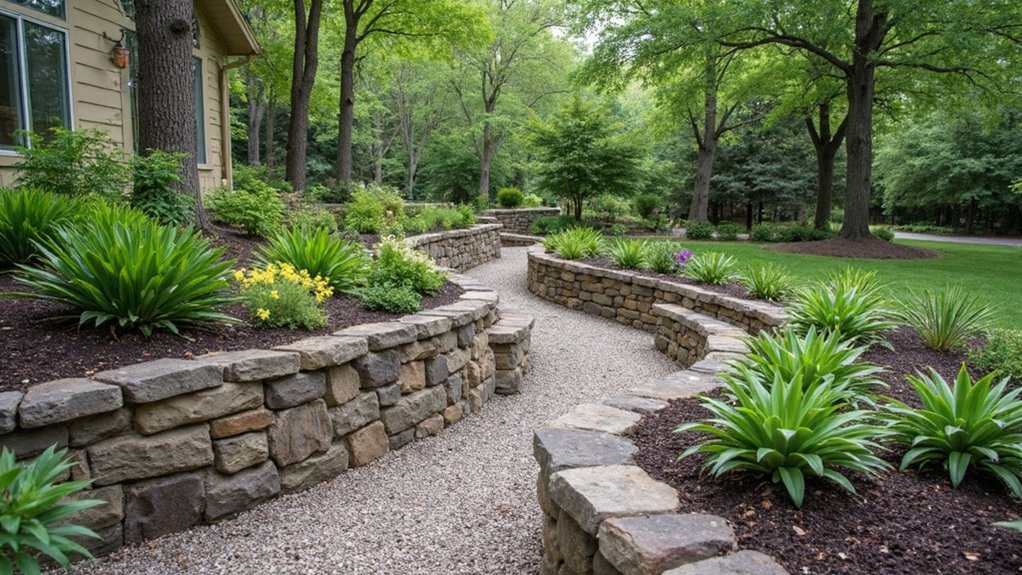
When the Johnsons moved to their new home in Clayton, they discovered their dream backyard came with a nightmare: dense clay soil that turned into concrete during dry spells and a muddy swamp after every rain. You’ve likely faced similar frustrations if you’re a St. Louis homeowner trying to establish a beautiful landscape. The region’s heavy clay presents unique challenges, but there’s hope – with the right strategies, you can transform your stubborn soil into a thriving garden paradise.
Key Takeaways
- Install raised beds and French drains to improve drainage and prevent water pooling in heavy clay soil areas.
- Amend clay soil annually with organic compost and perform core aeration to reduce compaction and improve root penetration.
- Select native clay-tolerant plants like purple coneflower, eastern redbud, and little bluestem for sustainable landscape success.
- Create rain gardens and bioswales with native plants to manage stormwater runoff and reduce erosion on slopes.
- Use permeable hardscaping materials like porous concrete and gravel pathways to reduce water runoff and soil compaction.
Understanding St. Louis Clay Soil Challenges
The heavy clay soil that dominates St. Louis properties presents unique challenges you’ll need to address in your landscape design. This dense, clay-heavy soil creates poor drainage conditions that cause water to pool around your home’s foundation and garden areas. When rain saturates the clay, it expands considerably, then contracts during dry periods, creating unstable ground that can damage structures and disrupt your landscaping efforts.
You’ll notice this soil becomes rock-hard when dry and muddy when wet, making it difficult for plant roots to penetrate and thrive. The compaction issues worsen with foot traffic, creating an inhospitable environment for grass and garden plants. Without proper drainage solutions like a retaining wall system, you’ll face ongoing problems with erosion, foundation settling, and failed landscaping investments throughout St. Louis’s seasonal weather extremes.
Signs Your Property Has Clay Soil Problems
Identifying clay soil problems on your property becomes straightforward once you know what warning signs to watch for. When heavy rains hit St. Louis’s climate, you’ll notice puddles forming that refuse to drain, sometimes lingering for days. Your soil will crack dramatically during dry spells, creating deep crevices that reveal the dense clay beneath. You’ll struggle with soil erosion on slopes where compacted clay soil can’t absorb water properly, causing runoff that washes away topsoil. Your plants will show distress signals too – stunted growth, yellowing leaves, and poor flowering indicate roots can’t penetrate the dense clay effectively. These visual cues make it easy to confirm you’re dealing with challenging clay soil conditions.
Soil Amendment Strategies for Clay Improvement
Once you’ve confirmed your property struggles with clay soil, implementing targeted amendment strategies will transform your challenging landscape into thriving garden beds. These proven techniques will improve drainage, enhance nutrient availability, and create healthier growing conditions for your plants.
- Add organic matter – Work compost or peat moss into existing soil to improve drainage, aeration, and nutrient content naturally
- Schedule annual aeration – Use a core aerator to break up compaction and allow water and air to penetrate dense clay layers
- Adjust soil pH – Apply gypsum or lime to optimize pH levels, making essential nutrients more accessible to your plants
- Implement strategic mulching – Apply 2-4 inches of organic mulch around planting beds to retain moisture and prevent surface crusting
- Select appropriate plants – Choose clay-tolerant species with deep, fibrous roots that naturally improve soil structure over time
Native Plants That Thrive in St. Louis Clay
While soil amendments can dramatically improve clay conditions, selecting native plants naturally adapted to St. Louis clay soils offers a more sustainable landscape design approach. You’ll find that Missouri natives like little bluestem, purple coneflower, and butterfly milkweed thrive in heavy clay without requiring extensive soil modifications. These species have evolved alongside the region’s challenging soil conditions.
Consider incorporating wild bergamot and New England aster, whose deep fibrous root systems actually improve soil structure and drainage over time. For vertical interest, plant serviceberry, eastern redbud, and oakleaf hydrangea—native trees and shrubs that tolerate poor drainage and nutrient-poor conditions.
Prairie grasses like prairie dropseed and sideoats grama provide drought tolerance while stabilizing clay soils with extensive root networks, creating low-maintenance landscapes perfectly suited to St. Louis conditions.
Raised Bed and Mound Planting Techniques
When native plants aren’t suitable for your specific landscape goals, raised beds and mounds offer an effective alternative that bypasses St. Louis clay soil challenges entirely. These elevated planting solutions create ideal growing conditions by lifting your plants above problematic clay layers.
You’ll find raised beds particularly effective for outdoor design projects requiring excellent drainage. Construct them using wood, stone, or other durable materials, then fill with high-quality potting mix. Retaining walls can double as planting beds for multi-functional landscaping.
- Improve drainage and air circulation around plant roots
- Create customized soil conditions for specific plants
- Reduce soil compaction issues common in clay
- Enable easier garden maintenance and accessibility
- Allow successful vegetable and herb cultivation
Both techniques transform challenging clay into productive growing spaces.
Drainage Solutions for Clay-Heavy Properties
Although raised beds provide excellent growing solutions, addressing underlying drainage issues across your entire property requires a more extensive approach. You’ll need to install French drains, dry creek beds, or underground pipes to manage excess moisture effectively. Proper grading that directs water away from your foundation prevents costly structural damage.
Consider incorporating a rain garden or bioswales using native plants that naturally absorb stormwater runoff. Rain gardens aren’t just functional—they’re beautiful landscape features that work with St. Louis’s climate. If slopes are problematic, retaining walls can control erosion while creating terraced planting areas.
Don’t forget soil amendments. Regularly adding compost and aerating your clay soil improves drainage over time. When you design and build these drainage solutions together, you’ll transform your waterlogged property into a thriving landscape.
Hardscaping Options for Clay Soil Areas
Beyond drainage systems, strategic hardscaping creates functional spaces that work with clay soil rather than against it. You’ll find that choosing the right materials transforms problematic clay areas into beautiful, functional outdoor spaces while effectively managing water flow.
Smart hardscaping solutions help manage stormwater naturally:
- Permeable pavers and porous concrete – Allow water infiltration while reducing runoff from patios and driveways
- Raised garden beds with amended soil – Create ideal growing conditions above clay layers
- Natural Stone retaining walls – Stabilize slopes and control drainage flow patterns
- Gravel pathways and dry creek beds – Channel water away from problem areas using aggregate permeability
- Gabion walls – Provide porous drainage solutions that excel in clay soil environments
These approaches turn clay soil challenges into design opportunities.
Professional Vs DIY Clay Soil Management
Professional landscapers understand Environmental Protection Agency guidelines and MSD Project requirements for drainage solutions, guaranteeing costly compliance issues are avoided. They’ll properly install drainage systems and amend clay soils using proven techniques that DIY approaches typically can’t replicate effectively.
Though hiring a professional landscaper requires upfront investment, you’ll save money long-term by avoiding plant replacements and drainage problems. Their expertise in soil preparation verifies your landscape thrives rather than struggles against St. Louis’s challenging clay conditions.
Long-Term Maintenance for Clay Soil Landscapes
Once you’ve established your clay soil landscape, keeping it healthy requires consistent attention to soil structure and plant needs. Your maintenance routine should focus on preventing compaction while supporting proper drainage. Annual aeration and compost amendments keep your soil loose and nutrient-rich, while strategic mulching prevents surface hardening.
- Annual soil aeration – Break up compacted clay layers each spring to improve root penetration and water infiltration
- Compost incorporation – Add organic matter yearly to enhance soil structure and microbial activity
- Rain garden maintenance – Clean debris from bioswales that collect runoff and filter pollutants naturally
- Native plant monitoring – Choose species suitable for St. Louis clay conditions that reduce runoff through deep root systems
- Erosion control – Address standing water issues promptly to prevent landscape damage
Frequently Asked Questions
How Much Does Clay Soil Remediation Typically Cost for Average Residential Properties?
You’ll spend $1,500-$4,000 for clay soil remediation on average property size. Soil testing costs $50-$200, organic matter addition runs $800-$2,500, and professional consultation fees range $200-$500, depending on your specific needs.
Can I Grow Vegetables Successfully in St. Louis Clay Soil Conditions?
Breaking clay’s stubborn grip, you’ll grow thriving vegetables through strategic solutions. Start with soil testing, then build raised garden beds filled with organic matter amendments. Practice crop rotation to maintain soil health and maximize your harvest potential.
How Long Does It Take to See Improvements After Amending Clay Soil?
You’ll notice clay soil compaction reduction within 2-3 months after applying amendments. Drainage enhancement methods show results in 4-6 months, while nutrient deficiency correction takes a full growing season. Your soil amendment timeline depends on consistency and proper techniques.
Should I Remove Existing Clay Soil or Work With What’s There?
Like wrestling a stubborn mule, you shouldn’t remove clay soil entirely. Instead, create raised garden beds, focus on tilling in compost, install proper drainage solutions, and monitor soil moisture content—you’ll transform what you’ve got.
What’s the Best Time of Year to Start Clay Soil Improvement Projects?
You’ll find early spring and late fall offer ideal seasonal timing for clay soil improvement projects. Start with soil testing during these periods when you’re not dealing with frozen ground or summer heat stress.
Conclusion
You’ve now mastered the ancient art of wrestling with St. Louis clay—that stubborn, concrete-like substance masquerading as soil in your yard. Armed with organic matter, native plants, and drainage tricks, you’ll transform your soggy, rock-hard landscape into something that won’t make your neighbors snicker. Sure, you could’ve moved to Florida instead, but where’s the fun in gardening without a daily battle against Mother Nature’s practical joke?