
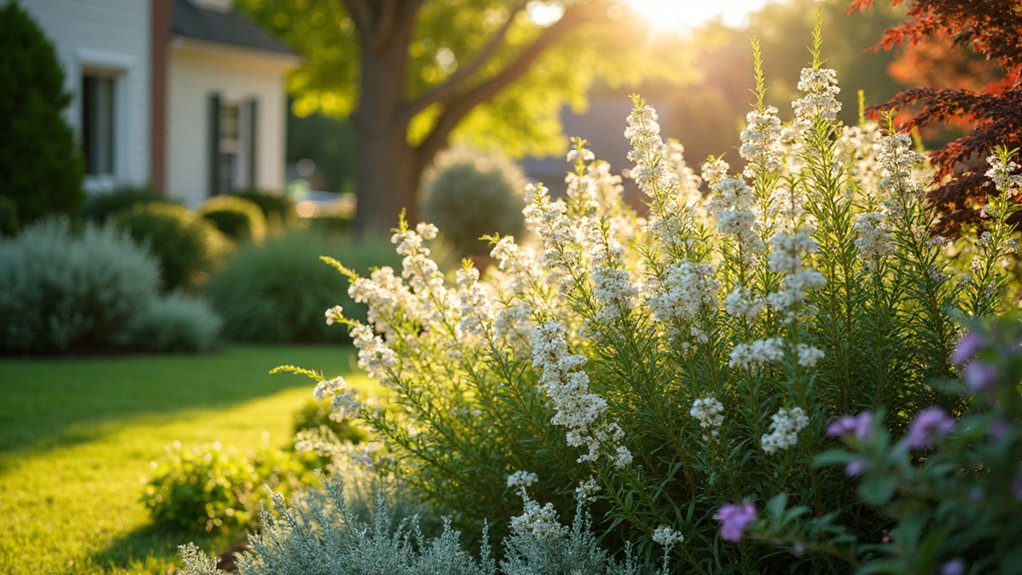
You’ve probably spent countless weekends battling non-native plants that demand constant watering, pruning, and fertilizing while offering little in return. Native Missouri shrubs flip this scenario entirely—they’re perfectly adapted to your local climate and soil conditions, requiring minimal intervention once established. These resilient plants don’t just survive; they create thriving ecosystems that attract beneficial wildlife while dramatically reducing your maintenance workload. The secret lies in understanding which species work best for your specific landscape challenges.
Key Takeaways
- Native Missouri shrubs like serviceberry, sumac, and chokeberry are perfectly adapted to local climate and soil conditions.
- These shrubs require minimal maintenance once established due to their extensive root systems and natural resilience.
- Staggered bloom times provide continuous nectar sources for pollinators from spring through fall seasons.
- Layered plantings at varying heights create natural wildlife corridors while maximizing habitat potential.
- Self-sustaining ecosystems develop when native species are grouped together, reducing long-term intervention needs.
Understanding Native Missouri Shrubs and Their Benefits
When you choose native Missouri shrubs for your landscape, you’re selecting plants that have evolved specifically to thrive in the state’s challenging climate conditions. These plants native to Missouri have developed extensive root development systems that help them withstand hot, humid summers and harsh winters without requiring constant intervention. Unlike non-native species that struggle with local soil conditions, native shrubs naturally adapt to Missouri’s clay-heavy terrain and variable moisture levels.
Your low maintenance approach becomes effortless when you incorporate these resilient species. Shrubs and trees that originated in Missouri support local ecosystems while reducing your workload considerably. They’ll attract beneficial pollinators, provide seasonal interest through colorful flowers and berries, and create sustainable landscapes that practically maintain themselves once established in your yard.
Site Analysis for Optimal Shrub Placement
Before selecting which native Missouri shrubs to plant, you’ll need to thoroughly evaluate your property’s unique conditions and microclimates. Examine your landscape during different seasons to understand sun, wind, and shade patterns that’ll affect shrub placement. Assess soil drainage carefully, identifying areas where water pools or runs off quickly, as essential for healthy root development.
Conduct a thorough soil test to determine necessary amendments for supporting native shrub growth. Pay special attention to the root zone of existing trees—avoid tilling beneath them to prevent damaging their root systems. Instead, address soil compaction under trees by core aerating and adding compost to the holes. This approach improves growing conditions without harming established roots while creating ideal environments for your new native Missouri shrubs.
Top Evergreen Native Shrubs for Year-Round Interest
Once you’ve identified the right locations through your site analysis, selecting evergreen shrubs becomes your next priority for creating structure and winter appeal in your Missouri landscape. Ilex glabra ‘Compacta’ excels in wet areas and heavy soils while tolerating both full sun and shade conditions. This versatile inkberry provides excellent erosion control on slopes and challenging sites.
For formal designs, Buxus varieties offer superior maintenance benefits. ‘Green Gem’ delivers slow growth with easy pruning, while ‘Morris Midget’ handles Missouri’s heat effectively. Both boxwood selections resist deer browsing damage.
Juniperus procumbens ‘Green Mound’ thrives in sunny locations, creating attractive mounding forms. These Native plants and Landscaping Plants selections guarantee your garden maintains visual interest throughout winter months while requiring minimal ongoing care compared to deciduous alternatives.
Best Deciduous Native Shrubs for Seasonal Color
While evergreen shrubs provide consistent structure, deciduous native Missouri shrubs deliver the dynamic seasonal transformations that make your landscape truly alluring. These versatile options require the least amount of maintenance while maximizing visual impact throughout the year.
Eastern Redbud bursts with vibrant pink blooms each spring, requiring minimal care once established. For stunning fall color, plant Smooth Sumac, which tolerates drought conditions and produces brilliant red foliage. American Beautyberry offers striking purple berries that persist into winter, perfect for small area plantings.
Oakleaf Hydrangea delivers large, showy summer blooms and exceptional autumn hues. In wet locations, Buttonbush thrives while attracting butterflies with its unique spherical flowers. Each plant provides distinct seasonal interest, ensuring your landscape remains captivating year-round with minimal intervention required.
Flowering Native Shrubs That Support Pollinators
Several native Missouri flowering shrubs transform your landscape into a pollinator paradise while requiring minimal upkeep. Buttonbush thrives in wet areas and produces fragrant, globular white flowers that attract butterflies and bees. Plant it where there’s adequate water for ideal blooms. Fragrant Sumac makes a good choice for challenging spots, tolerating dry conditions while offering yellow spring flower clusters that draw pollinators. Its low-growing, spreading habit works well in home landscapes where you need groundcover. Both shrubs benefit from organic matter added to planting areas to encourage healthy root growth. American Beautyberry‘s small flowers precede its famous purple berries, while Oakleaf Hydrangea‘s large white flower clusters provide nectar sources before developing into stunning fall displays.
Drought-Tolerant Native Shrubs for Water-Wise Landscapes
As Missouri’s summers grow increasingly hot and dry, drought-tolerant native shrubs become essential for creating resilient landscapes that thrive without constant watering. You’ll find these lower maintenance options perfect for water-wise gardening.
Smooth sumac adapts to poor, dry soils while delivering stunning red fall color. This resilient shrub requires minimal care once established. Yucca offers dramatic spiky foliage and impressive flower spikes, tolerating extreme heat and drought conditions effortlessly.
When you select plants for challenging sites, consider core aeration to improve water penetration in compacted areas. These hardy natives establish deep root systems that access moisture below the soil surface. You’ll discover that plants that thrive in Missouri’s climate naturally require less intervention, creating sustainable landscapes that remain beautiful during extended dry periods.
Proper Planting and Establishment Techniques
Selecting drought-tolerant native shrubs is only the beginning—proper planting techniques determine whether these resilient plants will thrive in your landscape. Time to plant matters greatly: early spring and fall offer ideal conditions when temperatures are moderate and growing seasons support establishment. Choose the right plant depth by matching the nursery container level, preventing root issues and stem rot.
Prepare your soil by amending with compost to improve drainage and nutrients. Water consistently during the first year to develop extensive roots before dry periods. Apply 2-4 inches of mulch around plants, keeping it away from stems to retain moisture and suppress weeds. Prune judiciously during fall and winter, removing dead branches while avoiding over-pruning that stunts new growth development.
Seasonal Care and Maintenance Requirements
Once your native Missouri shrubs are established, you’ll find their care requirements pleasantly simple compared to non-native alternatives. During winter months, plan your pruning schedule for late winter or early spring before new growth emerges. This timing maintains their natural shape while taking care of size control needs.
Your pruning needs will be minimal since native shrubs naturally maintain good form. Consider reducing watering frequency after the first year—these hardy plants only need supplemental water during extended dry spells. Early morning watering works best when necessary.
Apply 2-4 inches of organic mulch annually to suppress weeds and retain moisture. Throughout spring and summer, monitor for pests, though native varieties typically resist common problems. Avoid fertilizing entirely, as these plants thrive in poor soil conditions without additional nutrients.
Creating Wildlife Habitat With Native Shrub Communities
When you plant diverse native Missouri shrubs together, you’re creating miniature ecosystems that attract and sustain local wildlife throughout the year. These shrub communities, perfectly adapted to your local climate, outperform invasive plants by providing essential resources for birds, butterflies, and small mammals.
Here’s how to maximize wildlife habitat potential:
- Design layered shrub borders mixing serviceberry, sumac, and chokeberry at varying heights
- Select species with staggered bloom times ensuring continuous nectar sources from spring through fall
- Create natural corridors connecting your shrub border to existing woodland gardens
- Group similar species together while maintaining diversity for self-sustaining ecosystems
This Gardening and Landscaping approach requires minimal intervention once established. Each plant is perfect for supporting local wildlife while reducing your maintenance workload compared to non-native alternatives.
Frequently Asked Questions
What Are Low Maintenance Landscaping Plants in Missouri?
You’ll find drought tolerant shrubs like Smooth Sumac and native shrub varieties including Eastern Redbud work perfectly. These low water shrub options and cold hardy shrub selections create easy care shrub landscapes with shade loving shrub choices.
What Is the Lowest Maintenance Shrub?
You’ll absolutely love Smooth Sumac – it’s virtually indestructible! With exceptional drought tolerance, fast growth rate, adaptability to any sun exposure, zero soil requirements, complete pest resistance, and stunning seasonal interest, it’s maintenance-free perfection.
What Is the Rule of 3 in Landscaping?
You’ll create balance through layering three plant types: trees, shrubs, and perennials. This repetition establishes visual interest with color contrast and varying heights. You’re designing for seasonal changes that’ll provide year-round appeal in your landscape.
What Are the Best Low Maintenance Shrubs for the Front of the House?
You’ll love how drought tolerant shrub varieties like Smooth Sumac and native shrub suggestions such as Eastern Redbud create stunning curb appeal. These easy care shrub options thrive in various conditions, offering both sun loving and shade tolerant choices.
Conclusion
You’ve planted seeds of resilience that’ll bloom into living tapestries across your landscape. These native Missouri shrubs become bridges connecting past and future, their roots anchoring memories while their branches reach toward tomorrow’s possibilities. You’re not just gardening—you’re weaving threads of belonging that bind your yard to the greater fabric of Missouri’s wild heritage. Your low-maintenance oasis will whisper stories of home to every creature seeking sanctuary.