
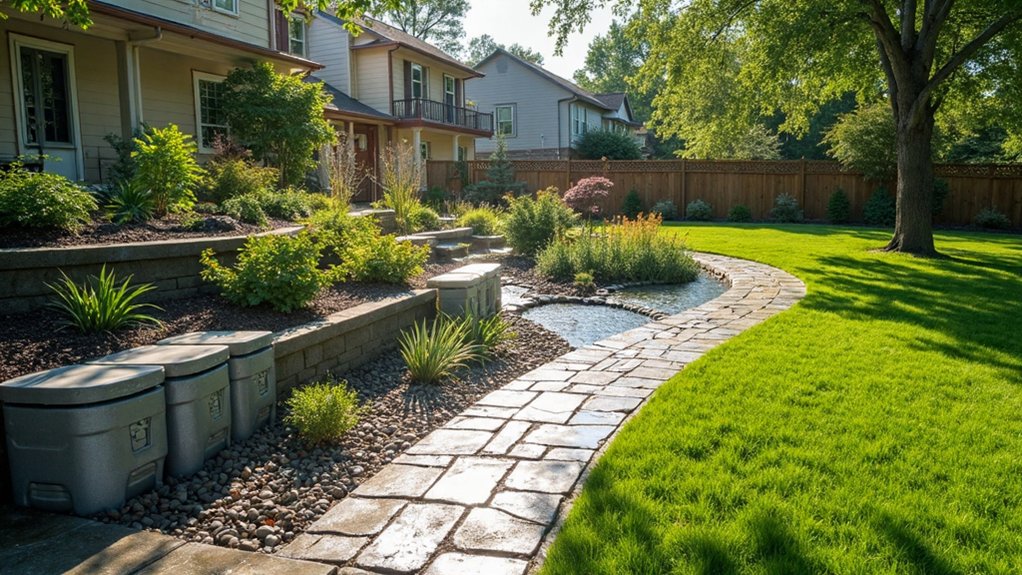
You’ve noticed water pooling in your yard after every storm, and you’re tired of watching your landscaping suffer. While quick fixes might seem tempting, effective flood management requires understanding why water accumulates in the first place. Your property’s unique characteristics—from soil composition to natural slopes—create specific drainage challenges that generic solutions can’t address. The key lies in developing a systematic approach that works with your landscape’s natural tendencies rather than against them.
Key Takeaways
- Identify problem areas by checking for standing water, soil erosion, and poor grading that prevents proper drainage flow.
- Install French drains and dry wells to redirect excess water away from foundations and vulnerable landscape areas.
- Create rain gardens and bioswales to naturally absorb runoff while providing attractive, functional landscape features.
- Replace impermeable surfaces with permeable hardscaping materials that allow water infiltration rather than surface runoff.
- Consult drainage professionals for engineered solutions that account for soil composition, slope calculations, and local rainfall patterns.
Understanding the Root Causes of Backyard Flooding
Before you can effectively address backyard flooding, you’ll need to identify what’s causing water to accumulate on your property in the first place. Heavy rains expose several common culprits behind persistent water problems.
Your soil composition plays a vital role in drainage effectiveness. Clay-heavy soils have low permeability, preventing proper water absorption and creating excessive runoff that leads to pooling. Poor grading compounds this issue—flat yards can’t direct excess water away from your home, resulting in standing water after storms.
Clogged gutters and downspouts cause overflow around your foundation, while extensive hardscaping reduces your ground’s natural absorption capacity. These impervious surfaces force more water to flow across your yard instead of infiltrating into the soil, increasing flooding risks during rain events.
Identifying Drainage Problems on Your Property
Once you understand what causes flooding, you’ll want to walk your property and look for telltale signs that water isn’t draining properly. Start by identifying areas with standing water or water pooling that persists for hours after rainfall. Check for soil erosion around your home’s foundation, which indicates excess water is washing away protective soil layers. Look for patches where grass or plants struggle to survive due to waterlogged conditions. Examine your property’s grading – water should flow away from your foundation, not toward it. Inspect existing drainage systems for blockages or damage. These drainage problems can lead to serious foundation issues and costly water damage if left unaddressed. Early identification of backyard flooding signs helps prevent extensive property damage.
Nature-Inspired Solutions for Water Management
Why fight nature when you can work with it? Nature-inspired water management solutions transform your flooding problems into opportunities for ecologically friendly landscape design.
Rain gardens act like natural wetlands, temporarily holding excess water while nutrient-rich soil and plants filter runoff into the ground. Bioswales create elevated planted channels that control and redirect water flow away from vulnerable areas. You’ll reduce surface runoff substantially by replacing traditional hardscapes with permeable alternatives like pavers or gravel that promote water infiltration.
Consider lawn alternatives such as meadows or prairies—they’re natural sponges that absorb far more water than conventional turf. Rainwater collection systems like rain barrels capture roof runoff for future use while reducing strain on stormwater infrastructure. These integrated solutions create sustainable, beautiful water management systems.
Hardscape and Infrastructure Improvements
Strategic hardscape modifications form the backbone of effective flood control, transforming problem areas into functional drainage systems. You’ll want to replace traditional surfaces with permeable hardscape options like pavers or crushed limestone that promote water infiltration rather than runoff. Install French drains and dry wells to redirect excess water away from vulnerable zones, while positioning channel drains strategically across driveways and patios to manage surface water flow effectively.
Proper grading guarantees water moves toward designated drainage areas instead of pooling. Don’t overlook gutter and downspout maintenance—these systems channel water away from your foundation when functioning correctly. By combining drainage-friendly materials with thoughtful infrastructure planning, you’ll create all-encompassing water management solutions that prevent flooding while enhancing your property’s functionality and appearance.
Professional Installation and Engineering Considerations
While DIY hardscape improvements can address minor drainage issues, complex flooding problems demand professional expertise and engineered solutions. You can’t rely on visual assessment alone when dealing with serious drainage challenges. Effective drainage requires understanding soil composition, slope calculations, and rainfall patterns that only trained professionals can properly evaluate.
Professional help certifies you’ll receive tailored drainage solutions like specialized grading, dry stream beds, flow wells, and French drains designed for your property’s unique conditions. Landscape architects apply engineering principles to create water management systems that are both functional and aesthetically pleasing.
Professional installation verifies compliance with local regulations while providing long-term benefits. You’ll protect against water damage, increase property value, and achieve proper drainage that addresses your specific drainage concerns through expertly managed water flow systems.
Long-Term Maintenance and Monitoring Strategies
Even the most expertly designed drainage systems won’t maintain their effectiveness without consistent upkeep and careful observation. You’ll need to schedule regular gutter maintenance and downspout cleaning to prevent debris buildup. Don’t overlook catch basin maintenance—clearing accumulated sediment keeps water flowing freely. French drain maintenance requires periodic de-silting and flushing to sustain optimal function, while dry well maintenance guarantees subsurface systems continue diverting water effectively.
Improve soil permeability through routine lawn aeration and overseeding to prevent waterlogged areas. Monitor your permeable hardscape maintenance needs by checking pavers and gravel for clogging or deterioration. Vegetation management around drainage features is equally important—trim growth regularly for proper swale maintenance and dry creek maintenance. This proactive approach prevents blockages and maintains intended water flow patterns.
Frequently Asked Questions
How Much Does It Cost to Fix Backyard Drainage?
You’ll face drainage system costs from $1,500 to $15,000+. French drain installation fees range $3,000-$6,000, while yard regrading price ranges hit $5,000-$10,000. Surface drainage improvement estimates depend on your property’s specific needs and solutions.
How to Stop Water From Flooding a Yard?
Don’t let your yard become a swimming pool! You can prevent soil erosion by installing French drains, improving grading and sloping, creating rain gardens, addressing downspout issues, and planting water-absorbing plants for effective drainage.
Who Do You Call for Yard Flooding?
You’ll call a landscape drainage professional who’ll assess your flooding issues and implement water diversion techniques like French drain systems, grading and leveling, drainage pipe installation, and gutter downspout redirection for effective solutions.
How to Fix a Poorly Draining Yard?
Though it seems overwhelming, you can fix poor drainage by implementing proper grading techniques, installing French drains, aerating compacted soil, controlling surface runoff, and creating rain gardens with permeable paving options.
Conclusion
You’ve learned exhaustive strategies to combat backyard flooding, from identifying root causes to implementing nature-inspired solutions and hardscape improvements. Here’s a striking fact: poorly managed stormwater causes over $8 billion in property damage annually in the US. Don’t become part of this statistic. By combining proper drainage assessment, strategic landscaping, and professional engineering when needed, you’ll protect your property investment. Remember, effective water management isn’t just about solving current problems—it’s about preventing future costly disasters through proactive planning and maintenance.