
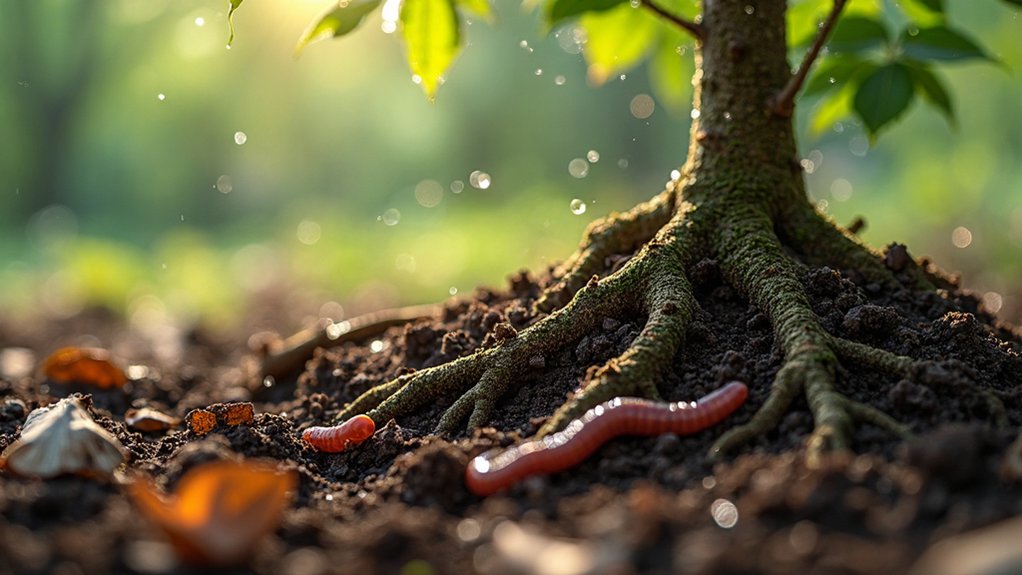
Your trees’ roots are swimming in a complex underground world that determines whether they’ll flourish or struggle. You might think soil is just dirt, but it’s actually a living ecosystem that can make or break your tree’s health. The pH levels, nutrient availability, and microscopic life beneath the surface all work together in ways that’ll surprise you. Understanding these hidden factors isn’t just helpful—it’s essential if you want your trees to reach their full potential.
Key Takeaways
- Test soil composition and maintain balanced proportions of sand, silt, clay, and organic matter for optimal root development.
- Adjust soil pH to 6.0-7.0 range using lime or sulfur to prevent nutrient deficiencies and promote healthy growth.
- Add organic amendments like compost or manure to boost nutrient availability and support beneficial soil microorganisms.
- Encourage mycorrhizal fungi partnerships through compost applications to enhance nutrient uptake and tree stress tolerance.
- Monitor soil moisture levels and improve drainage through raised beds or amendments to prevent root rot.
Understanding Soil Composition and Structure for Tree Growth
What determines whether your trees will thrive or struggle to survive? The answer lies beneath the surface in your soil composition and structure. Healthy soil contains balanced proportions of sand, silt, clay, and organic matter, creating the ideal foundation for robust root growth. This soil texture directly affects soil drainage and water infiltration, determining how efficiently your trees access nutrients and moisture.
Good soil structure allows roots to penetrate easily while maintaining proper aeration. You can assess your soil health through simple testing or by observing its physical characteristics. Clay-heavy soils retain moisture but may restrict drainage, while sandy soils drain quickly but struggle with nutrient retention. The key is achieving the most favorable soil composition that supports both water infiltration and nutrient availability for sustained tree health.
The Critical Role of Soil Ph in Tree Health
While soil texture and structure form the physical foundation for tree growth, soil pH acts as the chemical gatekeeper that controls nutrient availability. You’ll find that most trees perform best in slightly acidic to neutral conditions, with ideal soil pH ranging from 6.0-7.0. When soil acidity drops below 6.0 or soil alkalinity rises above 7.0, you’re likely to encounter nutrient deficiencies that compromise tree growth.
These imbalanced soil conditions severely limit nutrient absorption, making essential elements unavailable even when they’re present in the soil. You’ll notice visible symptoms like yellowing leaves or stunted growth. Fortunately, you can improve these conditions through pH adjustment techniques, such as adding lime to reduce acidity or sulfur to lower alkalinity, creating prime growing conditions for healthier trees.
Enhancing Soil Nutrient Content and Availability
Beyond achieving ideal pH levels, you’ll need to focus on building a robust nutrient profile that actively supports tree health throughout the growing season. Organic matter serves as your soil’s nutrient bank through cation exchange capacity, storing essential elements for future plant access. You’ll want to encourage thriving soil microbes and soil organisms like nematodes and microarthropods, which drive nutrient cycling and control nutrient availability timing.
Mycorrhizal fungi partnerships prove invaluable, mobilizing phosphorus and other nutrients directly to tree roots. You can boost nutrient supply by incorporating organic amendments such as compost or manure. These materials enhance nutrient levels while feeding beneficial soil organisms. Time your fertilization strategically—early spring and late fall applications guarantee trees receive nutrients when they’re most needed for ideal growth and development.
Boosting Beneficial Microorganisms in Tree Soil
Millions of beneficial microorganisms inhabit healthy tree soil, forming a complex underground network that’s essential for ideal tree growth and vigor. These beneficial soil microorganisms improve soil biological activity by decomposing organic matter, cycling nutrients, and protecting against pathogens. You’ll enhance your soil microbiome by adding compost regularly and establishing cover crops that feed these critical organisms. Mycorrhizal fungi create symbiotic relationships with tree roots, dramatically improving nutrient uptake and disease resistance. Avoid practices that harm soil quality through soil disturbance—excessive tilling and soil compaction destroy delicate microbial communities. Instead, minimize foot traffic around trees and use mulch to protect the soil surface. These microorganisms directly influence your trees’ stress tolerance and long-term health.
Managing Soil Moisture and Drainage Systems
Although healthy microorganisms form the foundation of tree significance, you’ll undermine their efforts without proper soil moisture and drainage management. Water balance directly affects roots’ ability to absorb nutrients and oxygen. Poor drainage creates waterlogged conditions that cause root rot, while excessive drainage leaves roots stressed and dehydrated.
Clay soil retains too much water, requiring amendments or tiling systems to improve drainage. Sandy soils drain too quickly, needing organic matter to enhance water retention. You can modify soil structure through raised beds or strategic amendments.
Mulch around tree bases regulates moisture levels and temperature fluctuations. Monitor soil moisture regularly and adjust irrigation accordingly. Each species has specific water requirements, so tailor your drainage solutions to match both your soil type and trees’ needs.
Long-Term Soil Management Strategies for Sustainable Tree Care
Effective moisture and drainage management sets the stage for broader soil stewardship that extends far beyond immediate watering needs. You’ll need a thorough approach that prioritizes long-term soil health through strategic interventions. Start with regular soil testing to assess nutrient levels and pH, enabling targeted soil improvement efforts. Incorporating organic matter like compost enhances soil structure while boosting biological activity around tree roots. Cover crops and green manures naturally increase fertility and suppress competing weeds. Minimize soil disturbance through careful traffic management and mulching practices. Since healthy soil is critical for sustained tree growth, you must integrate multiple techniques rather than relying on single solutions. This holistic soil management approach guarantees ideal growing conditions that support trees throughout their entire lifecycle, creating resilient ecosystems.
Frequently Asked Questions
How Do You Improve the Soil Around a Tree?
You’ll improve tree soil through organic matter addition, nutrient rich compost application, and root zone mulching. Use soil aeration techniques, check for nutrient deficiency testing, and consider soil pH adjustment for ideal growth conditions.
How to Improve the Health of a Tree?
You’ll improve tree health by applying mulch, incorporating organic matter, and reducing compaction through soil aeration. Address nutrient deficiencies, balance pH levels, enhance drainage, and promote mycorrhizal associations while expanding the root zone for better water management.
What Can I Give My Tree to Help It Grow?
You’ll boost tree growth through proper fertilizer application, mulch application around the base, compost addition, and aeration techniques. Test nutrients, adjust pH, improve drainage, manage the root zone, and maintain consistent watering schedules.
What Is the Soil Health for Trees?
You’ll find soil health encompasses nutrient composition, organic matter content, soil pH, texture, drainage, compaction levels, microbiome diversity, moisture retention, erosion resistance, and overall fertility that directly impacts your tree’s growth potential and survival.
Conclusion
You’ve learned how proper soil management transforms tree health from the ground up. By implementing these strategies—from pH optimization to microbial enhancement—you’re investing in your trees’ long-term success. Here’s a compelling fact: healthy soil can increase tree growth rates by up to 40% compared to depleted soil conditions. Don’t underestimate the power beneath the surface. Your commitment to soil health today will yield stronger, more resilient trees for decades to come.