
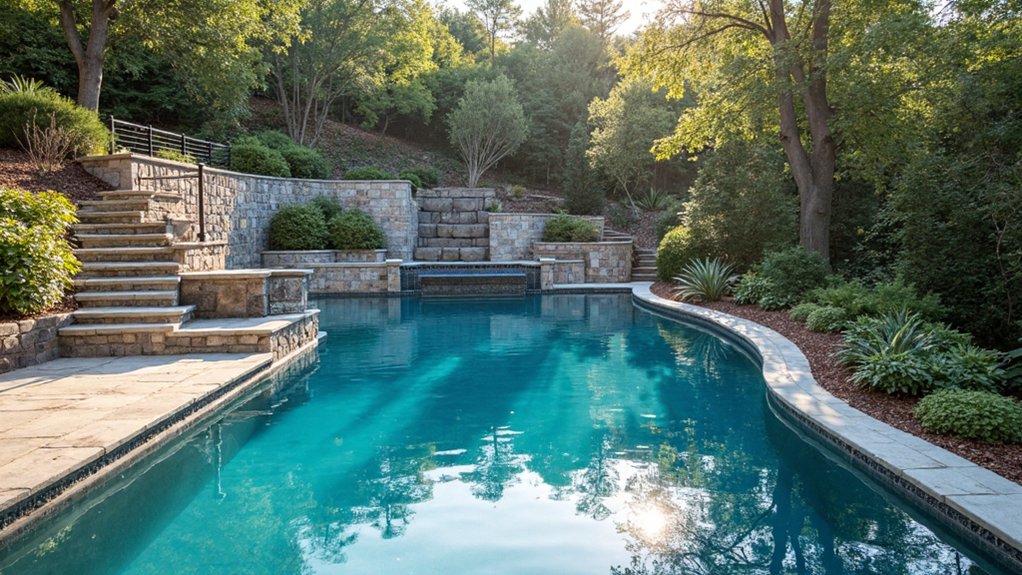
When you’re considering a pool installation on sloped terrain, you’ll face critical decisions that directly impact your family’s safety and your property’s long-term value. Retaining walls aren’t just functional barriers—they’re engineered solutions that prevent costly structural failures while creating stunning outdoor spaces. However, choosing the wrong materials or ignoring local building codes can transform your dream pool area into an expensive nightmare that threatens both your investment and your loved ones’ wellbeing.
Key Takeaways
- Evaluate soil composition, drainage patterns, and load requirements before construction to ensure structural integrity and prevent failure.
- Install proper drainage systems behind retaining walls to prevent water buildup that could cause erosion or structural damage.
- Most municipalities restrict residential retaining walls to 4 feet height without requiring engineered plans and professional permits.
- Use compacted gravel base and reinforcement like steel bars or geogrid to enhance load-bearing capacity and stability.
- Hire experienced contractors and consult professional engineers to ensure code compliance and safe construction practices.
Understanding the Purpose and Benefits of Pool Retaining Walls
Why do so many pool installations require retaining walls, and what makes them essential for your backyard oasis? Pool retaining walls serve critical functions that extend far beyond simple landscaping. They hold back soil on sloped properties, preventing soil erosion that could compromise your pool’s structural integrity over time. These walls excel at creating a level surface where natural terrain won’t cooperate, transforming challenging topography into usable space.
The benefits of retaining walls encompass both functional and aesthetic advantages. While they protect your pool and surrounding areas from shifting earth and water damage, they simultaneously enhance the visual appeal of your outdoor space. You’ll gain defined boundaries, improved safety through proper grading, and opportunities for creative design elements that complement your pool’s architecture.
Essential Design Planning and Site Assessment
Three critical factors determine the success of your pool retaining wall project before construction even begins: soil composition, drainage patterns, and structural load requirements. You’ll need a thorough site assessment to evaluate soil conditions and determine your wall’s height specifications. Understanding your specific soil type directly impacts load-bearing capacity calculations, which influence material selection and construction methods.
You can’t skip consulting with a professional engineer or landscape architect. They’ll guarantee your design complies with local building codes and meets essential safety standards. Don’t overlook drainage system planning – proper water management prevents erosion and structural failure.
Strategic placement enhances your landscape design while maintaining functionality. Thoughtful integration creates visual appeal that complements your pool area’s overall aesthetic without compromising structural integrity.
Material Selection for Durability and Aesthetics
Your material choice sets the foundation for both the structural performance and visual impact of your pool retaining wall. Concrete walls deliver exceptional durability and design versatility, while poured concrete can be customized to meet your specific requirements with unparalleled structural strength. Natural stone creates a timeless aesthetic that seamlessly blends with your landscape, though it requires careful installation. Timber walls offer rustic charm but need regular maintenance to preserve the integrity of your pool area. Gabion baskets filled with decorative rocks provide contemporary appeal with reliable structural performance. When selecting materials for your retaining wall, consider how each option complements your pool’s design while meeting your long-term durability needs. The right materials used will enhance the overall functionality and beauty of your outdoor space.
Construction Best Practices and Professional Installation
While selecting quality materials forms the cornerstone of any successful pool retaining wall project, proper construction techniques and professional expertise determine whether your investment will stand the test of time. You’ll need a compacted gravel base to guarantee structural integrity for your stone or concrete retaining wall. Don’t overlook reinforcement—steel bars or geogrid enhance load-bearing capacity and prevent cracking. Proper drainage systems protect against water damage that threatens your landscape investment. You must compact soil and backfill materials in thin layers to prevent settling. Following manufacturer’s instructions and construction codes isn’t optional—it’s indispensable for safety. Hiring an experienced contractor ascertains proper material selection, design expertise, and professional installation that’ll keep your pool area secure for years.
Height Requirements and Regulatory Compliance
Before breaking ground on your pool retaining wall project, you’ll need to navigate a complex web of local building codes, zoning regulations, and safety requirements that govern wall height and construction standards. Most municipalities restrict residential retaining walls to four feet without requiring engineered plans and permits. Taller structures demand structural engineering approval and professional oversight.
Consulting with a professional landscape architect during the design phase guarantees your retaining wall design meets all regulatory requirements. They’ll identify pivotal factors to ponder, including setback distances, drainage specifications, and soil conditions that impact building a retaining wall safely.
Meticulous planning averts costly delays and redesigns. Review local guidelines for retaining wall construction early, as design considerations vary drastically between jurisdictions. Some areas require additional permits for pool-adjacent structures.
Drainage Systems and Water Management
Effective drainage systems form the backbone of any successful pool retaining wall, preventing the water damage that destroys even well-built structures. You’ll need weep holes, drainage pipes, and gravel backfill to divert water runoff away from your wall and prevent soil saturation. Install drainage behind the retaining wall with proper slopes to enhance water flow and eliminate hydrostatic pressure from water buildup.
Surface water management requires sloped landscaping, catch basins, and French drains around your pool area to control water accumulation. Construct your wall with a slight outward lean to improve drainage effectiveness. Regular maintenance keeps your drainage systems functioning properly—clear debris from pipes and inspect for blockages. Consult a professional engineer to design appropriate water management solutions based on your site’s specific conditions and local climate requirements.
Maintenance and Inspection Guidelines
Regular maintenance and inspection routines will extend your pool retaining wall’s lifespan by decades while preventing costly structural failures. You should inspect your retaining wall quarterly, examining the wall for any signs of cracking, bulging, or settlement. Look for drainage issues like water pooling behind the structure or clogged weep holes that compromise stability.
Address problems promptly when you spot them. Small cracks can quickly escalate into major structural concerns. Essential maintenance tips include clearing debris from drainage systems and applying appropriate cleaning methods to remove algae, stains, and mineral deposits. Watch for potential issues like loose mortar joints or shifting stones.
Frequently Asked Questions
What Are the Factors to Consider When Designing a Retaining Wall?
You’ll need to evaluate soil composition, drainage considerations, and load bearing capacity. Consider height limitations, slope stability, material selection, structural integrity, frost heave prevention, seismic design factors, and aesthetic integration for ideal results.
What Is the Safety Factor for a Retaining Wall?
When engineering earth-holding structures, you’ll need a safety cushion of 1.5 to 2.0 times expected loads. This protective margin guarantees your wall’s structural integrity against soil conditions, water drainage issues, and seismic activity challenges.
What Are the 7 Common Mistakes Made When Installing Retaining Wall Blocks?
You’ll commonly make these mistakes: improper base preparation, inadequate drainage, insufficient reinforcement, incorrect backfill materials, poor compaction, neglecting geotechnical assessment, and failure to account for slope conditions during installation.
What Is the Code for Retaining Wall Design?
Building your earth-holding masterpiece requires following local codes addressing soil composition, slope stability, drainage requirements, lateral earth pressure, reinforcement materials, foundation design, construction methods, load bearing capacity, aesthetic considerations, and seismic performance standards.
Conclusion
You’ve laid the groundwork for a pool area that’s both stunning and secure. Don’t let your retaining wall project become a house of cards—proper planning, quality materials, and professional installation will guarantee your investment stands the test of time. You’ll create an outdoor oasis that not only protects your property but also adds lasting value. Remember, cutting corners now means costly repairs later, so invest wisely in your pool’s foundation.