
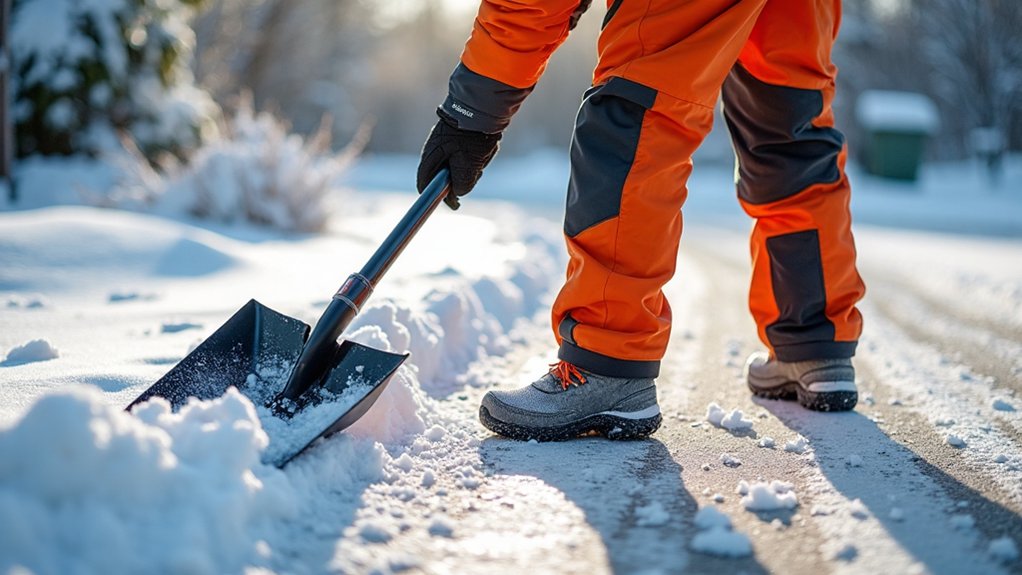
Winter’s first snowfall might look beautiful, but don’t let its appearance fool you—clearing it from your driveway and walkways can quickly turn dangerous if you’re unprepared. Each year, thousands of people end up in emergency rooms with snow removal injuries that could’ve been easily prevented. You’re about to discover the critical safety measures that separate a routine winter chore from a trip to the hospital, starting with one conversation you shouldn’t skip.
Key Takeaways
- Consult your doctor before snow removal if you have heart problems, chronic conditions, or live a sedentary lifestyle.
- Wear layered, water-resistant clothing with slip-resistant boots and use a lightweight, ergonomic shovel to minimize strain.
- Warm up with light stretching, stay hydrated, and take regular breaks to prevent muscle fatigue and exhaustion.
- Keep your back straight, bend at the knees, and push snow instead of lifting when possible.
- When using snow blowers, shut off the engine before clearing jams and keep children away from the work area.
Consult Your Doctor Before Starting Snow Removal
Why risk your health when a simple conversation with your doctor could prevent serious complications? If you have a history of heart problems or live a sedentary lifestyle, you’ll need medical clearance before grabbing that shovel. Snow removal places significant strain on your heart, making it essential to discuss your plans with healthcare professionals.
Older adults and individuals with chronic conditions face elevated injury risks during winter cleanup activities. Your doctor can evaluate your specific situation and recommend safer alternatives if traditional shoveling isn’t advisable for you.
Don’t wait until after an incident to seek guidance. Schedule a visit to your doctor’s office before winter weather arrives. This proactive approach helps you understand your limitations and develop a snow removal strategy that protects your health while keeping your property safe.
Proper Winter Attire and Equipment Selection
When temperatures drop and snow begins falling, your choice of clothing and equipment becomes your first line of defense against injury and exposure. Wear layered, water-resistant clothing that allows you to regulate body temperature while protecting against cold and moisture. Wear boots that are insulated and slip-resistant to maintain traction on icy surfaces and prevent dangerous falls.
Wear appropriate head protection with a warm hat covering your ears, plus a scarf or balaclava to shield your face from frostbite. Select durable, insulated gloves or mittens that keep your hands warm while preserving the dexterity you’ll need for effective shoveling. Choose a lightweight, ergonomic snow shovel designed to minimize strain on your back and joints during removal tasks.
Essential Warm-Up and Hydration Practices
Before you grab that shovel and head outside, your body needs proper preparation to handle the demanding physical work ahead. Spend 10 minutes performing light exercise and gentle stretching to prime your muscles and tendons for snow removal’s physical demands. This simple warm-up routine drastically reduces injury risk.
Stay hydrated by drinking water or sports drinks before starting, during breaks, and after finishing your snow removal work. Proper hydration prevents dehydration and fatigue that can lead to dangerous mistakes or overexertion.
Monitor your energy levels carefully and take breaks regularly throughout the activity. These rest periods allow your body to recover and prevent exhaustion-related injuries. Consider having a friend or family member join you during winter chores, as they can help if minor injuries occur in cold conditions.
Safe Shoveling Techniques and Body Mechanics
Once you’ve warmed up and hydrated properly, your shoveling technique becomes the determining factor between a safe, efficient snow removal session and a potential injury. Keep your back straight throughout the entire process, engaging your core muscles for stability. When lifting snow, bend at your knees and lift with your legs rather than straining your spine. Hold the shovel close to your body to reduce leverage stress on your back.
Whenever possible, push the snow instead of lifting it – this technique requires substantially less energy and reduces injury risk. Take smaller loads rather than attempting to move heavy scoops. Switch your grip and stance periodically to prevent muscle fatigue. Step in the direction you’re moving snow to maintain proper balance and control.
Recognizing Warning Signs and Emergency Symptoms
While proper technique considerably reduces injury risk, recognizing your body’s warning signals can mean the difference between a minor inconvenience and a life-threatening emergency. Stop shoveling immediately if you experience chest pain, pressure, shortness of breath, nausea, or lightheadedness—these are potential heart attack symptoms requiring immediate medical attention. Call 911 without delay.
Muscle pain in your back, shoulders, or arms signals possible injury and demands rest. Watch for frostbite indicators like red, waxy skin, and rewarm affected areas slowly. Hypothermia symptoms include confusion, slurred speech, shivering, and stiffness—call 911 if these occur.
Don’t ignore your body’s warnings. Snow shoveling can be deadly if you push through dangerous symptoms. Your safety is worth more than a clear driveway.
Snow Blower Safety and Maintenance Guidelines
Snow blowers eliminate the physical strain of shoveling, but they create their own set of hazards that demand your attention. Never remove snow jams with your hands while the engine runs. Always shut off the machine and wait for all moving parts to stop before clearing blockages. Use a stick or clearing tool instead.
Add fuel only when the engine’s completely cool to prevent fire hazards. Check oil levels regularly and replace spark plugs annually. Inspect the auger and discharge chute for damage before each use. Wear safety glasses and non-slip boots for protection.
Keep children and pets away from your working area. Never operate your snow blower on gravel surfaces without proper adjustments, and always maintain firm footing while operating.
Frequently Asked Questions
How to Avoid Injury While Shoveling?
You’ll avoid shoveling injuries by practicing proper ergonomics—lift with your legs, not your back. Do warm up exercises before starting, understand hydration importance by drinking water regularly, and take frequent breaks to prevent overexertion.
What Are the OSHA Safety Tips for Winter?
You should wear proper attire like insulated gloves and slip-resistant boots. Follow manufacturer’s instructions for snow blower usage, take frequent breaks, and use power tool precautions. Stay hydrated and push snow instead of lifting.
What Are the Injuries to Snow Removal?
You’ll face back strain from heavy lifting, joint pain in shoulders and knees, and hypothermia from cold exposure. Heart attacks, slips causing fractures, frostbite, and snow blower lacerations are also common snow removal injuries you should watch for.
What PPE Is Needed for Snow Removal?
You’ll need proper winter attire including waterproof boots, insulated gloves, and layered clothing. You’ll want appropriate equipment selection like eye protection and warm hats. You’ll benefit from layering clothing with moisture-wicking base layers and water-resistant outer shells.
Conclusion
Think of winter as a demanding dance partner who’ll test your every move. You’ve learned the steps—consulting your doctor, dressing properly, warming up, using correct techniques, recognizing danger signals, and maintaining equipment safely. Now you’re ready to waltz with winter’s challenges without stumbling. Don’t let this frozen partner catch you off-guard; respect its power, follow your choreographed safety routine, and you’ll glide through snow removal season uninjured and victorious.