
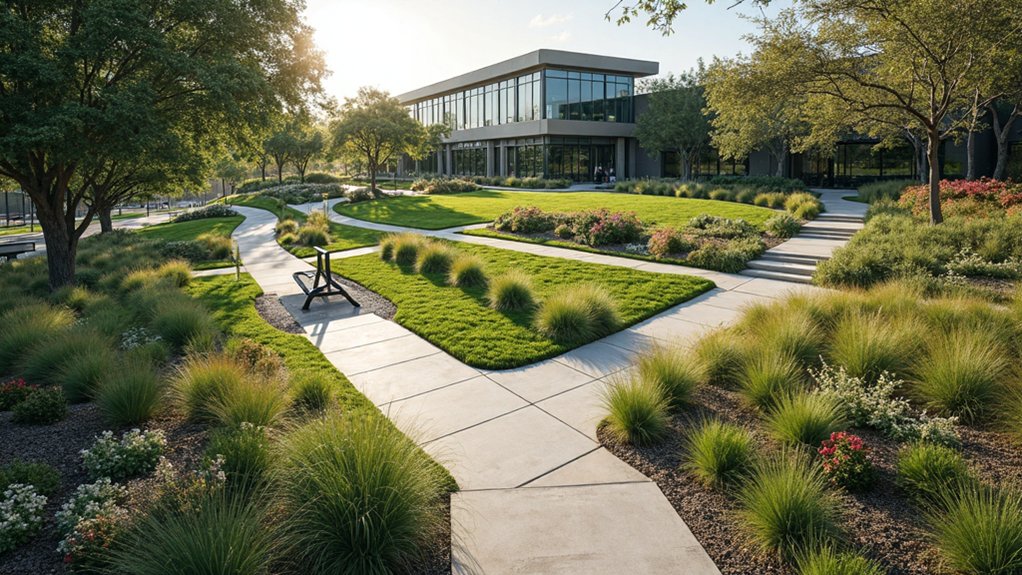
Your business property’s exterior creates the first impression that can make or break potential client relationships. You’ve invested heavily in your company’s interior, staff, and services, but if your landscape doesn’t reflect that same level of professionalism, you’re missing a critical opportunity. Commercial landscape design isn’t just about pretty plants—it’s a strategic tool that directly impacts your bottom line, property value, and brand perception in ways you might not expect.
Key Takeaways
- Transform business exteriors into strategic assets that enhance property values and reflect your brand identity.
- Balance aesthetics with practical functionality using native plants, water-efficient irrigation, and sustainable hardscaping features.
- Execute professional installation through thorough site assessment, custom planning, and coordinated hardscaping and planting phases.
- Maintain year-round appeal with consistent lawn care, seasonal pruning, debris cleanup, and proactive irrigation monitoring.
- Maximize investment returns using drought-resistant plants, efficient irrigation systems, and strategic artificial turf placement.
Understanding the Fundamentals of Commercial Landscape Design
Commercial landscape design transforms business exteriors into strategic assets that attract customers, enhance property values, and reflect your brand identity. Unlike residential landscaping, landscape design for commercial properties requires balancing aesthetics with practical functionality and environmental sustainability.
You’ll need to understand three core principles that guide successful projects. First, integrate native plants that thrive in your local climate while reducing maintenance demands. Second, implement water-efficient irrigation systems that conserve resources and lower operational costs. Third, incorporate permeable paving solutions that manage stormwater runoff effectively.
The design process begins with thorough site assessment, followed by comprehensive client needs analysis. This foundation verifies your landscape serves your business objectives while requiring manageable ongoing maintenance. When executed properly, commercial landscaping becomes a powerful tool for creating memorable first impressions and supporting long-term business success.
Key Design Elements That Create Functional Business Spaces
Several essential design elements work together to transform commercial outdoor spaces into highly functional business environments. You’ll find that hardscaping features like pathways, patios, and retaining walls create structural foundations that enhance both functionality and aesthetics while adding lasting value to your property.
Strategic lighting placement improves safety and visibility while accentuating key landscape elements, creating an inviting atmosphere for clients and employees. Your irrigation system should prioritize water efficiency alongside proper drainage solutions to maintain plant health and reduce long-term costs.
Incorporating native plants into your design minimizes maintenance requirements while supporting local biodiversity and sustainability goals. When you balance these elements thoughtfully, the collaborative design substantially increases your commercial property’s overall appeal and market value.
The Professional Installation Process From Planning to Completion
While transforming your commercial property’s vision into reality requires careful orchestration, the professional installation process follows a structured approach that guarantees exceptional results. Landscape architects begin with thorough site assessment, analyzing your property’s unique characteristics and regulatory requirements. They’ll develop a custom landscape plan that balances aesthetics with functionality, incorporating strategic hardscaping, plant selection, lighting, and irrigation systems.
Professional installation teams execute your landscape design with precision, minimizing disruption to daily operations while ensuring proper construction techniques. Landscape designers coordinate every element, from installing durable hardscaping features to establishing ideal plant placement. Irrigation systems receive meticulous attention, providing efficient watering that promotes plant health and conserves water resources.
The process concludes with comprehensive testing and adjustments, ensuring your commercial projects meet expectations and function seamlessly for years ahead.
Essential Maintenance Strategies for Year-Round Appeal
Once your commercial landscape installation is complete, maintaining its professional appearance requires a strategic approach that adapts to each season’s unique demands. Your seasonal maintenance strategy should include consistent lawn care throughout the growing season, focusing on regular mowing, edging, and fertilization to create that pivotal first impression. Strategic pruning of trees and shrubs at appropriate times enhances aesthetics while promoting plant health and preventing safety hazards. Timely cleanup of leaves and debris keeps your property visually appealing, while snow/ice removal guarantees year-round accessibility and safety. Don’t overlook your irrigation system – proactive monitoring and seasonal adjustments help conserve water while keeping plants thriving. Winter protection measures safeguard your investment during harsh weather conditions.
Cost-Saving Approaches That Maximize Your Investment
Smart budgeting strategies can transform your maintenance investment into long-term savings while preserving your landscape’s professional appeal. You’ll reduce maintenance costs greatly by installing water-efficient irrigation systems that cut both water usage and labor expenses. Automated irrigation systems eliminate manual watering while ensuring consistent plant care.
Choose drought-resistant native plants that thrive naturally in your climate, requiring minimal irrigation and reducing ongoing maintenance costs. Proper soil preparation upfront prevents costly plant replacements later. Consider artificial turf for high-traffic areas to eliminate mowing and watering expenses.
Partner with an experienced property manager who understands efficient landscape design principles. They’ll identify additional cost-saving measures through strategic planning. Implement robust account management practices to monitor expenses and optimize your landscape investment for maximum long-term value.
Choosing the Right Professional Landscape Design Services
When selecting a professional landscape design service, you’ll want to evaluate firms based on their proven track record of creating functional commercial spaces that boost property value. Look for companies that demonstrate expertise in both aesthetic appeal and practical functionality. Quality materials and skilled craftsmanship guarantee your landscape investment delivers long-lasting durability.
Choose services that efficiently manage projects from initial design concepts through final installation, saving you valuable time and resources. Prioritize firms promoting sustainable practices, as these reduce your property’s long-term maintenance costs while showcasing environmental responsibility. The right professional landscape team will offer collaborative guidance, working closely with you to transform your commercial property into an attractive, functional outdoor environment that enhances your business’s overall appeal and market value.
Frequently Asked Questions
How Long Does Commercial Landscaping Typically Last Before Major Renovations Are Needed?
You’ll typically need major commercial landscape renovations every 7-10 years, depending on plant selection criteria, hardscaping elements’ durability, maintenance costs, and sustainability initiatives. Proper contractor selection and renovation planning extend longevity considerably.
What Permits or Regulations Apply to Commercial Landscape Installations in My Area?
Need permits for landscaping? You’ll face local zoning guidelines, building permit requirements, environmental impact assessments, water usage regulations, tree preservation policies, accessibility standards, stormwater management plans, and professional licensing mandates in your area.
Can Commercial Landscaping Help Reduce My Property Insurance Premiums?
Yes, you’ll potentially reduce premiums through stormwater management solutions, reduced maintenance needs, and sustainable design elements that lower risk factors. Insurance companies often recognize improved property value and enhanced safety features in their assessments.
How Does Seasonal Weather Impact Different Plant Choices for Business Properties?
Ironically, you’d think plants would adapt naturally, yet seasonal weather demands strategic seasonal plant selection and maintenance schedule planning. You’ll need drought tolerant plant options, cold weather protection methods, and native plant integration for year-round success.
What’s the Average ROI Timeline for Commercial Landscape Design Investments?
You’ll typically see average payback period of 3-5 years through property value increases, operational cost reductions, and tenant satisfaction increases. Energy efficiency impacts and water conservation benefits accelerate ROI beyond expected lifespan.
Conclusion
Your business property’s transformation awaits like a blank canvas ready for a masterpiece. You’ve planted the seeds of knowledge about design fundamentals, installation processes, and maintenance strategies. Now it’s time to cultivate these insights into action. Don’t let your commercial landscape remain a wallflower—make it the showstopper that draws clients like bees to honey. Your investment will bloom into increased property values and a thriving business environment.