
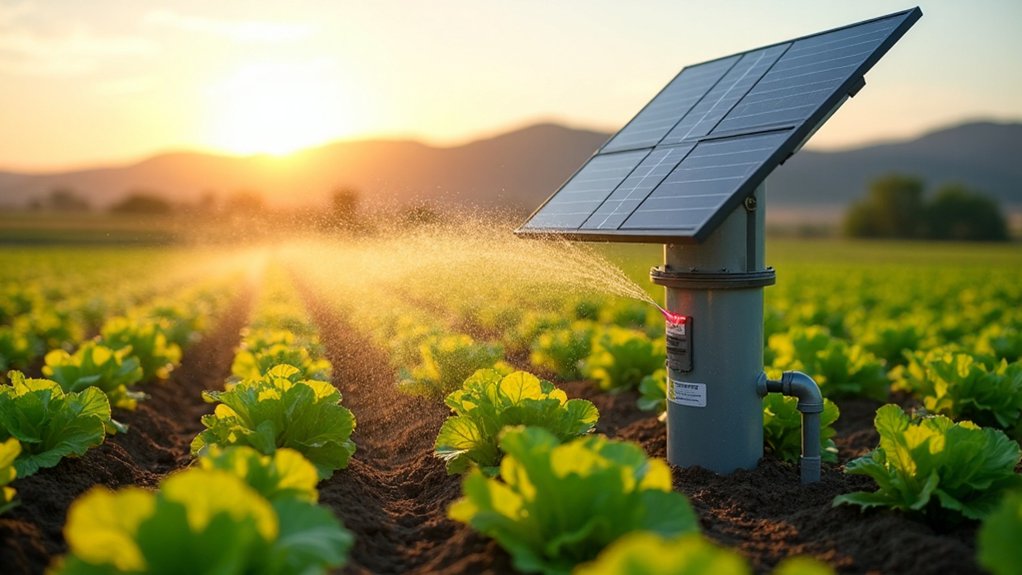
Like David facing Goliath, you’re confronting rising energy costs and environmental pressures with what might seem like an impossible challenge. However, energy-efficient irrigation pumps aren’t just technological upgrades—they’re your strategic advantage in modern agriculture. These systems can slash your operational expenses by half while dramatically reducing your carbon footprint. The question isn’t whether you can afford to invest in this technology, but rather whether you can afford not to make this essential shift.
Key Takeaways
- Variable speed drives automatically adjust pump speed to match real-time water demand, achieving 20-30% energy savings compared to fixed-speed systems.
- Operational expenses can be reduced up to 50% through lower electricity bills, decreased maintenance costs, and high-efficiency motor upgrades.
- Energy-efficient irrigation pumps significantly reduce carbon footprint while minimizing water waste through optimized pump speeds and flow control.
- Smart control systems continuously monitor energy usage and automatically optimize pump performance based on crop, weather, and soil conditions.
- Solar-powered irrigation pumps eliminate energy costs entirely while government incentives help offset upfront investments in efficient pumping technology.
Understanding Energy-Efficient Irrigation Pump Technology
When you’re looking to optimize your irrigation system’s performance, energy-efficient pumps represent a significant technological advancement that’s transforming how water management systems operate. These sophisticated pumping systems incorporate variable speed drives that automatically adjust pump speed based on real-time demand, dramatically improving energy efficiency while reducing energy costs.
You’ll benefit from smart control systems that continuously monitor energy usage, enabling your system to achieve maximum operational efficiency. The advanced technology focuses on sustainability and water conservation by minimizing unnecessary energy consumption. By implementing these energy-efficient solutions, you’re not only cutting operational expenses but also reducing your environmental impact. The variable speed technology guarantees your pump operates at ideal levels, delivering precise water flow while consuming only the energy required for current irrigation demands.
Financial Benefits and Cost Reduction Strategies
While the initial investment in energy-efficient irrigation pumps might seem substantial, you’ll discover that the financial returns justify every dollar spent on upgrading your system. Energy-efficient pumps can slash your operational expenses by up to 50% through dramatically reduced electricity bills and maintenance costs. By incorporating variable speed drives, you’ll match pump speed to actual water demand, reducing unnecessary energy consumption.
Upgrading to high-efficiency motors like IE4 and IE5 models maximizes your system’s efficiency while cutting costs. You can leverage government incentives such as SEAI’s Better Energy Communities program to offset upfront investments. Consider solar-powered irrigation pumps for eliminating energy costs entirely, providing long-term financial stability. These strategic upgrades transform your pumps from expense centers into profit-enhancing assets.
Environmental Impact and Sustainability Advantages
Beyond their impressive financial returns, energy-efficient irrigation pumps deliver substantial environmental benefits that position your agricultural operation as a leader in sustainable farming practices. These advanced water pumps considerably reduce your carbon footprint by reducing energy consumption, directly contributing to cleaner air and a healthier ecosystem.
Your irrigation systems become powerful tools for sustainability when equipped with energy efficient technology. Enhanced system efficiency minimizes water waste through optimized pump speeds, ensuring every drop counts toward productive irrigation. This conservation approach protects limited natural resources while maintaining crop yields.
Variable Speed Drives and Advanced Control Systems
Since modern irrigation demands fluctuate throughout growing seasons, variable speed drives (VSDs) represent a breakthrough technology that automatically adjusts your pump’s operating speed to match exact system requirements. This precision delivers 20-30% energy savings compared to traditional fixed-speed systems, creating significant savings on your electricity bills.
When equipped with advanced monitoring systems, these intelligent controls continuously track water demand and optimize performance in real-time. You’ll experience enhanced efficiency and reliability as the system responds to changing crop, weather, and soil conditions. Reducing operational stress through precise speed control extends your pump’s lifespan while minimizing maintenance costs. These integrated automation systems provide the flexibility needed for sustainable irrigation practices while maximizing energy savings throughout your operation.
Real-World Applications and Case Studies
These advanced pumping technologies deliver measurable results across diverse agricultural operations worldwide. You’ll find that pumps are often energy-intensive components, but real-world implementations prove significant efficiency gains are achievable. Australia’s major irrigation company optimized their water supply system by combining pump stations and reducing equipment count, achieving 87.1% overall efficiency with highly efficient Sulzer pumps. Spain’s San Salvador reservoir project demonstrates how all-encompassing solutions reduce the total cost of ownership by 15-50% through premium efficiency motors and advanced control infrastructure.
Systems often require traditional efficiency indicators, but energy performance metrics like ECI and EFI better quantify actual performance. You can reduce maintenance costs and carbon footprint simultaneously by integrating these technologies within the Water-Energy-Food Nexus framework for sustainable irrigation management.
Maximizing Water Conservation Through Smart Pumping
Water conservation takes on new dimensions when you harness smart pumping technologies that precisely control flow rates and delivery timing. When you implement variable frequency drives, you enable your pump to adjust speed based on real-time irrigation demands, eliminating wasteful overwatering. Modern pumps are designed with adaptive regulation capabilities that deliver exactly what your crops need, reducing runoff and maximizing resource efficiency.
Your efficient pump system drastically cuts electricity consumption through optimized speed control, directly lowering operating expenses. Traditional irrigation methods are often energy-intensive and contribute to unnecessary carbon emissions, but smart pumping transforms this dynamic. By reducing operational stress on equipment, you’ll extend pump lifespan while minimizing maintenance costs. This approach supports conservation and sustainability goals while creating cost-effective irrigation infrastructure that benefits both your budget and environmental stewardship.
Frequently Asked Questions
How Does an Energy Efficient House Reduce the Impact on the Environment?
You’ll reduce environmental impact through renewable energy integration, water conservation strategies, and sustainable landscaping practices. Smart irrigation systems with sensor-based control, efficient sprinkler heads, xeriscaping techniques, and climate-appropriate plant selection minimize resource consumption drastically.
Are Water Pumps Good for the Environment?
“Every drop counts,” and you’ll find water pumps excellent for the environment when they employ efficient irrigation techniques, sustainable groundwater management, and renewable energy integration, delivering carbon footprint reduction while enhancing biodiversity and ecosystem preservation.
What Is the Efficiency of Irrigation Pumps?
You’ll find irrigation pump efficiency ratings range from 50-90%, with energy consumption analysis showing well-maintained systems achieving 80-90% efficiency through optimized pump impeller design, motor efficiency improvements, and proper water flow optimization maintenance practices.
How Does Reducing Energy Costs and Therefore Energy Use Help the Environment?
Like drops forming a stream, you’re conserving natural resources when you reduce energy consumption. You’ll decrease greenhouse gas emissions, lower your carbon footprint, and mitigate climate change while promoting sustainable practices that protect ecosystems.
Conclusion
You’ll revolutionize your entire farming operation with energy-efficient irrigation pumps that’ll slash your costs by jaw-dropping amounts while transforming you into an environmental superhero! These game-changing systems won’t just save you money—they’ll catapult your farm into the future of sustainable agriculture. You’re not just upgrading equipment; you’re becoming a pioneering force that’ll inspire countless others to follow your groundbreaking lead in water-smart farming excellence!