
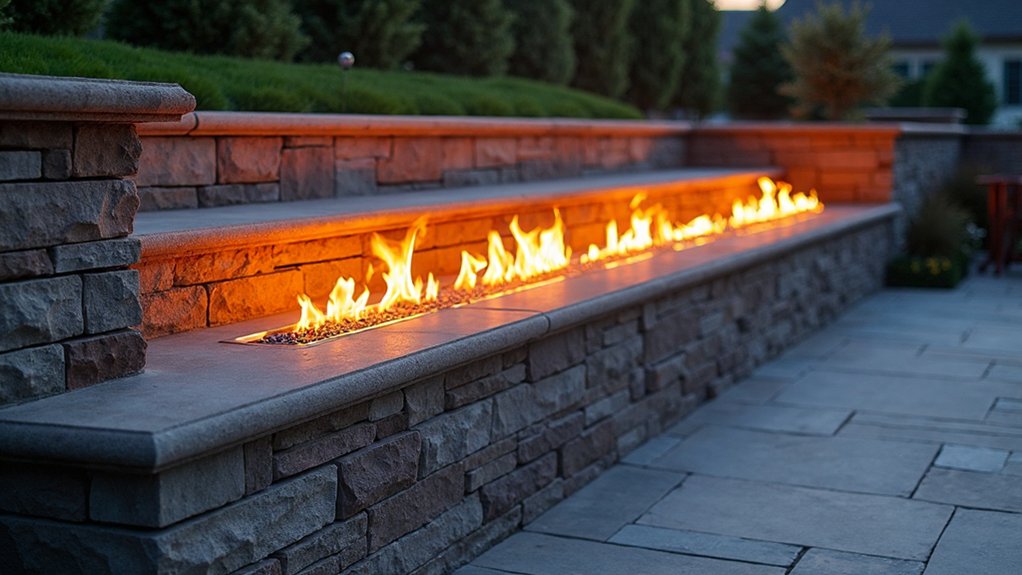
You’re likely considering a fire feature for your outdoor space, but integrating it with a retaining wall design can transform your backyard from ordinary to extraordinary. This strategic combination doesn’t just save space—it creates natural windbreaks, defines entertainment zones, and maximizes your property’s elevation changes. However, there’s a vital balance between aesthetics and functionality that most homeowners overlook, and getting it wrong could compromise both your safety and your investment.
Key Takeaways
- Position fire pit 36-48 inches from retaining wall to ensure safe clearance while creating intimate gathering zones.
- Use matching materials like natural stone or premium blocks for visual continuity between fire feature and wall.
- Design retaining wall sections as 18-24 inch high seating walls that follow fire pit contours for integrated comfort.
- Install proper fire brick lining and venting systems while maintaining structural integrity of adjacent retaining wall.
- Leverage natural slopes by positioning fire feature at lower elevations with retaining wall as dramatic backdrop.
Planning Your Fire Feature and Retaining Wall Layout
When designing an integrated fire feature and retaining wall system, you’ll need to establish the best, most suitable, or most favorable placement that balances safety requirements with aesthetic appeal. Start by evaluating your backyard’s scale to determine the ideal fire pit size and shape that won’t overwhelm the space or appear disproportionate to your retaining wall.
Consider how many people you’ll typically host to establish proper seating capacity around the feature. Position your retaining wall strategically to create distinct zones within your outdoor living space while providing wind protection for guests. This thoughtful placement enhances both functionality and visual flow.
Ensure adequate clearance between the fire pit and wall structure, maintaining safe distances while creating a cohesive design that seamlessly integrates both elements into your landscape.
Essential Materials for Heat-Resistant Construction
Although your fire feature’s visual appeal matters greatly, selecting the right heat-resistant materials forms the foundation of a safe and durable construction. You’ll need fire brick and heat-resistant mortar for your fire pit’s interior lining, as these materials withstand extreme temperatures without cracking or deteriorating.
While standard retaining wall blocks can’t handle direct flame exposure, premium blocks work perfectly for your fire pit’s exterior facing. They’ll create visual continuity with your retaining wall design. Natural stone options like granite, limestone, and fieldstone offer superior heat resistance and timeless aesthetics.
Don’t overlook proper venting systems—they’re essential for allowing heat and gases to escape safely. This prevents structural damage and extends your fire feature’s lifespan dramatically.
Structural Design That Supports Connection and Comfort
Since heat-resistant materials provide your fire feature‘s foundation, you’ll want to focus on structural elements that encourage social interaction while maintaining safety standards. Seating Walls integrated into your retaining wall create natural gathering spaces around the fire feature. Design these walls at comfortable heights between 18-24 inches, allowing guests to sit facing the flames while maintaining conversation flow.
Your structural design should incorporate proper spacing between seating areas and fire sources, typically maintaining 36-48 inches for safety. Consider creating a Fire Pit with Seat configuration that follows your retaining wall’s contours, establishing intimate conversation zones. Built-in armrests and back supports enhance comfort during extended gatherings. Strategic placement of lighting and storage niches within the seating walls adds functionality while maintaining the design’s cohesive aesthetic appeal.
Working With Your Landscape’s Natural Elevation
As your landscape’s natural slope dictates the flow of your outdoor space, you’ll discover that elevation changes offer unique opportunities for fire feature placement within retaining wall systems. Strategic positioning transforms steep grades into functional terraced levels where fire elements become focal points.
Your landscape design benefits from working with existing contours rather than fighting them. Higher elevations naturally create dramatic backdrops for fire features, while lower areas provide intimate gathering spaces. Retaining wall blocks can step down slopes, creating multiple viewing angles for flame displays.
Natural stone options complement varied elevations by echoing the site’s geological character. Consider how downhill views frame fire features against retaining walls, while uphill perspectives showcase flames rising above structured stonework, maximizing visual impact throughout your sloped terrain.
Strategic Placement for Maximum Everyday Enjoyment
When you position fire features within retaining wall designs, you’ll want to prioritize locations that enhance your daily outdoor routines rather than create obstacles. Consider sight lines from your home’s interior spaces, ensuring the fire becomes a natural focal point visible from kitchen windows or family rooms where you spend most of your time.
Position your integrated fire feature near frequently used pathways and entrances, making it accessible for spontaneous evening gatherings. Design the surrounding retaining wall as a seating wall, creating intimate conversation zones that don’t interfere with foot traffic patterns.
Your outdoor living space design should accommodate prevailing wind directions, preventing smoke from drifting toward seating areas or neighboring properties while maximizing warmth distribution throughout your most-used outdoor zones.
Natural Stone and Block Selection for Seamless Integration
The foundation of your fire feature’s visual success lies in selecting materials that create a cohesive look between your retaining wall and fire elements. Natural stone options like granite, limestone, and fieldstone deliver timeless strength and visual richness that complements any landscape design. Stone Veneer applications allow you to achieve premium aesthetics while maintaining cost efficiency and structural integrity.
Manufactured concrete blocks offer consistent quality with extensive style variations, plus they’ll withstand direct flame exposure without compromise. Stacked Stone patterns create dramatic texture that seamlessly bridges your retaining structure and fire feature. Interlocking Retaining Wall Systems provide superior stability while accommodating custom fire pit integration.
Choose materials that share similar color palettes, textures, or design themes to guarantee your combined structure looks intentionally designed rather than pieced together.
Safety Requirements and Proper Ventilation Systems
Beyond selecting the right materials for visual harmony, your fire feature integration must prioritize safety through proper ventilation and code compliance. You’ll need adequate airflow systems to prevent dangerous gas buildup and guarantee safe heat dispersal from your fire pit. Position your fire feature at least 10-25 feet from any structures, including your retaining walls, to maintain proper clearance zones.
Your fire pit’s interior requires heat-resistant materials like fire bricks and steel inserts to withstand extreme temperatures safely. Before construction, consult local building codes to verify your design meets regulatory requirements. Don’t overlook ongoing maintenance—regular inspections of both your fire feature and surrounding retaining walls help identify potential safety issues before they become hazardous problems.
Comprehensive Outdoor Living Space Development
Since safety considerations establish your foundation, you can now focus on creating a cohesive outdoor living environment that maximizes both functionality and aesthetic appeal. Your fire-integrated retaining wall becomes the centerpiece that defines distinct outdoor rooms within your landscape. Strategic placement creates natural boundaries between dining areas, lounging spaces, and entertainment zones.
The retaining wall adds vertical interest while providing built-in seating around your fire feature. Consider incorporating additional elements like built-in planters, lighting, or storage compartments to enhance functionality. Your outdoor living spaces should flow seamlessly together, with the fire feature serving as a gathering focal point.
Plan pathways that connect different zones naturally, ensuring easy movement between areas. This integrated approach transforms your yard into a sophisticated outdoor retreat that extends your home’s living space year-round.
Frequently Asked Questions
How Much Does It Cost to Integrate a Fire Feature With Retaining Walls?
You’ll find cost estimates range from $3,000-$15,000 depending on your material selection and design complexity. Professional installation’s essential for safety and proper integration, with labor typically adding $2,000-$5,000 to your total project expenses.
Do I Need Permits for Fire Pit and Retaining Wall Construction?
Don’t assume you’ll skip paperwork—you absolutely need permits for both projects. Check local zoning regulations and building codes immediately. The permitting process varies by location, but fire pits and retaining walls typically require separate approvals.
Can Existing Retaining Walls Be Modified to Include Fire Features?
You can modify existing retaining walls for fire features, but you’ll need to evaluate structural integrity first. Consider material compatibility with heat exposure and address safety considerations like proper ventilation and clearances before proceeding.
What Maintenance Is Required for Integrated Fire and Retaining Wall Systems?
80% of fire feature failures stem from poor maintenance. You’ll need regular cleaning of burners and vents, seasonal inspections of gas lines and stone integrity, plus annual professional servicing to guarantee your system operates safely year-round.
How Long Does Construction Typically Take for Integrated Fire Retaining Projects?
You’ll typically need 2-4 weeks for installation timeline, depending on your project’s complexity. Design considerations like permits and utility locations affect project feasibility. Weather conditions and site accessibility can extend your construction schedule considerably.
Conclusion
You’ve learned that integrating fire features with retaining walls isn’t just about construction—it’s about crafting experiences. When you combine proper materials, thoughtful placement, and safety considerations, you’ll create spaces where memories flourish. Remember, Rome wasn’t built in a day, so take time to plan each element carefully. Your investment in quality design and materials will reward you with an outdoor sanctuary that brings family and friends together for years to come.