
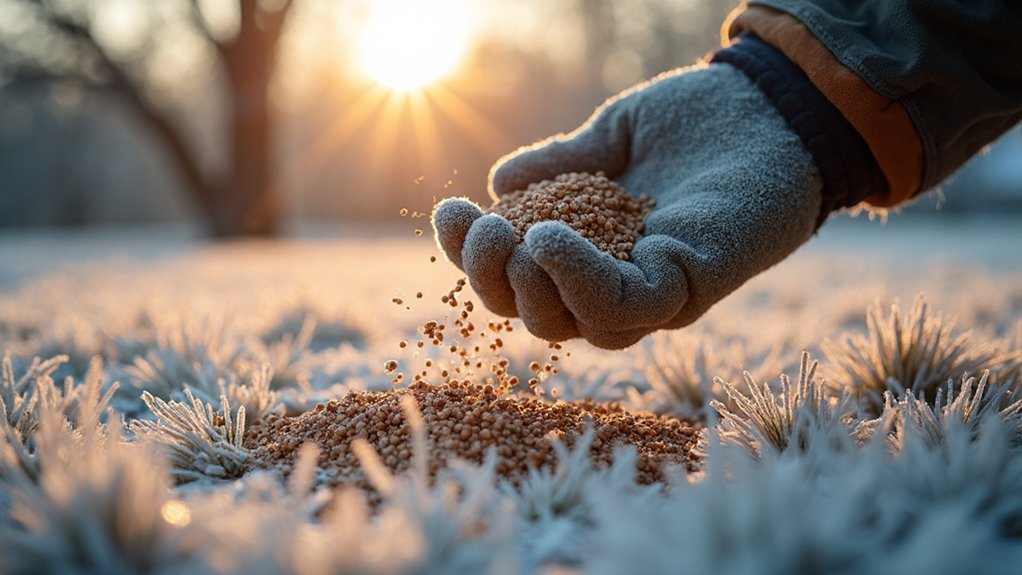
Did you know that 60% of homeowners stop all lawn care once temperatures drop, potentially missing a critical window for stronger spring growth? You’re likely among those who assume dormant grass needs no attention, but winter fertilization can be the difference between a patchy, slow-recovering lawn and one that emerges vibrant in spring. The key isn’t whether you should fertilize during dormancy—it’s knowing exactly when, what type, and how much to apply for your specific grass variety.
Key Takeaways
- Yes, but timing matters – fertilize in late fall (after Halloween, before Thanksgiving) before full dormancy sets in.
- Use slow-release, high-quality nitrogen fertilizers like Milorganite; avoid quick-release options that trigger vulnerable winter growth.
- Cool-season grasses benefit from late-winter nitrogen applications, while warm-season grasses need potassium-rich fertilizer for root strength.
- Apply one pound of nitrogen per 1,000 square feet and never fertilize frozen ground or fully dormant grass.
- Avoid fertilizing warm-season grasses from December through February to prevent turf weakening and nutrient runoff.
Understanding Lawn Dormancy and Winter Growth Patterns
Your lawn’s brown winter appearance doesn’t necessarily signal death—it’s likely entered dormancy, a natural survival mechanism that helps grass conserve water and nutrients during harsh conditions. Understanding your dormant grass requires recognizing that grass roots remain alive underground, ready to regrow when temperatures improve.
Cool-season grasses like fescue and bluegrass slow growth during extreme cold but may continue minimal activity during mild winter days. Warm-season grasses such as Bermuda and Zoysia completely shut down when temperatures drop, creating a fully dormant lawn. This dormancy timing affects winter fertilization strategies considerably.
Recognizing these growth patterns helps you avoid winter damage from improper care. Your winter lawn needs different maintenance approaches depending on grass type, ensuring healthy spring recovery when dormancy breaks naturally.
Benefits of Winter Fertilization for Different Grass Types
While dormant grass might seem like it doesn’t need nutrients, strategic winter fertilization provides distinct advantages that vary greatly between grass types. When you fertilize my lawn with potassium-rich fertilizer during winter months, warm-season grasses like Bermuda and Zoysia develop stronger root systems and improved cold tolerance. Cool-season varieties such as Kentucky bluegrass thrive with late-winter nitrogen applications that jumpstart early spring growth.
You’ll achieve healthy lawns by choosing the right lawn fertilizer timing. Slow-release nitrogen applied in late fall helps cool-season grass recover from winter damage quickly. However, avoid fertilizing dormant warm-season grasses from December through February, as this weakens turf and causes nutrient runoff. The key lies in matching your fertilizer application to your specific grass type’s growth patterns and dormancy schedule.
Timing Your Winter Fertilizer Application
Successful winter fertilization hinges on precise timing that aligns with your grass’s natural dormancy cycle. You’ll want to fertilize your lawn in late fall, typically after Halloween but before Thanksgiving. This window ensures your grass receives nutrients just before the first deep freeze or snowfall locks it into dormant mode.
Don’t wait too long—applying fertilizer after your lawn enters full dormancy won’t provide the intended benefits. The goal is catching your grass as it’s shifting into winter rest, allowing it to store nutrients for early spring recovery.
Cool-season grasses particularly benefit from this timing, as they’ll emerge healthier and more resilient after winter damage. Proper timing prevents over-fertilization while maximizing your lawn’s ability to bounce back when growing conditions improve.
Choosing the Right Fertilizer for Dormant Grass
Which fertilizer works best when your grass enters its winter slumber? When your grass is dormant, it requires careful attention to fertilizer selection for proper lawn care. You’ll want to choose a slow-release, high-quality nitrogen fertilizer like Milorganite that provides steady nutrients throughout winter. This approach, known as dormant fertilization, supports your fall lawn’s recovery potential.
Avoid quick-release fertilizers when you apply winter treatments, as they’ll signal unwanted growth during dormancy. Apply at one pound of nitrogen per 1,000 square feet, following bag instructions carefully. This method helps cool-season grasses bounce back from winter damage and snow mold come spring. Always check local fertilization ordinances before applying fertilizer. Consider overseeding with grass seed after winter damage becomes apparent.
Common Winter Fertilization Mistakes to Avoid
Even with the right fertilizer knowledge, many homeowners make costly errors that can damage their lawn’s spring recovery. Quick-release fertilizers during dormancy signal grass to grow, making it vulnerable to cold weather damage. Overfertilizing creates serious problems—excess nutrients wash away as nutrient runoff and can burn your grass, preventing healthy spring emergence.
Your grass type matters considerably for your fertilization schedule. Warm-season varieties need different winter fertilization approaches than cool-season grasses. Fertilizing warm-season grass during dormancy wastes energy on top growth instead of building root strength and cold tolerance.
Don’t apply fertilizer to frozen ground—nutrients simply wash away before absorption. Check local winter fertilization regulations to avoid fines and environmental issues.
Protecting Your Lawn During the Dormant Season
Once your lawn enters dormancy, it becomes surprisingly fragile and requires careful protection from common winter hazards. Minimizing foot traffic prevents ice crystals from piercing grass cell walls and causing permanent damage. Jaime Staufenbeil, turf management expert, emphasizes avoiding these critical mistakes:
- Never use heavy landscape equipment on dormant grass, as it crushes delicate crowns
- Don’t park vehicles on your lawn for extended periods – they’ll compact soil and kill grass
- Remove fallen leaves and objects that can suffocate grass blades beneath
When spring starts to warm the soil, you’ll need to fertilize appropriately. Determine the best application rates based on soil testing rather than guessing how much fertilizer to apply. This preparation allows healthy roots to grow once your lawn exits dormancy.
Preparing Your Lawn for Spring Recovery
While your grass lies dormant, you can take proactive steps to certify it bounces back stronger than ever when warmer weather arrives. Expert advice emphasizes that this time of year offers the perfect window for dormant-season fertilization. Your lawn begins storing nutrients during winter months, setting the foundation for explosive spring growth. Precise timing prevents you from applying fertilizer when grass is actively growing, which could cause damage during vulnerable periods. Late fall or early winter applications won’t harm to the lawn like early spring treatments on wet, sensitive ground. Maintaining a healthy fertilization schedule during dormancy ascertains your grass emerges thick and vigorous, ready to outcompete weeds and handle foot traffic when spring arrives.
Frequently Asked Questions
Should You Fertilize When Grass Is Dormant?
You shouldn’t fertilize dormant grass as it can’t absorb nutrients effectively. Focus on proper lawn maintenance by following seasonal fertilization schedules. Wait until spring growth begins for better nutrient uptake and reduced environmental impact.
When Should You Put Winter Fertilizer on Your Lawn?
Consider Minnesota homeowners applying fertilizer in October—you’ll achieve proper fertilizer timing by fertilizing between early September and mid-November. This annual fertilization schedule meets lawn nutrient needs, supporting cool season grass care and effective winterizing lawn strategies before dormancy.
When Should You Not Fertilize Grass?
You shouldn’t fertilize grass during dormancy to avoid over fertilizing and prevent lawn damage. Poor timing for dormancy risks winter feeding problems, impacts soil health, and affects spring growth. Follow proper turf management strategies during dormant season considerations.
When to Apply Winterguard Fertilizer?
You should apply Winterguard fertilizer during the ideal application period of late fall, typically September through mid-November. This dormant season timing provides dormant grass nutrients while soil’s still warm, ensuring proper wintertime lawn feeding before complete dormancy.
Conclusion
You’ve planted the seeds of knowledge for successful winter lawn care. Don’t let your dormant grass become a forgotten child—it still needs your attention through the cold months. By timing your fertilization correctly and choosing the right nutrients, you’re investing in a lawn that’ll reward you with lush, healthy growth come spring. Your patience and proper winter care will pay dividends when warmer weather returns.