
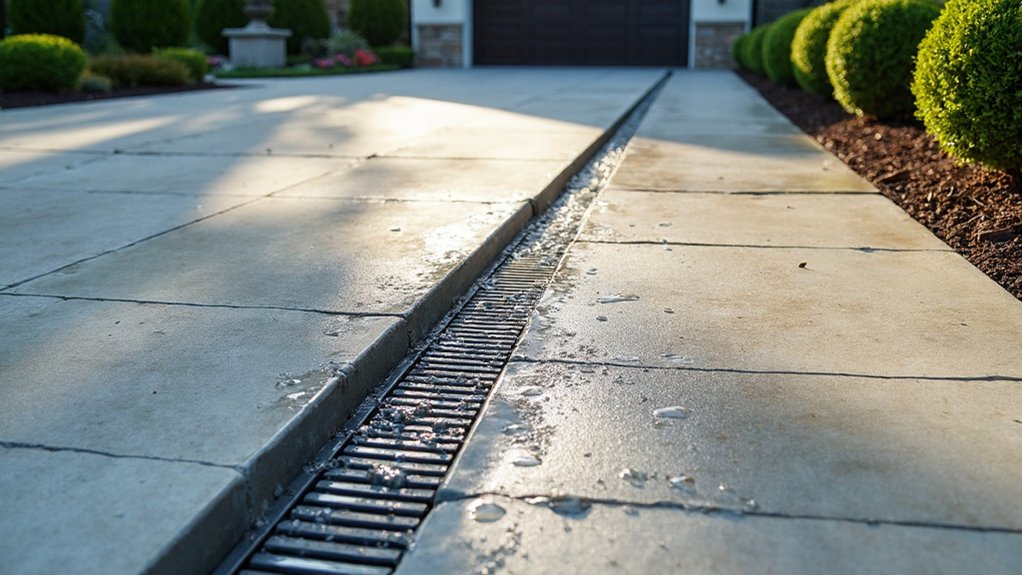
You’ve invested thousands in your driveway’s appearance, but water damage can destroy it all in a single heavy storm. Standing water doesn’t just create unsightly puddles—it undermines your pavement’s foundation, creates dangerous ice patches in winter, and can even redirect flow toward your home’s foundation. The right drainage system isn’t just about aesthetics; it’s about protecting your entire property investment. But here’s what most homeowners don’t realize about choosing the perfect solution.
Key Takeaways
- Choose from trench drains, French drains, catch basins, or slot drains based on your property’s water flow patterns.
- Select materials like cast iron, stainless steel, or polymer concrete that match your traffic loads and environmental conditions.
- Proper installation requires consistent slope, correct depth, and strategic placement to direct water away from your property entrance.
- Quarterly inspections and annual pressure washing prevent clogs and maintain optimal drainage system performance throughout the year.
- Consider aesthetic preferences, vehicle weight requirements, and long-term maintenance needs when selecting your driveway drainage solution.
Common Types of Driveway Drains
When choosing a driveway drainage system, you’ll encounter several effective options designed to handle different water management challenges. Trench drains create long, narrow channels that efficiently collect and redirect water flow across your driveway surface. Channel drains feature grated covers, making them versatile choices for residential drainage needs while maintaining accessibility. French drains work underground, using perforated pipes surrounded by gravel to manage water runoff effectively. Catch basins excel at collecting large water volumes and directing them away from your property entrance. Slot drains provide a sleek, modern aesthetic with narrow surface slits that blend seamlessly into your driveway design. Each drain type offers unique advantages for preventing standing water and protecting your property’s foundation from moisture damage.
Choosing the Right Materials for Your Driveway Drain
After selecting your preferred drain type, you’ll need to choose materials that match your driveway’s traffic demands and environmental conditions. Cast iron provides exceptional strength for heavy-duty driveway drainage applications, making it ideal for channel drains and trench drains handling significant loads. Polymer concrete offers lightweight durability with chemical resistance, while stainless steel excels in high-moisture environments or salt exposure areas. For budget-conscious homeowners tackling DIY drainage systems, plastic materials like PVC deliver cost-effective performance for light-duty applications. Reinforced concrete handles heavy traffic loads effectively. Consider pairing your catch basin with permeable pavers and crushed stone for enhanced water runoff management. Balance your driveway materials selection against installation costs while ensuring long-term performance matches your property’s specific drainage requirements.
How to Install a Driveway Drain System
With your materials selected, you can begin the installation process by marking the drainage area and gathering the necessary tools. The first step involves planning your trench drain layout to guarantee proper water flow away from your property. When you dig the trench, maintain consistent depth and slope for optimal drainage.
Install a driveway drain system by carefully positioning your channel drain in the excavated area. Connect the drain pipe to direct water toward appropriate outlets. This DIY project requires attention to detail—make certain all components are level and securely fastened.
A properly installed drainage project prevents water accumulation and protects your entrance. Driveway drains must be positioned at the lowest points where water naturally collects. Test your system thoroughly before backfilling.
Maintenance Tips for Driveway Drain Systems
Regular maintenance keeps your driveway drain system functioning effectively and extends its lifespan considerably. You’ll need to inspect your existing drainage quarterly, removing leaves and debris that accumulate in catch basins and channels. Pressure washing the system annually removes stubborn buildup and helps prevent blockages during heavy rainfall.
Check for wear and tear on grates, pipes, and connections. Replace damaged components immediately to maintain proper drainage and prevent excess moisture from compromising your driveway’s foundation. Make adjustments to slopes or grades if you notice standing water after storms.
During winter, limit harsh de-icing products that can corrode metal components. Instead, use sand or calcium-based alternatives. Clear snow promptly to prevent debris from freezing in place, which helps prevent costly spring repairs.
How to Choose the Right Driveway Drain
How do you select the perfect drainage system when dozens of options flood the market? You need to assess your driveway’s specific water flow patterns first. Driveway drainage solutions vary dramatically based on your property’s slope and vehicle load requirements.
Your system choice depends on whether you need French drains for subsurface water or drainage channels for surface runoff. Each solution serves different purposes – French drains redirect water underground, while trench drains capture surface flow directly.
Consider your aesthetic preferences when selecting the right drainage solution. Heavy trucks require reinforced systems compared to passenger cars. Don’t overlook long-term maintenance needs either.
The key is matching your specific situation with appropriate driveway drainage solutions that’ll help manage water effectively while preventing costly damage to your property’s entrance.
Cost Estimates for Driveway Drainage Solutions
Budget planning becomes critical once you’ve identified your ideal drainage system. French drain installation costs vary dramatically, ranging from $1,000 to $18,000 depending on your driveway’s complexity and water drainage needs. Channel drains require a larger investment, typically costing $3,000 to $9,000 per 100 linear feet of installation. If you’re considering a swale system, you’ll find it’s the most economical option at approximately $0.50 per foot.
Regrading your driveway can cost between $1,500 to $9,500, depending on the scope of work required. When incorporating paver stones into your drainage solution, expect to pay $15 to $60 per square foot. These cost estimates help you compare different approaches and select the most budget-friendly option for your property’s specific drainage requirements.
DIY vs. Hiring a Professional
After determining your budget for drainage solutions, you’ll need to decide whether to tackle the project yourself or hire a professional contractor. Simple DIY tasks like adding permeable materials or installing rain barrels can save money at your home. However, complex projects like regrading your driveway or installing French drains require specialized knowledge and tools, making it wise to hire a professional.
DIY work on driveway drainage systems carries risks if done improperly, potentially causing further damage and costly repairs. A licensed contractor guarantees your drainage solution meets local codes and handles regional weather conditions effectively. When selecting professionals, request multiple quotes, check references, discuss permits and timelines, and ask about warranties. This system approach helps prevent water damage while protecting your property’s appearance.
Frequently Asked Questions
What Is the Problem With Driveway Drainage?
You’ll face standing water from inadequate slope and insufficient grading. Clogged culverts, poor soil permeability, and incorrect pipe sizing create runoff accumulation. Without proper maintenance, you’ll encounter erosion concerns and potential seasonal flooding around your property entrance.
How Much Does It Cost to Put a Drain in a Driveway?
drainage system cost varies 1,800% between options! You’ll spend $500-$18,000 depending on materials chosen. Professional installation guarantees proper function, while DIY saves money but risks costly mistakes affecting your property’s long-term drainage effectiveness.
How to Prevent Water Running Down a Driveway Towards a House?
You’ll need proper grading techniques and driveway slope optimization to redirect water. Install french drains, catch basins, or trench drain construction. Consider permeable paving options and driveway swale design for effective surface water management solutions.
What Is the Best Type of Driveway for Drainage?
Don’t let water become your driveway’s worst enemy! Gravel offers the best driveway material permeability at budget-friendly prices. You’ll get excellent driveway runoff mitigation through natural filtration, making it superior to other permeable pavement options for effective drainage.
Conclusion
Like Noah preparing for the flood, you’re now equipped with the knowledge to protect your property from water’s destructive power. You’ve learned about drain types, materials, installation, and maintenance—everything needed to keep your driveway high and dry. Whether you’re channeling your inner DIY warrior or calling in professional reinforcements, you’ll make informed decisions that’ll save your entrance from becoming another casualty of poor drainage planning.