
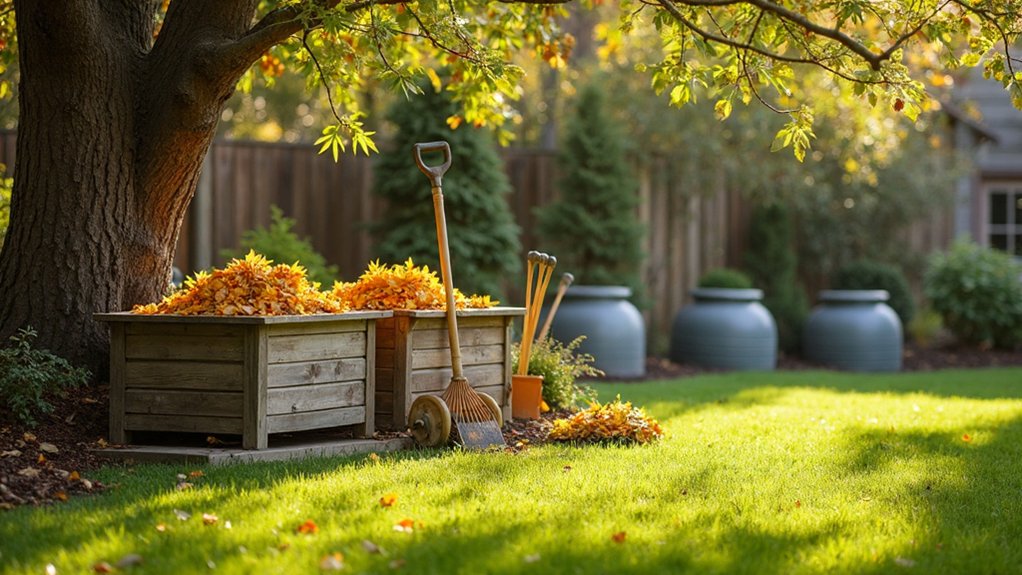
You probably don’t realize that traditional yard cleanup methods release more carbon than they prevent, turning your well-intentioned maintenance into an environmental burden. When you rake leaves into plastic bags and power through debris with gas-powered blowers, you’re actually disrupting nature’s recycling system while contributing to landfill waste and air pollution. There’s a completely different approach that transforms your yard work from environmental liability into ecological asset—one that saves you money while supporting local wildlife.
Key Takeaways
- Transform fallen leaves and grass clippings into nutrient-rich compost instead of sending yard waste to landfills.
- Use mulching mowers to recycle grass clippings directly back into lawns as natural fertilizer.
- Choose electric or battery-powered tools over gas-powered equipment to reduce harmful emissions during yard work.
- Create natural mulch from woody debris and whole leaves to insulate garden beds year-round.
- Establish backyard compost bins to convert organic yard waste into valuable soil amendments sustainably.
Why Choose Eco-Friendly Yard Cleanup Methods?
While traditional yard maintenance often relies on harsh chemicals and wasteful practices, eco-friendly cleanup methods offer a smarter approach that benefits both your wallet and the planet. You’ll save money by eliminating expensive chemical treatments while creating a healthier landscape for your family and pets. These sustainable practices improve air quality through natural filtration and oxygen production. By choosing organic fertilizers and natural pest control, you’re protecting children and animals from harmful toxins. Your yard becomes a sanctuary for local pollinators and wildlife when you incorporate native plants and minimize soil disruption. Additionally, eco-friendly methods promote water conservation and waste reduction, making your property an environmental asset rather than a burden.
Natural Debris Removal and Composting Techniques
The smartest yard cleanup strategy starts with harnessing nature’s own recycling system. You’ll create beautiful, nutrient-rich soil amendments by collecting leaves and debris with rakes and leaf blowers, then transforming them into compost. Use your lawn mower to mulch fallen leaves directly onto your landscaping—this returns valuable nutrients to plants while suppressing weeds naturally.
Establish a backyard compost bin to convert grass clippings and pruned branches into free fertilizer for your outdoor spaces. This approach helps reduce waste while keeping carbon and nutrients within your local environmental ecosystem. Avoid burning or sending yard waste to landfills, as composting maintains these resources where they benefit your property most. Remember to dispose of hazardous materials like paints and chemicals through municipal recycling programs instead.
Sustainable Leaf Management and Mulching Practices
Since autumn brings millions of fallen leaves to yards across the country, you’ll want to maximize their potential rather than simply bagging them for disposal. These sustainable landscaping practices transform leaf litter into valuable organic materials that enhance your sustainable landscape while supporting water conservation and soil health.
Transform fallen leaves through these effective methods:
- Mulch directly on lawns – Run your mower over leaves to create natural organic fertilizers that feed grass roots and improve drought-resistant plants’ resilience
- Create insulated garden beds – Layer whole leaves around plantings to provide winter habitat for beneficial insects while retaining soil moisture
- Build compost piles – Shred leaves to accelerate composting, producing nutrient-rich amendments that boost soil structure
These sustainable practices reduce waste while creating organic materials that naturally support your landscape’s ecosystem health.
Organic Waste Reduction and Recycling Strategies
Beyond composting leaves, your yard generates numerous organic materials that can become valuable resources through strategic reduction and recycling approaches. You’ll transform grass clippings and plant trimmings into nutrient-rich soil amendments through proper composting techniques. Mulching mowers eliminate grass waste by recycling clippings directly back into your lawn, delivering essential nutrients naturally.
Converting woody debris into valuable resources requires investing in a chipper/shredder, which transforms branches into useful natural mulch for garden beds and pathways. You’ll retain soil moisture and suppress weeds effectively using this all-encompassing mulch.
Maximize your yard waste reduction by strategically positioning recycling bins throughout your property, encouraging proper sorting of recyclable materials. This thorough approach transforms potential waste streams into beneficial soil amendments, creating a closed-loop system that nourishes your landscape sustainably.
Environmentally Safe Equipment and Tool Selection
When selecting equipment for yard cleanup, you’ll greatly reduce your environmental impact by choosing electric or battery-powered tools over gas-powered alternatives. These energy-efficient equipment options support emission-free gardening while maintaining effective lawn maintenance practices.
Consider incorporating these environmentally-friendly tools into your sustainable landscaping routine:
- Manual gardening tools like rakes and push mowers that require zero electricity
- Solar-powered hedge trimmers that harness renewable energy-powered tools technology
- Robotic mowers that optimize cutting schedules for maximum efficiency
Regular maintenance keeps your eco-friendly lawn care equipment running efficiently, maximizing equipment efficiency and extending lifespan. When tools reach their end-of-life, proper tool recycling and disposal prevents hazardous materials from contaminating soil and water sources, completing your commitment to environmentally responsible yard maintenance.
Water Conservation During Seasonal Cleanup
Water conservation becomes crucial during seasonal cleanup as you’ll often need supplemental irrigation to help disturbed plants recover and establish new growth. Install efficient irrigation systems like drip irrigation systems to minimize water usage and reduce evaporation. These targeted methods deliver water directly to root zones, helping you conserve water while maintaining healthy plants.
Collect rainwater in barrels to supplement your water use during dry periods that often follow cleanup activities. Group plants with similar watering requirements together to optimize irrigation efficiency. Apply mulch around disturbed areas to retain moisture and reduce water needs. Aerate compacted soil to improve water absorption and prevent runoff. These Practices for a Greener landscape help you reduce water consumption while adapting to your local climate conditions, ensuring plants thrive with less water.
Creating Wildlife-Friendly Spaces Through Sustainable Maintenance
While maintaining your yard sustainably, you’ll discover that thoughtful cleanup practices can transform your outdoor space into a thriving habitat for local wildlife. Your eco-friendly practices will support local wildlife while reducing environmental impact through strategic maintenance choices.
Create wildlife-friendly spaces by implementing these sustainable landscapes techniques:
- Preserve native plants that are adapted to local conditions, providing essential food sources for pollinators like bees and butterflies throughout seasons
- Maintain brush piles from pruned branches, offering shelter for beneficial insects that provide natural pest control year-round
- Leave seed heads on perennials during winter cleanup, supplying vital food for migrating birds and overwintering wildlife
You’ll create beautiful outdoor environments that require less maintenance while fostering biodiversity. These sustainable practices establish thriving ecosystems that benefit both your landscape and local wildlife populations.
Frequently Asked Questions
How Much Does Eco-Friendly Yard Cleanup Cost Compared to Traditional Methods?
You’ll find eco-friendly yard cleanup offers competitive pricing with traditional methods initially, but delivers superior long-term savings. Budget-friendly sustainable options provide excellent ROI considerations through reduced chemical costs and environmental benefits over time.
What Certifications Should I Look for When Hiring Sustainable Landscape Professionals?
Only 12% of landscapers hold green certifications. You’ll want professionals certified in organic lawn care, native plant specialists credentials, permaculture design principles, and regenerative soil management. Look for water efficient irrigation systems and pollinator friendly garden planning expertise.
How Long Does It Typically Take to See Results From Sustainable Practices?
You’ll notice seasonal changes within months through organic fertilizer application and water conservation techniques. Native plant selection shows results yearly, while composting strategies and soil health improvement develop over seasons with sustainable lawn care practices.
Can Eco-Friendly Methods Work Effectively in Extreme Weather Conditions?
Yes, you’ll find climate resilient gardening with native species promotion and water efficient irrigation actually performs better during extreme weather. Organic mulch application, soil health improvement, and integrated pest management create stronger, more adaptable landscapes than conventional methods.
Are There Local Regulations or Permits Required for Sustainable Yard Modifications?
You’ll need permits for rain garden installation, permeable paving materials, and renewable energy landscape features. Check municipal composting programs, xeriscaping techniques, and wildlife friendly landscaping regulations before implementing water conservation strategies.
Conclusion
You’ve discovered that sustainable yard cleanup isn’t just about maintaining your landscape—it’s about nurturing the entire ecosystem around your home. By composting debris, mulching leaves, conserving water, and choosing eco-friendly tools, you’re creating a thriving habitat for wildlife while reducing your environmental footprint. Remember, you reap what you sow. Your commitment to green practices today guarantees a healthier, more vibrant outdoor space for generations to come.