
When floodwater starts creeping toward your property, you don’t have the luxury of waiting for professional help or ordering specialized equipment online. You need drainage solutions that work immediately—systems you can deploy in minutes, not hours. The difference between minor water damage and catastrophic flooding often comes down to how quickly you can redirect, contain, or remove water before it overwhelms your home’s natural drainage capacity and finds its way inside.
Key Takeaways
- Deploy portable sump pumps immediately during flooding for high-capacity water removal and emergency operation during power outages.
- Install temporary barriers like sandbags, inflatable barriers, or water-filled bladders to redirect flood water and protect vulnerable areas.
- Create emergency surface water diversion using temporary berms, portable guttering, and gravel-lined channels to redirect runoff flow.
- Identify critical drainage problems by monitoring standing water, damp spots, water stains, and musty odors before floods occur.
- Conduct post-flood assessments by clearing clogged gutters, examining drains for blockages, and installing temporary pumps for continued water removal.
Identifying Critical Drainage Problems Before Emergencies Strike
While most homeowners wait for flooding to reveal drainage problems, you can spot critical issues before disaster strikes by conducting regular property inspections. Look for standing water, damp spots, water stains, and musty odors around your foundation and basement areas. These warning signs indicate existing drainage failures that’ll worsen during storms.
After each heavy rainfall, observe water flow and pooling patterns across your property. Note where water accumulates and moves slowly, as these areas need immediate attention. Don’t overlook clogged gutters and downspouts—they’re common culprits that cause water to overflow and damage your foundation.
Watch for eroded soil around your home’s perimeter and dying vegetation in consistently wet areas. These landscape changes signal underlying drainage problems that require professional assessment and prompt correction.
Portable Sump Pumps for Rapid Water Removal
Once you’ve identified potential drainage problems, you need reliable equipment ready to handle water emergencies when they occur. Portable sump pumps offer immediate protection against flooding when traditional drains can’t keep up with heavy rain or rising water levels.
These battery-powered units provide critical advantages for your property:
- Emergency Operation – They’ll continue working during power outages when you need them most
- Rapid Deployment – Lightweight design lets you quickly position them in flooded basements or crawlspaces
- High Capacity – Remove hundreds of gallons per hour to minimize water damage risk
Proper hose attachment helps direct water safely away from your home’s foundation. Whether you’re renting or purchasing, portable sump pumps deliver cost-effective flood mitigation that protects your property when standard drainage systems fail.
Temporary Barriers and Sandbag Systems
When floodwaters threaten your property, temporary barriers serve as your first line of defense against water intrusion before it reaches your home’s interior. Sandbags offer a cost-effective DIY solution to prevent flooding, though they require significant manual labor for placement. You’ll find inflatable flood barriers deploy rapidly, filling with water or air to redirect water away from vulnerable areas. Water-filled bladders eliminate heavy lifting while providing substantial weight for effective flood management.
These temporary systems work alongside your existing drainage systems and pumps and drainage infrastructure to manage water runoff effectively. You can strategically position barriers to channel runoff toward rain barrels or away from foundations. When properly installed during heavy rain events, these barriers prevent water from overwhelming your property’s natural drainage capacity.
Emergency Surface Water Diversion Techniques
As floodwaters begin rising around your property, you’ll need to act quickly to redirect surface water away from your home’s foundation and vulnerable entry points. Emergency drainage systems can considerably reduce flood risk when implemented properly.
Temporary drainage channels offer immediate relief by guiding stormwater toward safer areas. You can dig shallow trenches using basic tools to redirect water away from your home toward storm drains or open spaces. Make sure these channels have adequate slope for effective flow.
Key surface water diversion techniques include:
- Constructing temporary berms – Build small earthen barriers to guide water flow
- Installing portable guttering – Use sectional materials to channel water efficiently
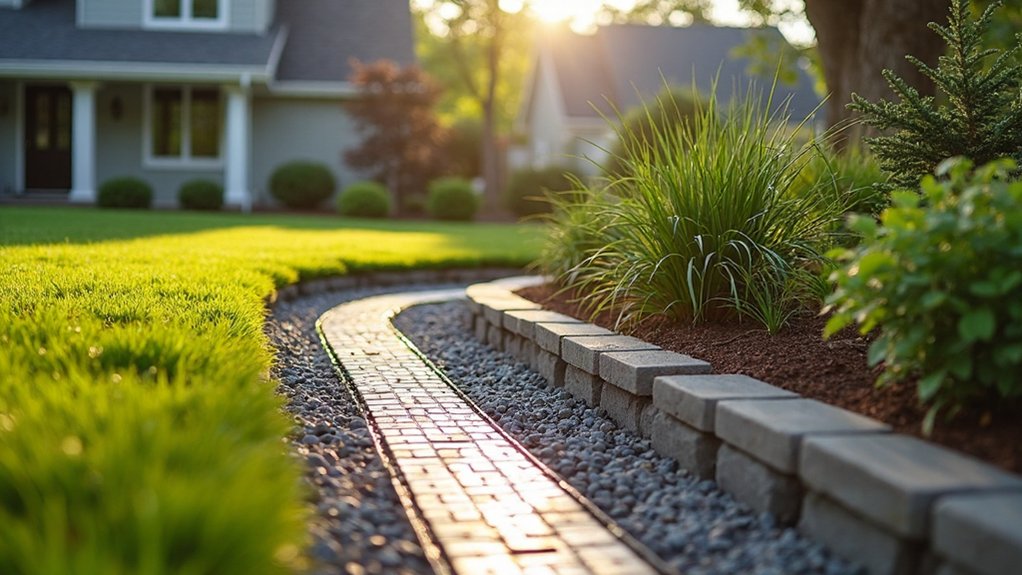
- Creating gravel-lined channels – Improve water flow while preventing erosion
These emergency systems buy you precious time during flooding events.
Quick-Deploy French Drain Solutions
While surface diversions provide immediate protection, quick-deploy French drains offer a more sophisticated emergency solution that’ll capture and redirect groundwater before it reaches your foundation. These temporary systems use perforated pipe surrounded by gravel to channel excess water away from your property during a flood event. You can install them within hours, making them ideal for emergency flood mitigation when permanent solutions aren’t available.
Quick-deploy French drains work exceptionally well in low-lying areas where water naturally accumulates. If you’re dealing with chronic drainage issues, these systems provide immediate drainage relief while you plan long-term fixes. The gravel and perforated pipe combination effectively capture and divert floodwater, offering faster installation and lower costs than permanent drainage solutions.
Storm-Ready Equipment and Backup Power Systems
Beyond drainage systems, your flood preparedness depends heavily on having the right equipment and reliable power sources when storms strike. You’ll need multiple layers of protection to safeguard your property effectively.
Essential storm-ready equipment includes:
- Portable sump pumps with battery backup power that’ll keep functioning during outages
- Inflatable flood barriers for quick deployment around doorways and windows
- High-capacity generators to power dewatering pumps and other critical systems
When water accumulates, gasoline-powered trash pumps can quickly remove large volumes from basements and low areas. Submersible pumps excel in flooded conditions, operating efficiently underwater. Your backup power system should support all pumping equipment during extended outages. These portable solutions create an all-encompassing defense network that activates automatically or on-demand when flooding threatens your property.
Post-Flood Assessment and Immediate Drainage Repairs
Once floodwaters recede, you’ll face critical hours where swift assessment and immediate drainage repairs can mean the difference between manageable restoration and catastrophic structural damage. Thoroughly inspect your property for standing water, water stains, and musty odors that signal drainage problems. Focus first on clearing clogged gutters and downspouts to restore basic water flow away from your foundation.
Examine surface drains and drain pipes for blockages or collapsed pipes that need professional attention. Install temporary sump pumps to actively remove trapped water from basements or low-lying areas. Consider French drains to redirect persistent water accumulation until permanent repairs are completed.
Document everything with photographs and videos for insurance claims. Don’t delay—each hour increases your risk of mold growth and structural deterioration.
Frequently Asked Questions
What Are the Drains to Prevent Flooding?
You’ll need drainage pipes, catch basin systems, and sump pump installations. Consider grading adjustments, rainwater harvesting, permeable pavement, trench drains, subsurface networks, downspout extensions, and flood mitigation landscaping to effectively prevent water damage.
What Can You Put Around Your House to Prevent Flooding?
Flooding affects 25% of homeowners annually. You can install French drain design, gutter downspout extensions, flood barrier installation, and gravel landscaping around your property. Add permeable pavement installation and bioswale construction for thorough protection.
Which Solution Was Most Effective at Preventing Flooding?
You’ll find French drain installation most effective for preventing flooding. This permanent drainage system uses underground drainage pipes to redirect water away from your foundation, outperforming temporary solutions and surface drainage channels.
What to Do if a House Is Prone to Flooding?
Water’s your unwelcome guest that won’t leave. You’ll need proper grading, sump pump installation, basement waterproofing, and emergency flood barriers. Add downspout extensions, permeable pavement, water resistant sealants, and foundation reinforcement for complete protection.
Conclusion
You’ll protect your property by identifying problems early, you’ll respond quickly with portable pumps, and you’ll prevent damage with temporary barriers. You can’t control when floods strike, but you can control your preparation. You won’t regret investing in storm-ready equipment, you won’t underestimate backup power systems, and you won’t delay post-flood repairs. Take action now—your property’s safety depends on the drainage solutions you implement today.