
You probably don’t realize that St. Louis’s unique Ozark geology creates soil conditions that make standard retaining wall approaches ineffective. Your suburban property’s clay-heavy earth expands and contracts dramatically with seasonal moisture changes, putting enormous pressure on conventional wall systems. That’s why local contractors have developed specialized installation techniques and material combinations that work specifically with the region’s challenging terrain. Understanding these regional adaptations could save you thousands in future repairs and replacements.
Key Takeaways
- Natural stone materials like Missouri limestone and granite remain the premium choice for historic neighborhood integration and long-term durability.
- Segmental block systems are increasingly popular for their versatility in freeze-thaw conditions and cost-effective maintenance requirements.
- Curved and multi-tiered designs that follow natural hillside contours are trending over traditional straight wall installations.
- Proper drainage integration with gravel backing and weep holes is essential for preventing water pressure buildup damage.
- Material selection focuses on complementing existing home architecture while maximizing usable outdoor space on sloped properties.
Why Suburban St. Louis Properties Choose Retaining Walls
While St. Louis County’s natural terrain presents unique challenges, you’ll find retaining walls offer practical solutions for your property’s specific needs. The region’s hilly landscape throughout West County and South County creates slopes that naturally limit your usable outdoor space, making level areas difficult to achieve without structural support.
Your property’s clay-heavy soil compounds these challenges since it expands when wet and contracts during dry periods, leading to persistent erosion issues. When seasonal weather extremes hit—from freezing winters to intense summer storms—unprotected slopes face accelerated deterioration that threatens your landscape investment.
Retaining walls help you prevent soil erosion, create functional terraced areas, manage water runoff effectively, define outdoor spaces clearly, and transform steep yards into usable recreational areas for your family’s enjoyment.
Natural Stone: The Premium Choice for Historic Neighborhoods
Natural stone stands as the gold standard for retaining walls in St. Louis’s prestigious historic neighborhoods. You’ll find homeowners in Webster Groves, University City, and Clayton consistently choosing locally-sourced Missouri limestone or granite for their exceptional durability and distinctive natural patterns.
Your natural stone retaining wall seamlessly integrates into the surrounding landscape while honoring the architectural heritage that defines these established communities. The material’s resistance to freeze-thaw cycles and extreme weather guarantees your investment performs beautifully for decades.
Consider these premium natural stone benefits:
- Timeless aesthetic that complements historic St. Louis architecture
- Unique patterns created by natural geological formations
- Weather-resistant properties that withstand Missouri’s climate extremes
- Cohesive landscape integration that enhances property value
Professional installation verifies structural integrity and visual appeal.
Segmental Block Systems: Modern Durability Meets Design Flexibility
Since St. Louis experiences harsh freeze-thaw cycles, you’ll find segmental block retaining walls exceptionally durable for your property. These modular systems offer impressive versatility, allowing you to create curved walls and terraced landscape designs that transform sloped yards into functional outdoor living space. You can choose from numerous colors and textures that complement contemporary home styles while boosting curb appeal.
The interlocking blocks handle significant heights and loads, making them perfect for managing erosion and water runoff. Installation’s straightforward, and maintenance requirements stay minimal, ensuring long-term cost-effectiveness. When planning your retaining wall project, consider how segmental blocks integrate seamlessly with features like an irrigation system, creating cohesive designs that enhance both functionality and aesthetic appeal throughout your residential landscape.
Curved and Multi-Tiered Wall Designs Taking Center Stage
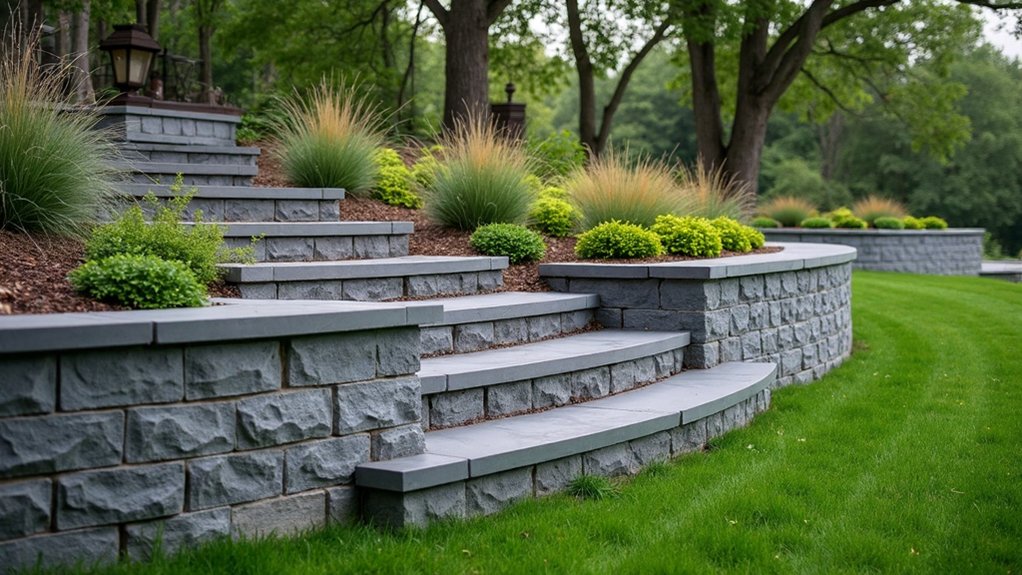
As St. Louis homeowners embrace innovative landscaping solutions, curved and multi-tiered retaining wall designs are revolutionizing outdoor spaces across suburban neighborhoods. You’ll find these dynamic structures transforming sloped properties into functional, visually stunning landscapes that work harmoniously with the area’s natural terrain.
These trending Retaining wall styles offer superior benefits:
- Flowing curves that mirror natural hillside contours, creating organic shifts between different elevation levels
- Terraced platforms maximizing usable space for patios, gardens, and entertainment areas on previously unusable slopes
- Enhanced water drainage systems that prevent erosion while directing runoff away from your home’s foundation
- Structural integrity that surpasses traditional straight walls through improved load distribution and soil pressure management
You’re investing in both aesthetic appeal and long-term functionality when choosing these innovative designs for your outdoor living space.
Material Selection Based on St. Louis Climate Conditions
While curved and multi-tiered designs create stunning visual impact, your material choice will ultimately determine how well your retaining wall withstands St. Louis’ challenging climate conditions. Segmental block walls excel in freeze-thaw cycles while offering diverse design options that complement your existing landscape. Natural stone provides unmatched durability and seamlessly integrates with St Louis’ historic architectural character. For smaller installations under four feet, wood timber creates warmth but requires careful consideration of moisture exposure. Concrete delivers maximum strength for complex engineering needs and handles significant water runoff effectively. Gabion walls shine in areas requiring superior drainage management, making them ideal when water runoff poses challenges to your property’s stability and aesthetic goals.
Cost Considerations for Different Wall Materials and Designs
How much should you expect to invest in your St. Louis retaining wall project? Different materials offer varying price points and value propositions for your suburban landscape investment.
Wood timber walls provide the most budget-friendly entry point at $20-50 per square foot, though they’ll require more frequent maintenance in St. Louiss unique climate conditions. Segmental block walls deliver excellent cost-effectiveness at $30-80 per square foot, balancing durability with reasonable pricing. For premium aesthetics, natural stone commands $60-150 per square foot but creates lasting curb appeal.
Consider these material investment ranges:
- Wood timber: $20-50/sq ft – Budget-conscious with shorter lifespan
- Segmental block: $30-80/sq ft – Ideal durability-to-cost ratio
- Gabion walls: $40-80/sq ft – Contemporary drainage solution
- Concrete/Natural stone: $50-150/sq ft – Maximum structural integrity and premium aesthetics
Professional Installation Requirements and Permit Regulations
Three key factors determine whether your St. Louis retaining wall project requires professional installation and permits. First, height regulations under building codes mandate permits for walls exceeding 4 feet, treating them as engineered structures. Second, site conditions including drainage problems, poor soil, or steep slopes necessitate professional expertise to guarantee structural integrity. Third, walls supporting additional loads like driveways or commercial properties require specialized engineering.
Complex designs featuring curves or stepped elements also demand experienced contractors. Your Landscape Project’s success depends on avoiding common DIY pitfalls: inadequate drainage systems, insufficient base preparation, ignoring freeze/thaw cycles, and improper backfill materials. These mistakes create costly long-term problems. Professional installation ensures compliance with local building codes while delivering the structural performance your property needs.
Drainage Solutions Critical for Clay-Heavy St. Louis Soil
Because St. Louis’s clay-heavy soil creates significant drainage challenges, you’ll need comprehensive water management solutions for your retaining walls. This dense soil doesn’t drain well, causing water accumulation that can lead to wall failure and foundation damage.
Your drainage system must address these critical components:
- Perforated pipe installation behind the wall to collect and redirect water away from the structure
- Free-draining backfill materials like gravel to prevent water pressure buildup
- Proper grading to channel surface water away from the retaining wall base
- Seasonal considerations for freeze-thaw cycles and heavy rainfall events
Without proper drainage, you’re risking costly repairs and ongoing landscaping problems. Professional installation guarantees your St. Louis retaining walls withstand the region’s challenging soil conditions and weather extremes.
Blending Retaining Walls With Existing Landscape Architecture
Beyond addressing drainage requirements, you’ll want your retaining wall to enhance rather than interrupt your property’s existing design flow. Start by selecting materials that match your home’s architectural style and surrounding natural elements. Native stone or masonry in complementary color palettes creates seamless integration.
Position walls strategically along natural land contours to minimize visual impact while creating functional spaces. Design Ideas include incorporating planting pockets or cascading greenery that softens hard edges and blends structures naturally into your landscape. Scale matters—align your wall’s height with surrounding features to avoid overwhelming existing elements.
This thoughtful approach enhances your propertys overall composition rather than competing with it, transforming necessary soil retention into attractive landscape architecture that feels intentionally designed rather than merely practical.
Maintenance Best Practices for Long-Lasting Performance
While proper installation sets the foundation for retaining wall longevity, consistent maintenance determines whether your investment will last decades or require costly repairs within just a few years.
St. Louis homeowners can maximize their retaining wall’s lifespan through these essential practices:
- Inspect drainage systems quarterly – Clear weep holes of debris and guarantee water flows freely away from the structure
- Monitor for settling or bulging – Look for stones shifting outward or gaps forming between blocks
- Remove vegetation growing between joints – Pull weeds and trim roots that can compromise structural integrity
- Clean surfaces annually – Power wash to prevent staining and organic buildup
Let us help you develop a maintenance schedule tailored to your wall’s materials and local climate conditions. Call us for professional inspections that identify potential issues before they become expensive problems.
Frequently Asked Questions
Can I Build a Retaining Wall on My Property Line Without Neighbor Consent?
You can’t build a retaining wall on your property line without checking local zoning regulations first. Construction permits are required, and you must consider adjacent property impacts. Always consult your neighbor and local authorities before starting.
How Long Does Typical Retaining Wall Construction Take From Start to Finish?
You’ll typically need 3-7 days for your project timeline. The construction process includes excavation and backfill phases. Weather, wall height, and material choices affect duration. Simple walls finish faster than complex designs requiring permits.
Will a Retaining Wall Increase My Property Value and by How Much?
Like a fortress protecting treasure, retaining walls typically boost your home value increase by 70-80% of installation costs. Smart cost benefit analysis reveals significant potential resale benefits, especially for erosion-prone properties requiring functional landscaping solutions.
What Happens if My Retaining Wall Fails or Collapses After Installation?
If your retaining wall fails, you’ll face causes of wall failure like poor drainage or foundation issues. You’ll need expensive remediation options including reconstruction. Liability concerns arise if damage occurs to neighboring properties or if permits weren’t obtained properly.
Do I Need an Engineer’s Design for Walls Under Four Feet Tall?
Generally, you don’t need engineer designs for walls under four feet, but you should still consider vital factors like soil composition, proper drainage considerations, and appropriate material selection to safeguard your wall’s stability and longevity.
Conclusion
You’ll find fantastic functionality when you finally choose the perfect retaining wall for your property. Whether you’re selecting stunning stone or durable segmental blocks, you’re creating both beauty and stability. Don’t delay in deciding on proper drainage – it’s absolutely essential for St. Louis clay conditions. Remember, professional planning and precise placement will protect your investment for years. You’ve got great options to gracefully transform your terrain while maintaining your home’s character.