
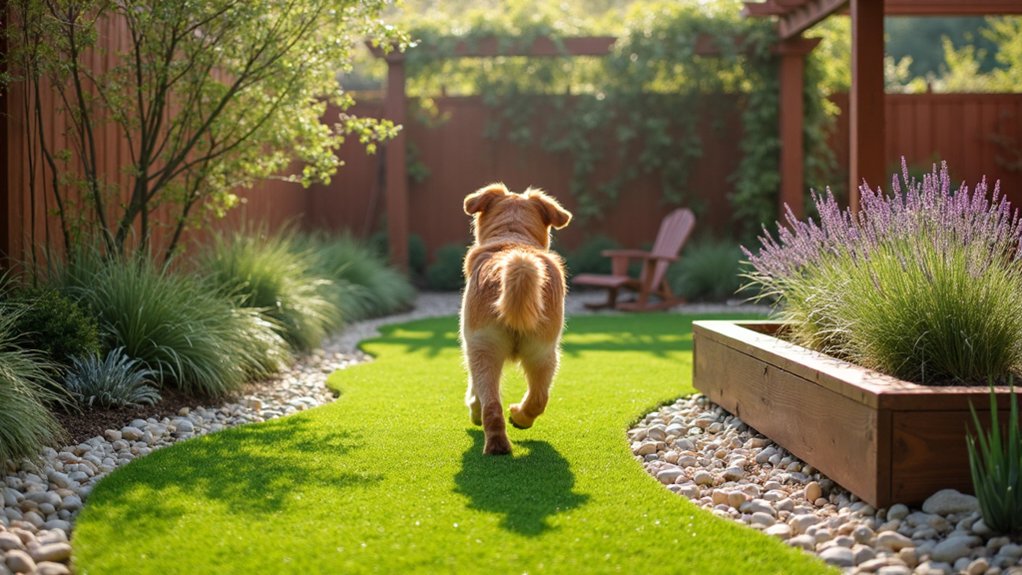
When you’re planning your backyard renovation, you’ve probably focused on entertaining guests and boosting curb appeal—but have you considered your dog’s safety and happiness? Your four-legged family member spends just as much time outdoors as you do, yet most homeowners overlook critical design elements that can make or break their pet’s outdoor experience. The difference between a beautiful yard and a truly functional one lies in understanding what your dog actually needs.
Key Takeaways
- Create designated safe zones with artificial turf or decomposed granite that withstand heavy dog traffic and provide excellent drainage.
- Install secure fencing and shade structures to keep pets safely contained while protecting them from harsh weather conditions.
- Choose non-toxic plants like coneflowers, sunflowers, magnolias, and rosemary that add beauty without endangering curious pets.
- Avoid hazardous materials including cocoa mulch, rubber mulch, and toxic plants like azaleas, oleander, and foxglove varieties.
- Design dedicated activity areas such as digging zones and potty areas to satisfy natural behaviors while maintaining yard aesthetics.
Why Pet-Safe Landscaping Matters for Dog Owners
When you create a backyard landscape without considering your dog’s safety, you’re potentially turning your outdoor space into a hazardous environment. The ASPCA Animal Poison Control Center receives thousands of calls annually about pets exposed to toxic plants in residential settings. Common landscaping choices like azaleas, rhododendrons, and certain lilies can cause serious health issues for your canine companion.
Beyond plants, cocoa mulch, fertilizers, and insecticides pose significant risks to curious dogs exploring your yard. Creating a pet-friendly yard eliminates this anxiety while reducing emergency vet visits. A thoughtfully designed dog-friendly outdoor space that’s safe for dogs doesn’t sacrifice aesthetics—it creates designated areas where your pet can play freely while maintaining your property’s value and visual appeal.
Essential Features Every Dog-Friendly Backyard Needs
How do you transform an ordinary backyard into a canine paradise that meets both your dog’s needs and your design preferences? Start by establishing a designated potty area using pet-safe ground cover like mulch or gravel to protect your lawn from urine damage. Install durable surfaces such as artificial turf or decomposed granite for comfortable play areas that won’t require constant maintenance.
Create shade structures through covered patios or dog houses where your pup can escape the heat. Secure boundaries with proper fencing—whether physical or invisible—to keep your dog safe within your property. Don’t forget to include a dedicated digging zone with loose soil or sand, giving your dog an appropriate outlet for natural instincts while keeping your garden beds dog safe.
Artificial Turf Solutions for Pet-Friendly Yards
Among the durable surfaces mentioned for creating comfortable play areas, artificial turf stands out as one of the most practical solutions for pet owners seeking a pristine yard without constant upkeep. This pet-friendly surface handles heavy dog traffic while providing excellent drainage that prevents muddy paw prints throughout your home.
You’ll eliminate time-consuming tasks like mowing, watering, and applying chemical treatments. The synthetic grass stays cool during hot weather, protecting your dog’s paws from burns while hiding unsightly urine spots that plague natural lawns.
Modern artificial turf designed for pets includes antimicrobial treatments that control odors and bacteria. This low maintenance solution saves you money long-term while creating a safe, functional outdoor space your dogs will love year-round.
Dog-Safe Plants: Flowers, Shrubs, and Trees
Beyond creating durable surfaces, selecting the right plants transforms your yard into a vibrant landscape that’s both beautiful and safe for your four-legged family members. You’ll find numerous pet-safe options that don’t compromise on visual appeal.
Coneflowers deliver dramatic blooms while attracting butterflies to your garden. These native perennials are completely non-toxic plants, making them perfect for dog-friendly landscapes. Sunflowers create stunning visual impact without posing any safety concerns.
For structural elements, consider magnolias as dramatic focal points—they’re entirely safe for canines. Rosemary adds both garden structure and culinary value while remaining harmless to dogs. Blueberry bushes offer year-round interest with spring flowers, summer fruit, and fall color. Your dog can safely sample the berries, making these shrubs doubly rewarding for pet-loving gardeners.
Creating Designated Areas for Natural Dog Behaviors
While you can’t eliminate your dog’s natural instincts to dig, run, and explore, you can channel these behaviors into designated zones that preserve your landscape’s beauty. Create a dedicated digging area with loose soil and bury treats to satisfy your dog’s excavation urges without destroying flower beds. Establish a dog run using durable materials like pea gravel or pavers to handle high-traffic patterns and minimize lawn damage. Install a splash pool or water feature in your designated space so your dog can cool off and play safely. Fence off vulnerable garden areas with sturdy, pet-proof barriers to protect plants from curious canines while maintaining an organized, functional outdoor environment.
Water Features and Cooling Solutions for Active Dogs
When temperatures soar, active dogs need reliable ways to stay cool and hydrated in your outdoor space. Water features and splash pools serve as essential cooling solutions that’ll transform your landscape into a canine oasis. These installations don’t require elaborate setups—simple kiddie pools provide immediate relief for overheated pups.
Consider these practical water feature options for your dog-friendly landscape:
- Shallow fountains or ponds that allow safe wading while providing continuous fresh water access
- Splash pools with safety features like stairs or sun shelves for easy entry and exit
- Shaded water stations positioned under dog-safe trees or protective structures
- Multiple hydration points strategically placed throughout your yard using decorative bowls or built-in features
Always prioritize your dog’s safety when designing these cooling solutions.
Safe Ground Cover and Pathway Options
After creating invigorating water features for your dog’s comfort, you’ll need to focus on the surfaces where your pet spends most of their outdoor time. Decomposed granite offers excellent durability and stays cool underfoot, making it perfect for high-traffic pathways and runs. Pea gravel provides another solid option, though you’ll want to monitor heat absorption during summer months.
Wood chips or cedar mulch deliver cost-effective solutions while naturally repelling fleas and ticks. However, never use cocoa bean mulch—it’s toxic to dogs. Consider artificial pet turf for low-maintenance areas that maintain their appearance year-round. Living ground covers like clover, creeping thyme, and Irish moss create soft surfaces that handle moderate foot traffic while adding natural beauty to your landscape design.
Effective Barriers and Fencing for Garden Protection
Once you’ve established safe surfaces for your pet, protecting your valuable plants and garden beds becomes the next priority. Strategic barriers around delicate areas help maintain your landscape’s beauty while allowing pets to roam freely. You’ll need solutions that effectively protect your lawn and flower beds without creating an eyesore.
Consider these proven barrier options:
- Decorative metal edging – Creates clean lines while preventing digging in flower beds
- Low wooden picket fencing – Offers charming protection around vegetable gardens and prized plantings
- Natural stone borders – Provides sturdy, attractive boundaries that discourage trampling
- Mesh wire barriers – Invisible protection that keeps pets away from newly seeded areas
Choose barriers that complement your home’s architecture while effectively protecting your landscaping investment.
Landscaping Materials to Avoid Around Pets
While creating beautiful barriers protects your plants, selecting the wrong landscaping materials can put your pet’s health at serious risk. You’ll need to avoid potentially harmful substances that dogs and cats commonly encounter in yards.
Cocoa mulch smells appealing to pets but contains theobromine, which is toxic. Instead, verify your mulch is safe by choosing cedar, pine, or shredded hardwood options. Avoid rubber mulch, as pets may ingest pieces.
Many toxic plants pose serious threats including azaleas, rhododendrons, foxglove, and lily varieties. Oleander, sago palms, and yew shrubs can be fatal if consumed.
Skip gravel or sharp decorative stones that can injure paw pads. Avoid treated lumber containing harmful chemicals, and steer clear of pesticides, herbicides, or fertilizers containing ingredients dangerous to pets.
Professional Design Tips for Multi-Functional Pet Spaces
Beyond selecting safe materials, you’ll want to maximize your outdoor space by incorporating features that serve both your pets and your design vision. Professional landscape designers excel at creating environments that look stunning while meeting your dog’s natural needs.
- Create designated activity zones – Install specific areas for digging, running paths, and splash pads that redirect destructive behaviors
- Use strategic barriers – Place fencing and contained areas to protect delicate plants while allowing safe exploration
- Choose durable, pet-resistant materials – Select non-toxic plants and hardscaping that withstand constant activity
- Design comfortable resting areas – Include shaded spots and comfortable surfaces where dogs can relax
These thoughtful additions guarantee pet owners maintain beautiful landscapes while keeping their companions happy and safe.
Frequently Asked Questions
How to Create a Pet Friendly Garden That’s Safe and Enjoyable?
You’ll want to choose low maintenance plants like rosemary and sunflowers, install escape proof fencing around your yard, and create shaded rest areas where your pets can relax safely while exploring their outdoor space.
What Landscaping Is Safe for Dogs?
You’ll want soft grasses like fescue, durable shrubs such as rosemary and lavender, and low maintenance trees like maple or oak. Avoid toxic plants like azaleas, and choose non-slip hardscaping materials for your dog’s safety.
What Is the Best Ground Cover for Dog Pee Area?
You’ve heard rubber mulch works best, but that’s only half-true. For dog pee areas, you’ll want durable ground cover like artificial turf, dog friendly mulch such as cedar chips, or paw friendly paving stones for easy cleanup.
What Is the Best Landscape for Dogs?
You’ll want artificial turf with proper drainage, dog safe plants like sunflowers, dog friendly furniture that’s durable, and pet friendly pathways using pea gravel. Add barriers around beds and include water features for cooling.
Conclusion
You’ve planted the seeds of transformation, but your backyard’s true potential remains buried beneath conventional choices. As your dog’s paws touch that first section of pet-safe turf, as they discover their new favorite shaded retreat, you’ll witness something magical unfold. The landscape you’re about to create won’t just change your property—it’ll revolutionize how your four-legged family experiences home. Your dog’s paradise awaits your next move.