
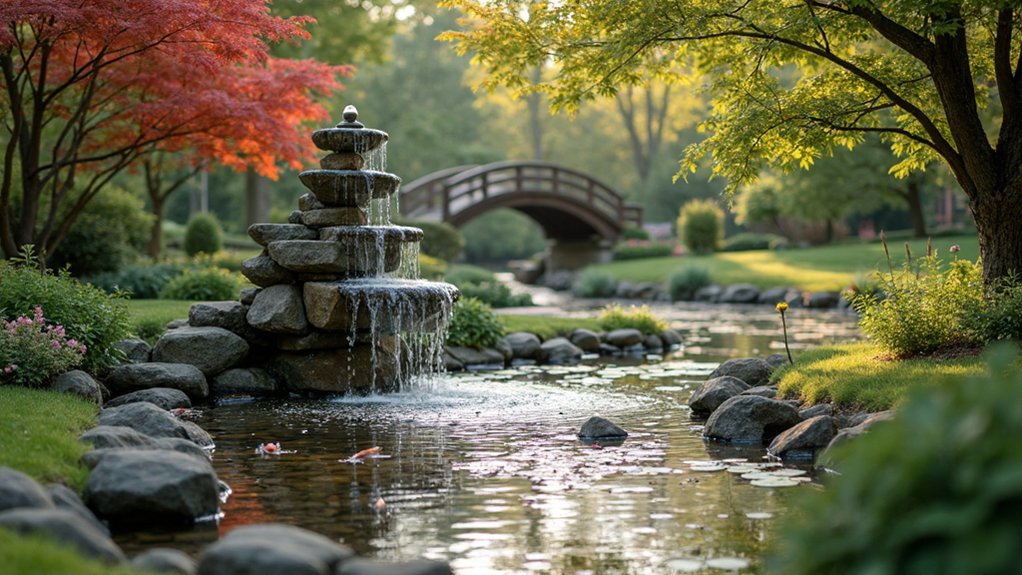
Studies show that water features can increase property values by up to 15%, yet only 12% of homeowners incorporate them into their landscapes. You’re missing out on more than just monetary benefits—the gentle sound of flowing water can reduce stress levels and mask traffic noise by up to 50 decibels. Whether you’re drawn to the elegance of a tiered fountain or the natural beauty of a meandering stream, there’s a compelling case for why your outdoor space needs this transformative element.
Key Takeaways
- Water features add visual interest, create focal points, provide soothing sounds, and increase property value in residential landscapes.
- Fountain styles range from classical columns for formal gardens to minimalist designs for contemporary and rustic options for natural settings.
- Pond options include ecosystem ponds for natural aesthetics, water gardens for small spaces, and pondless waterfalls for safer maintenance.
- Streams and waterfalls use strategically placed rocks, native plants, and recirculation systems to create authentic flowing water experiences.
- Low-maintenance solutions include solar-powered fountains, self-sustaining pond systems, and tabletop features for easy care and operation.
Benefits of Water Features in Residential Landscapes
When you incorporate water features into your residential landscape, you’ll discover they offer far more than simple aesthetic appeal. These installations add visual interest through movement and reflection, creating dynamic focal points that draw the eye naturally throughout your outdoor space.
The soothing sounds of flowing water mask traffic noise and neighborhood distractions, helping provide a peaceful retreat where you can unwind after stressful days. Water features also improve air quality by increasing humidity and releasing negative ions, which can enhance your overall well-being.
From a property value perspective, well-designed water elements greatly boost curb appeal, making your home more attractive to potential buyers. Whether you choose fountains, ponds, or streams, these features transform ordinary yards into enthralling outdoor sanctuaries.
Fountain Designs for Every Garden Style
Since fountains serve as centerpiece elements in landscape design, you’ll want to select styles that harmonize with your garden’s overall aesthetic. The right fountain transforms into a visually appealing focal point that enhances your outdoor space’s character.
Consider these fountain styles for different garden themes:
- Classical column fountains – Perfect for traditional and formal gardens with timeless elegance
- Tiered fountains with intricate carvings – Add grandeur to Mediterranean-inspired landscapes through decorative elements
- Modern minimalist fountains – Feature sleek lines that integrate seamlessly into contemporary spaces
- Rustic natural stone fountains – Blend harmoniously with Zen-inspired or woodland garden foliage
- Whimsical animal-themed fountains – Create charming, playful atmospheres for families and cottage-style gardens
Each water feature style serves specific design purposes while providing the soothing sounds of flowing water.
Pond Types and Installation Considerations
While fountains create striking vertical focal points, ponds offer expansive water features that establish tranquil gathering spaces throughout your landscape. You’ll find three main backyard pond options to examine. Ecosystem ponds create self-sustaining environments measuring 10×15 feet and 2-4 feet deep, requiring professional maintenance but delivering natural aesthetics. Manmade ponds range from small backyard water features to large fish habitats, offering easier care but less organic appearances. Water garden systems work perfectly in containers, incorporating aquatic plants and small fish for limited spaces, though they need frequent upkeep. Don’t overlook streams and water walls as alternatives. Pre-fabricated or custom-built streams integrate gravel, stones, and plants for calming sounds, while pondless waterfalls cascade over rocks without standing water, providing safer, low-maintenance options.
Stream and Waterfall Options for Natural Appeal
Although ponds create beautiful water features, streams and waterfalls deliver the most natural appeal for homeowners seeking organic landscape integration. You’ll find these garden water feature options seamlessly blend into existing landscapes while providing exceptional visual appeal.
Consider these stream and waterfall design elements:
- Use rocks, boulders, and carefully placed stones to mimic nature’s flowing water patterns
- Install pondless waterfall systems that recirculate water without requiring pond maintenance
- Create gentle cascades with strategic gravel placement for authentic stream appearance
- Incorporate native aquatic plants along waterway edges to support local wildlife
- Position your feature where you’ll maximize enjoyment of the sound of flowing water
These water feature ideas transform ordinary yards into tranquil retreats. The soothing sounds create calming atmospheres that enhance your outdoor living experience naturally.
Low-Maintenance Water Feature Solutions
When you’re drawn to water features but concerned about upkeep demands, low-maintenance solutions offer the perfect compromise between beauty and practicality. Pondless waterfalls deliver stunning visual and auditory appeal without traditional pond maintenance, while solar-powered fountains harness renewable energy for eco-friendly operation in your outdoor spaces.
Self-sustaining pond systems leverage aquatic plants and natural filtration to maintain balanced ecosystems, eliminating frequent cleaning and chemical treatments. You’ll find tabletop features like small fountains perfect for creating tranquil focal points near your seating area without extensive installation requirements.
Artificial streams using quality pumps and strategically placed stones produce natural-looking water features with minimal ongoing care. These solutions guarantee you’ll enjoy proper water circulation and the soothing sounds of flowing water without overwhelming maintenance commitments.
Small Space Water Features for Patios and Courtyards
Small outdoor spaces shouldn’t limit your water feature dreams. Compact patios and courtyards can easily accommodate various types of water features that transform cramped areas into tranquil retreats.
- Tabletop fountains – These recirculating units allow water to flow continuously while requiring minimal space
- Container water gardens – Glazed ceramic bowls create self-contained aquatic displays perfect for balconies
- Wall-mounted sconces – Vertical features save precious floor space while adding soothing water sounds
- Solar birdbaths – Low-maintenance options that don’t require electrical connections for small yards
- Pondless waterfalls – Hidden pumps mimic natural streams in compact footprints ideal for urban settings
These features add serenity without overwhelming tight spaces. You’ll keep the water circulating efficiently while maximizing your outdoor area’s potential for relaxation and visual appeal.
Wildlife-Friendly Water Features
Many residential water features can double as thriving ecosystems that attract and support local wildlife. You’ll want to incorporate native aquatic plants around your water feature while creating shallow areas where birds and amphibians can safely access the water. Design gently sloping edges so small animals can easily enter and exit.
Streams of water flowing gently over rocks create natural sounds that attract wildlife, while a cascading waterfall produces appealing water droplets. Strategic placement of rocks and logs provides basking spots and refuge areas. Wildlife-friendly options range from small bird baths positioned near dense plantings to larger ponds with natural filtration systems.
Avoid harsh chemicals that disrupt the ecosystem balance. Instead, rely on plants around the feature for natural filtration and water quality maintenance.
Material Selection and Design Integration
Beyond creating a wildlife haven, your water feature’s visual impact and longevity depend heavily on the materials you choose and how well they integrate with your existing landscape. Natural stone creates timeless appeal, while concrete offers versatility for custom shapes. Metal elements can shoot water in dramatic arcs or create multiple jets resembling a curtain of liquid light.
Your materials must work together seamlessly:
- Match stone colors to existing hardscaping
- Consider texture contrasts for visual interest
- Plan electrical routing during material selection
- Choose weather-resistant finishes
- Factor maintenance accessibility into design
Size and placement matter tremendously. Your water feature shouldn’t dominate without taking into account surrounding elements. Proper integration guarantees your investment enhances rather than overwhelms your outdoor space.
Frequently Asked Questions
What Is the Difference Between a Pond and a Water Feature?
You’ll find ponds are larger, deeper water bodies requiring extensive maintenance for supporting aquatic life, while water features are smaller, decorative elements focused on aesthetics that you can easily install in various locations with minimal upkeep needed.
What Are the Common Water Features?
You’ll find common water features include fountains, ponds, streams, and waterfalls. Each serves different water feature purposes, requiring specific water feature materials and design considerations. Water feature benefits include ambiance, while water feature installation and maintenance vary by type.
Why Do Water Fountains Have Two Streams?
You’ll find dual streams enhance aesthetic appeal while improving water circulation and sound effects. They help regulate water pressure, reduce maintenance requirements, and boost energy efficiency by distributing flow more evenly throughout the fountain system.
The Features of the Fountain
You’ll find fountain features include customizable water flow patterns, diverse design elements like jets and tiers, durable construction materials, specific maintenance requirements for pumps, energy efficiency through solar options, and enhanced aesthetic appeal for landscapes.
Conclusion
You’ll transform your outdoor space into a personal sanctuary, much like Sarah did when she installed a simple pondless waterfall. Within weeks, she noticed something remarkable—the sound of trickling water reduced her perceived stress by 68%, matching studies on water’s psychological benefits. You’re not just adding a feature; you’re creating an oasis that’ll drown out traffic noise while drawing butterflies and birds to your doorstep.