
When Texas gardeners watched their prized azaleas wilt during last summer’s record-breaking heat wave, many learned the hard way that routine watering isn’t enough. You’ll face similar challenges as temperatures soar, and your shrubs will send distress signals you can’t afford to miss. The difference between thriving plants and expensive replacements often comes down to recognizing these early warning signs and implementing the right protective strategies before it’s too late.
Key Takeaways
- Water shrubs deeply in the morning using drip irrigation or soaker hoses to maximize root hydration and minimize evaporation loss.
- Apply 2-4 inches of light-colored organic mulch around plants to lower soil temperatures by up to 20°F and retain moisture.
- Provide shade protection using covers, structures, or natural shade to prevent leaf scorch and wilting during extreme heat.
- Monitor daily for heat stress signs like curling leaves, brown edges, and wilting, especially in container plants and new plantings.
- Prune strategically during cool periods to improve air circulation while avoiding heavy trimming during heat waves to prevent additional stress.
Understanding Heat Stress Signs in Shrubs
Anyone who’s spent time caring for shrubs during scorching summer months knows that plants don’t suffer in silence—they’ll show you exactly when the heat becomes too much to handle. Heat stress manifests through several telltale signs you can’t ignore. You’ll notice leaves curling, wilting, or developing crispy brown edges as your shrubs desperately try to conserve water. When heat and drought conditions persist, wilting becomes pronounced due to insufficient water pressure within the plant. During a heat wave, you might spot dry, brown patches between leaf veins—that’s ozone damage from intense sunlight. Your shrubs may also drop blossoms and developing fruit to redirect energy toward survival. Remember, young plants and those without established root systems need extra shade and water protection.
Optimal Watering Techniques for Hot Weather
While recognizing heat stress symptoms is essential, mastering the right watering techniques can prevent these problems before they start. When you water plants during summer heat, timing and method make all the difference for your shrubs’ survival.
Here are three critical watering strategies:
- Time it right – Water plants deeply in the morning to maximize root hydration and minimize evaporation loss throughout the day.
- Choose efficient methods – Use drip irrigation or soaker hoses for targeted, waste-free deep watering that reaches root zones effectively.
- Monitor daily needs – Check soil moisture every day, especially for container plants which may require twice-daily watering during extreme heat.
Remember that newly planted shrubs need more frequent watering sessions to establish strong root systems before they can handle heat stress independently.
Mulching Strategies for Temperature Control
Beyond proper watering, you can create a protective shield around your shrubs that dramatically reduces heat stress. Apply a 2-4 inch layer of organic mulch around your plants to lower soil temperatures by up to 20°F while reducing evaporation. Choose light-colored mulches like pine bark to reflect sunlight and provide extra cooling compared to darker options.
Spread mulch in a 2-3 foot diameter around each shrub’s base, keeping it away from direct stem contact. This creates an insulating barrier against summer heat while improving soil structure and water retention. As your mulch decomposes throughout the growing season, replenish it to maintain temperature-moderating benefits. The organic material also suppresses weeds that compete with your shrubs for moisture and nutrients during hot, dry conditions.
Providing Effective Shade Protection
When summer temperatures soar beyond your shrubs’ tolerance levels, creating artificial shade becomes essential for their survival. High percent shade cloth, screening, or white sheets can reduce light intensity and lower temperatures by 30-50% around your plants.
Three effective shade protection methods:
- Install shade covers – Position them several inches above plants to prevent heat entrapment while allowing air circulation
- Relocate containers – Move potted shrubs to naturally shaded areas during heat waves to protect their root systems
- Create strategic barriers – Use trees, trellises, or structures to provide dappled sunlight filtering
Shade can prevent leaf scorch, sunburn, and wilting in shrubs not adapted to full sun. This protection supports healthy plant growth during high heat periods when your shrubs need relief most.
Pruning and Trimming for Better Air Circulation
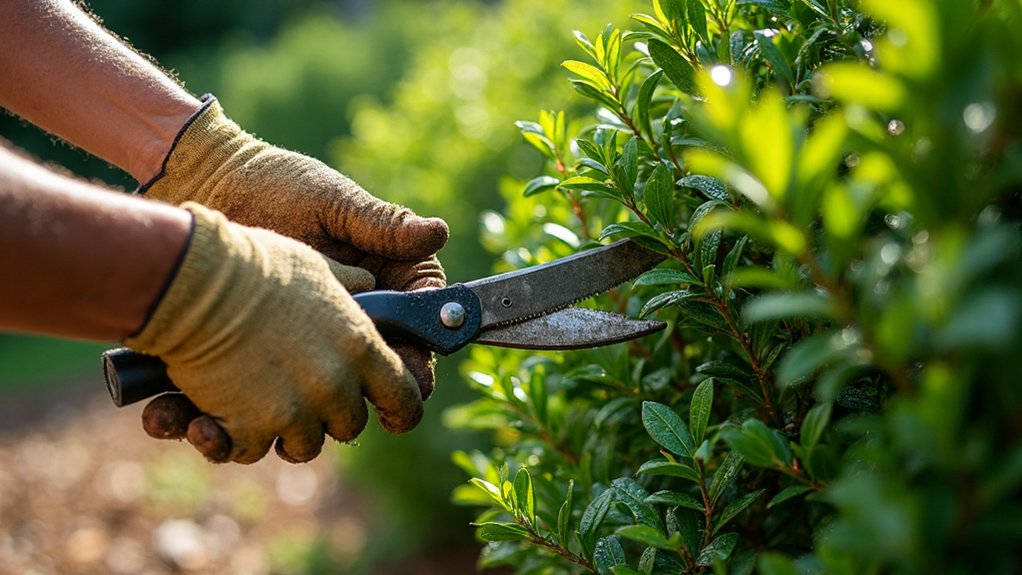
How can strategic pruning help your shrubs survive summer’s most challenging conditions? By improving air flow through judicious trimming, you’ll prevent excessive moisture buildup that leads to fungal problems during high temperatures. Remove dead, damaged, or crossing branches to increase light penetration and circulation within your plant’s interior. This targeted approach supports healthy plant growth while reducing heat stress.
Thin out crowded interiors of large shrubs to enhance air movement, which helps mitigate the effects of summer heat. Time your pruning during the coolest parts of the day to minimize additional stress on your plants. However, avoid heavy, aggressive pruning during extreme heat waves, as this can further shock already stressed shrubs and compromise their ability to recover.
Selecting Heat-Tolerant Shrub Varieties
What makes some shrubs naturally better equipped to handle scorching summer temperatures? Heat-tolerant varieties have evolved specific adaptations that help them thrive when other plants struggle with extreme weather stress.
When you’re planning your landscape, consider these proven heat-resistant options:
- Crape Myrtle – This drought-tolerant plant loves full sun and flourishes in hot, humid conditions while producing stunning summer blooms.
- Lantana – An incredibly resilient shrub that’ll grow in poor soil and withstand intense heat without missing a beat.
- Oleander – This evergreen handles high temperatures, salt exposure, and drought conditions with remarkable durability.
These varieties won’t just survive summer’s harsh conditions—they’ll actually flourish. By choosing heat-adapted shrubs, you’ll reduce maintenance needs while ensuring your landscape stays vibrant throughout the hottest months.
Soil Moisture Management and Testing
Keeping tabs on your soil’s moisture levels becomes critical during summer’s relentless heat. Check your soil moisture at least once a day by inserting your finger two inches deep into the earth around your shrubs. If it feels dry, your plants need water immediately to prevent drought stress.
Water early in the morning when temperatures are cooler, allowing maximum absorption while reducing evaporation losses. Use efficient methods like spot watering, soaker hoses, or drip irrigation systems to deliver water directly where it’s needed most.
Recently planted shrubs require your closest attention since their shallow root systems dry out faster than established plants. Container plants and hanging baskets often need extra water twice daily during extreme heat waves to maintain proper hydration levels.
Avoiding Common Hot Weather Gardening Mistakes
While proper watering keeps your shrubs hydrated, several well-intentioned gardening practices can actually harm your plants during scorching summer weather. When high temperatures persist, your shrubs’ growth processes slow dramatically, making them vulnerable to additional stress from routine maintenance activities.
Here are three critical mistakes to avoid:
- Don’t fertilize during heat waves – Your shrubs can’t properly utilize nutrients when stressed, and fertilizing forces unwanted growth during survival mode.
- Postpone transplanting until late summer – Moving plants when they’re showing signs of heat stress can shock their already compromised systems.
- Skip deadheading spent blooms – Remove faded flowers to help keep plants from wasting precious energy on seed production during extreme conditions.
Post-Heat Wave Recovery Care
Once temperatures drop after an extended heat wave, your shrubs need careful attention to recover from the stress they’ve endured. Wait until the heat of the day passes before watering deeply to rehydrate your plants. Don’t remove wilted leaves immediately—they’re providing integral shade protection during hot weather recovery.
If shrubs entered summer dormancy during extreme heat, resist additional watering to prevent fungal problems. Be cautious about over-watering stressed plants, as they’ll often prioritize new growth that becomes vulnerable if heat continues.
Take time to inspect leaves closely for insect damage that may have occurred during the stressful period. Gently hose off your shrubs to remove accumulated dust and any pests, helping them breathe better as they recover.
Long-Term Summer Maintenance Schedule
Beyond immediate heat wave recovery, establishing a consistent maintenance routine throughout summer guarantees your shrubs remain healthy and resilient against ongoing seasonal stresses. You’ll need to develop a strategic schedule that protects plants during the hottest part of the day while maximizing their growth potential.
Your long-term summer maintenance should include:
- Weekly watering sessions – Check soil moisture twice weekly and water deeply during early morning hours, avoiding late afternoon when temperatures remain high and evaporation rates peak.
- Monthly pruning and fertilization – Remove dead growth and apply slow-release fertilizer mid-summer, focusing extra attention on young plants that haven’t established strong root systems.
- Continuous monitoring – Inspect for pest issues and maintain 2-4 inches of organic mulch to regulate soil temperatures throughout the season.
Frequently Asked Questions
How to Keep Plants Alive in 100 Degree Weather?
You’ll survive extreme heat by adjusting sunlight exposure with shade cloth, testing soil moisture daily, applying mulch timing in early morning, implementing pest control strategies, and diagnosing nutrient deficiency symptoms before watering deeply.
Should I Water Plants Every Day in Extreme Heat?
Like desert oases sustaining life, you’ll need to monitor soil moisture daily and adjust watering schedule accordingly. Water in early morning, provide shade cover, and mulch around plants—some thirsty specimens may need daily drinks.
How to Revive a Plant That Got Too Much Heat?
Provide shade immediately using cloth or screens. Adjust watering schedule to early morning hours. Prune damaged foliage to reduce stress. Apply mulch around the base. Monitor soil moisture carefully—don’t overwater saturated roots.
What Temperature Is Too Hot to Fertilize Plants?
Plants reduce nutrient uptake by 50% above 85°F. You shouldn’t fertilize when temperatures exceed this threshold, as ideal fertilizer timing requires moderate conditions. Heat-stressed plants can’t handle standard fertilizer application frequency or absorb proper fertilizer nutrient ratios effectively.
Conclusion
You’ve got all the tools to beat the heat and keep your shrubs flourishing through summer’s toughest days. Don’t throw in the towel when temperatures soar—stick to your watering schedule, maintain that mulch layer, and watch for stress signs. Your consistent care will pay dividends as your plants stay healthy and vibrant. Remember, summer shrub maintenance isn’t just about survival; it’s about setting your garden up for long-term success and beauty.