
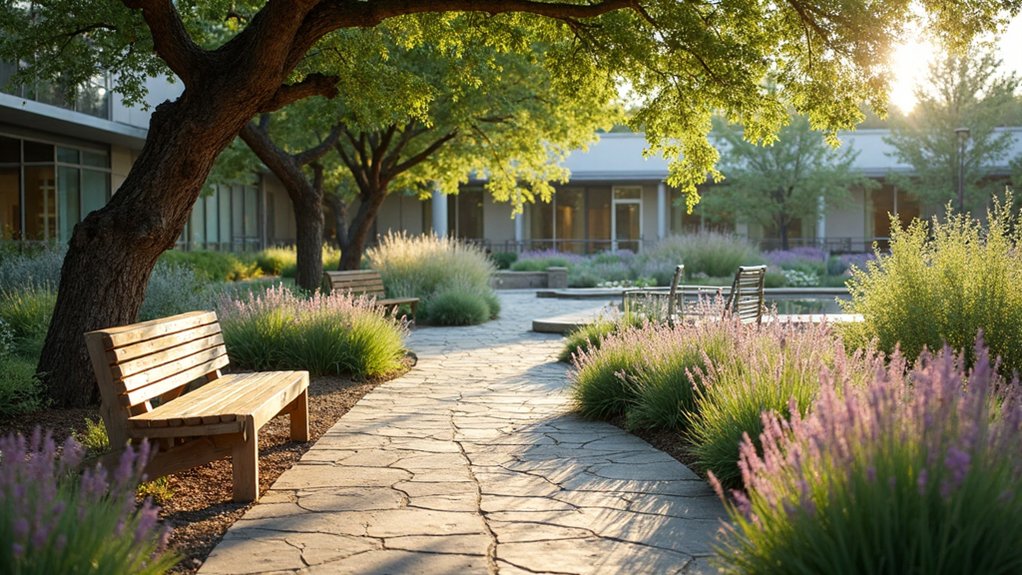
When you’re designing outdoor spaces for healthcare facilities, you’re not just creating pretty gardens—you’re crafting environments that can literally heal. Research consistently shows that well-designed therapeutic landscapes reduce patient stress, lower blood pressure, and even shorten recovery times. But here’s what most people don’t realize: the difference between a standard garden and a truly therapeutic space lies in specific design principles that tap into our deepest psychological and physiological responses to nature.
Key Takeaways
- Healing gardens reduce patient stress, lower blood pressure, and accelerate recovery through scientifically proven therapeutic benefits for patients, staff, and families.
- Essential design elements include water features, diverse plant textures, accessible pathways, shade structures, and strategically placed seating for multi-sensory engagement.
- Accessibility requires wide paved pathways, flush entrances, appropriate bench heights, and high-contrast signage to accommodate all mobility levels and impairments.
- Sustainable practices incorporate native drought-tolerant plants, water-efficient irrigation, permeable pavement, and integrated pest management without harmful chemicals.
- Successful therapeutic landscapes need ongoing collaboration between landscape professionals, facility managers, and healthcare staff for proper maintenance and functionality.
Understanding the Purpose and Benefits of Hospital Healing Gardens
When you step into a hospital healing garden, you’re entering a thoughtfully designed therapeutic space that serves far more than aesthetic purposes. These specialized green spaces are scientifically proven to reduce stress, lower blood pressure, and accelerate patients’ recovery times. You’ll find that strategic Landscape Design elements like water features create calming soundscapes while abundant vegetation filters air and provides visual respite from clinical environments.
The garden’s therapeutic benefits extend beyond patients to include staff and families who need emotional restoration. You’re creating accessible spaces that encourage gentle physical activity and social interaction. When you incorporate comfortable seating areas with visibility from hospital rooms, you’re ensuring year-round usability. These healing environments actively boost immune systems, maintain vitamin D levels, and provide vital psychological benefits that complement medical treatment protocols.
Therapeutic Benefits of Outdoor Spaces for Patients and Staff
Building on these foundational design principles, the measurable therapeutic benefits of outdoor spaces create compelling evidence for integrating natural elements into healthcare facility planning. When you incorporate therapeutic outdoor environments, you’ll provide patients who need stress relief with immediate calming effects. Green spaces to help reduce anxiety naturally lower blood pressure and heart rate while offering pain-distracting views of nature. These environments drastically decrease stress levels for both patients and healthcare staff.
You’ll find that nature and gardening activities boost mental health outcomes and accelerate recovery times through improved immune function. Staff members experience increased energy levels and enhanced well-being, leading to greater productivity and engagement. The restorative impact of these carefully designed outdoor spaces creates measurable improvements in overall patient satisfaction and clinical outcomes.
Essential Design Elements for Effective Healing Gardens
What transforms an ordinary outdoor space into a powerful healing environment? You’ll need to integrate multiple sensory elements that create a therapeutic garden experience. Install water features, diverse plant textures, and greenery that engage sight, sound, and touch as patients recover.
Design pathways wide enough for wheelchairs and walking aids, ensuring smooth shifts when patients go outside. Include various seating options—benches, chairs, and moveable furniture—that accommodate different comfort needs and mobility levels.
Add pergolas or shade structures for year-round protection while maintaining nature connections. These key healing elements provide environmental benefits through sustainable design choices like native plants and water-conserving features.
Interactive raised planters encourage patient participation, while strategically placed rest areas along accessible paths create multiple therapeutic zones throughout your healing space.
Accessibility and Inclusivity in Therapeutic Garden Design
Creating these healing elements means nothing if patients can’t actually access and use your therapeutic garden spaces. You’ll need wide, paved pathways with minimal grade changes to accommodate wheelchairs and walkers throughout your green space in hospitals. Install flush entrances with automatic doors at healthcare facilities, ensuring seamless crossovers between indoor and outdoor areas.
When creating gardens, position benches with backs and armrests at appropriate heights for patients and employees with mobility challenges. You should strategically place sensory elements like water features where visitors with visual or hearing impairments can enjoy them. Make the garden navigable by incorporating high-contrast signage with large text and braille throughout different areas.
These accessibility features prove essential whether you’re designing for acute care hospitals or assisted living communities.
Creating Multi-Sensory Experiences Through Plant Selection and Features
While accessibility guarantees patients can reach your therapeutic garden, thoughtfully selected plants and features will transform their experience once they arrive. Creating multi-sensory environments through strategic nature and gardening choices engages all five senses, helping patients heal more effectively.
When you design the garden with sensory diversity, you’ll help reduce stress while encouraging active participation. Consider these elements to enhance your entire outdoor healing space:
- Fragrant herbs and flowers – lavender, rosemary, and jasmine provide calming aromatherapy
- Textured plants – lamb’s ear, ornamental grasses offer tactile stimulation
- Sound features – wind chimes, water fountains create soothing auditory experiences
- Colorful blooms – seasonal varieties provide visual interest year-round
- Edible plants – berry bushes, herb gardens engage taste safely
Gardens designed this way allow patients to simply enjoy restorative moments while actively participating in their healing journey.
Incorporating Shade Structures and Weather Protection
Since patients need consistent access to healing gardens regardless of weather conditions, incorporating thoughtful shade structures and weather protection becomes necessary for year-round therapeutic benefits. You’ll help patients who can’t walk long distances by providing shaded rest areas along paths, making the garden accessible to those with mobility limitations or skin conditions that require sun protection.
These architectural features become an important part of your design strategy, allowing patients to experience nature and gardening activities safely. You should select weather-resistant materials that withstand elements while minimizing maintenance on hard surfaces below. Strategic placement guarantees structures don’t obstruct sightlines or create unwanted shadows. Consider integrating solar panels into shade designs to generate renewable energy, making your healing garden both therapeutic and sustainable for hospital operations.
Maintenance and Sustainability Considerations for Healthcare Landscapes
Beyond the initial installation of shade structures and protective elements, successful healthcare landscapes require thorough maintenance and sustainability strategies that support both environmental health and operational efficiency. You’ll need to establish complete care protocols that preserve therapeutic benefits while minimizing environmental impact.
Essential maintenance and sustainability practices include:
- Implementing water-efficient irrigation systems paired with drought-tolerant native plants to reduce resource consumption
- Establishing routine maintenance schedules for pruning, weeding, and debris removal around shade structures
- Adopting integrated pest management practices that eliminate harmful pesticides from patient environments
- Installing permeable pavement and green infrastructure for temperature regulation and stormwater management
- Fostering ongoing collaboration between landscape professionals, facility managers, and healthcare staff
These strategies guarantee your healing gardens remain viable therapeutic spaces while supporting long-term operational sustainability.
Frequently Asked Questions
How Much Does It Typically Cost to Build a Healing Garden?
You’ll spend $15-50 per square foot building a healing garden. Costs vary based on plant selection, water feature placement, lighting design, accessibility concerns, maintenance requirements, sensory stimulation elements, and seasonal planning considerations.
What Permits and Approvals Are Needed for Healthcare Landscape Projects?
Don’t assume permits are overwhelming—you’ll need zoning regulations approval, accessibility compliance for pathways, water conservation permits, and patient safety clearances. Landscape design expertise guarantees proper documentation while maintenance planning and seasonal plant selection meet healthcare standards efficiently.
How Long Does Construction of a Therapeutic Garden Usually Take?
You’ll typically need 3-6 months for therapeutic garden construction, depending on garden design considerations, site preparation steps, irrigation system choices, accessibility features installation, plant selection strategies implementation, seasonal planting schedules, and ongoing maintenance requirements planning.
Can Healing Gardens Be Built on Existing Parking Lots or Rooftops?
You can absolutely transform parking lots or rooftops into healing gardens. Consider budget limitations, planting considerations for drainage, maintenance requirements, patient accessibility ramps, clear wayfinding signage, sustainable materials, and comfortable seating arrangements throughout your design.
What Insurance Considerations Apply to Outdoor Therapeutic Spaces at Hospitals?
Like shepherds protecting their flock, you’ll need extensive liability coverage for visitor safety, strict maintenance requirements, accessibility guidelines compliance, water feature regulations adherence, careful plant selection criteria, and adequate staffing considerations for your outdoor therapeutic spaces.
Conclusion
You’ll find it’s no coincidence that patients recover faster when they’re surrounded by nature’s healing touch. As you design these therapeutic spaces, you’re not just creating gardens—you’re crafting sanctuaries where broken bodies mend and weary spirits restore themselves. It’s remarkable how the same elements that naturally heal our earth also heal our humanity. Your thoughtful design choices don’t just transform landscapes; they transform lives, one healing moment at a time.