
You’ve watched your once-beautiful shrubs transform into tangled, overgrown masses that barely resemble their former glory. Those leggy branches reaching skyward, the sparse flowering, and the dead wood scattered throughout tell a story of neglect—but it’s not too late. Rejuvenation pruning can breathe new life into these tired plants, restoring their shape and essential/critical/fundamental/indispensable nature. However, one wrong cut at the wrong time could set you back years or even kill the shrub entirely.
Key Takeaways
- Assess shrub condition by identifying dead branches, sparse foliage, and pest issues before determining restoration viability.
- Choose between extensive pruning (6-10 inches above ground) or gradual three-year method based on species tolerance.
- Time pruning for late winter through early spring, just before bud break for optimal energy redirection.
- Apply consistent watering and fertilization throughout the growing season to support vigorous recovery after pruning.
- Remove problematic growth including dead, damaged, crossing, or rubbing branches using proper cutting techniques and tools.
Assessing Your Shrub’s Current Condition
Before you can develop an effective restoration plan, you’ll need to thoroughly evaluate your shrub’s current health and structural condition. Start by identifying the most significant issues: sparse foliage, dead or diseased branches, and any pest infestations that may be compromising your overgrown shrub’s essential. Look carefully for signs of new growth, as these healthy shoots indicate the plant’s potential for recovery through rejuvenation pruning.
Document which sections can be salvaged and which require complete removal. Take detailed photographs and notes to track your assessment findings. Check for safety concerns like blocked pathways or unstable branches that pose immediate risks. This thorough evaluation helps you understand the full restoration scope and determines whether your shrub is a good candidate for rejuvenation or needs replacement.
Understanding When Rejuvenation Pruning Is Needed
Once you’ve completed your assessment, you’ll need to determine if your shrub is a candidate for rejuvenation pruning—a drastic but highly effective restoration technique. This method works best for multi-stemmed deciduous shrubs that’ve become overgrown and woody over time. You’ll know rejuvenation pruning is needed when your shrub has lost its compact shape, produces fewer blooms, and has accumulated substantial woody growth without healthy foliage on more than one-third of its branches.
However, not all overgrown shrubs can handle this intensive approach. Your plant must be able to respond well to severe cutting, regenerating new growth from its root system. If your shrub meets these criteria, rejuvenation pruning will restore it to a vigorous, youthful state with maximum flowering potential.
Choosing Between Extensive and Gradual Rejuvenation Methods
When deciding between extensive and gradual rejuvenation methods, you’ll need to evaluate your shrub’s species, current health, and your tolerance for temporary aesthetic disruption.
Extensive rejuvenation involves cutting the entire plant 6-10 inches above ground, prompting healthy shrubs to send up vigorous new shoots. This method works best for multistemmed varieties that respond well to drastic pruning. However, you won’t see flowers the year of pruning.
Consider these key factors when choosing your approach:
- Shrub species tolerance – Some handle drastic cuts better than others
- Current plant condition – Healthier shrubs recover faster from extensive pruning
- Landscape aesthetics – Gradual methods maintain appearance throughout the process
- Bloom timing preferences – Extensive pruning delays flowering but maximizes future growth potential
Timing Your Pruning for Maximum Success
Three critical timing windows exist for rejuvenation pruning, and choosing the right one determines whether your shrub thrives or struggles through recovery. Late winter through early spring offers the ideal window—just before bud break when you can clearly see the shrub’s structure without leaves obscuring your view. This timing allows your shrub to channel all its energy into new growth during the upcoming growing season.
When you prune overgrown spring-flowering shrubs during this period, expect to sacrifice one year’s blooms since flowers form on previous year’s growth. However, this trade-off guarantees vigorous regrowth and healthier flowering in subsequent years. After heavy pruning, your shrub needs consistent watering and fertilizer applications to support its recovery and establishment of new branches.
Identifying Problematic Growth Patterns
After determining the best pruning window, you’ll need to assess your shrub’s current condition to identify which branches require removal. Look for these key problem areas that prevent your shrub from thriving:
- Dead or damaged branches – Cut out diseased old wood to encourage healthy new growth
- Crossing or rubbing branches – Remove these to prevent plant damage and improve air circulation
- Misshapen or misdirected growth – Prune back to buds facing the desired direction
- Suckers from base or roots – Eliminate these shoots to maintain natural form
Identifying these problematic patterns helps you bring your overgrown shrub back to life systematically. Focus on removing the most problematic growth first, then work toward shaping. This targeted approach gives new life to neglected shrubs while preserving their best features.
Executing the Three-Year Gradual Rejuvenation Process
Rather than shocking your overgrown shrub with severe pruning all at once, you’ll achieve better results by spreading the restoration across three years. This step-by-step approach allows shrubs to recover gradually while maintaining their health.
During the first year, remove one-third of the largest and oldest stems at ground level in late winter or early spring. In year two, prune out half of the remaining old stems and thin new growth during the same timing window. The third year involves removing all remaining old wood.
Each year, you’ll also need to thin new shoots to maintain plant health and appearance. This gradual three-year method works effectively for overgrown lilacs, dogwoods, privets, honeysuckles, and forsythias, ensuring successful restoration without compromising the plant’s vigor.
Performing Severe Pruning for Complete Restoration
When your shrub has deteriorated beyond the point where gradual restoration will work effectively, severe pruning offers a more aggressive solution. This dramatic approach involves cutting deciduous shrubs back to 4-6 inches above ground level in early spring, triggering vigorous new growth throughout the growing season.
Follow these steps for complete restoration:
- Cut back severely in early spring before buds break
- Allow new shoots to develop during the first growing season
- Select strongest shoots the following late winter
- Head back selected branches to encourage further branching
This method works exceptionally well for scraggly potentillas and summer-flowering spireas. You’ll witness remarkable transformation as healthy growth emerges from seemingly lifeless stumps, creating dense, attractive shrubs within two seasons.
Using Proper Pruning Techniques and Tools
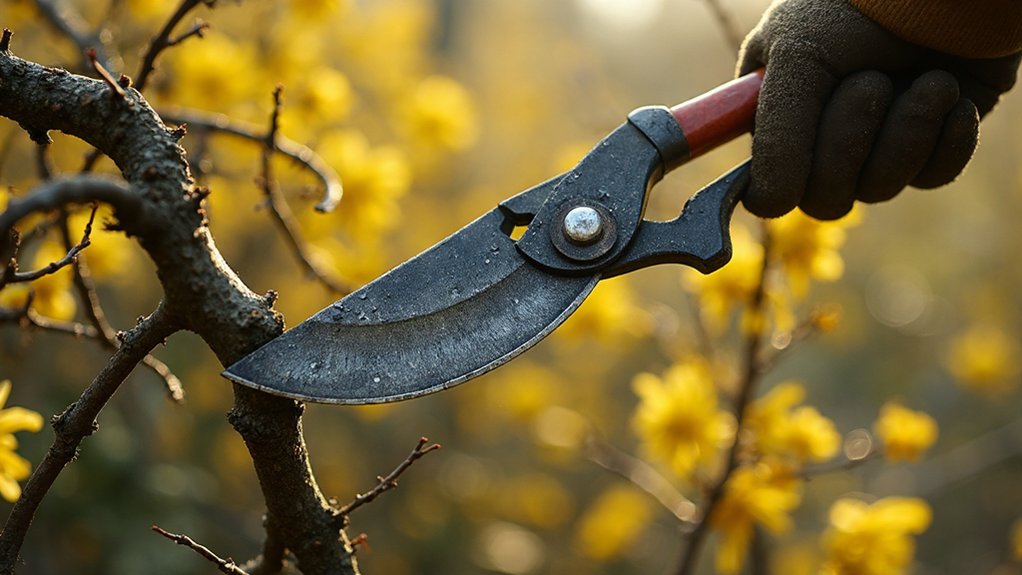
Success in shrub restoration depends heavily on using the right tools and applying correct cutting techniques. You’ll need sharp, clean hand pruners, loppers, and a pruning saw to make precise cuts on overgrown branches. Proper pruning requires making cuts just above outward-facing buds or branches to preserve the shrub’s natural form.
Follow this Step by Step approach: stagger your cuts at different levels along branches to promote lateral growth and create a fuller appearance. Always prune during the dormant season when you can clearly see the shrub’s structure and make informed decisions about which branches to remove.
Safety matters too—avoid loose clothing that can snag on branches, and regularly clean your tools between cuts to prevent disease transmission throughout your restoration project.
Post-Pruning Care and Maintenance
The real work begins after you’ve completed your pruning cuts, as proper post-pruning care determines whether your overgrown shrub will thrive or struggle through recovery. Your newly pruned shrub needs intensive support to come back stronger than before.
Follow these essential post-pruning steps:
- Apply balanced, slow-release fertilizer to fuel new growth and accelerate recovery
- Water deeply and regularly throughout the first growing season for proper establishment
- Spread 2-4 inches of organic mulch around the base to retain moisture and suppress weeds
- Monitor for pests and diseases and address issues immediately
Keep watching what’s going on with your shrub’s progress. In subsequent years, prune lightly to maintain your desired shape and size, ensuring your restoration efforts create lasting results.
Managing Expectations for Recovery and Growth
Although your shrub may look drastically different after rejuvenation pruning, patience becomes your most valuable tool as recovery unfolds slowly over the coming seasons. You’ll need to wait 2-3 years for complete restoration, so don’t panic if you’re wondering what’s going wrong initially. Expect markedly fewer blooms the first year as your plant channels energy into producing new growth rather than flowers. Deciduous shrubs that lose their leaves in the fall may appear especially stark after severe pruning, but this dormant period allows root systems to strengthen. If you’ve chosen gradual pruning over drastic cutting, you’ll maintain better aesthetics throughout recovery. Your shrub’s pre-pruning health and overgrowth severity directly influence recovery speed and ultimate success.
Frequently Asked Questions
How Do You Rejuvenate an Overgrown Bush?
You’ll rejuvenate overgrown bushes using proper pruning techniques with correct timing. Remove one-third of oldest stems at ground level during late winter. This gradual approach guarantees healthy plant recovery while maintaining the shrub’s natural form and vigor.
What to Do With a Shrub That Has Grown Too Big?
Your massively overgrown shrub’s completely overtaken your yard! Start pruning neglected shrubs by removing one-third of oldest stems yearly. You’re restoring leggy bushes through gradual renewal, effectively reviving old shrub growth over three seasons for spectacular results.
How to Remove Old Overgrown Shrubs?
Cut overgrown shrubs 6-10 inches above ground using sharp pruners and saws. This’ll reveal healthy shrub base and control shrub size effectively. You’ll need to properly dispose removed shrubs through composting or municipal pickup services.
What Is the Process of Cutting Back Overgrown Plants?
Don’t bite off more than you can chew—cutting back overgrown plants requires proper tool selection, strategic branch thinning techniques, and careful seasonal timing considerations. You’ll achieve better results by planning your approach systematically.
Conclusion
You’ve now equipped yourself with the knowledge to transform your overgrown shrubs into healthy, vibrant plants. Whether you choose extensive or gradual pruning, remember that patience is key—recovery takes time. Don’t forget to provide consistent water and nutrients during the healing process. Why settle for unruly, declining shrubs when you can restore their natural beauty? With proper technique and aftercare, you’ll soon enjoy the renewed vigor and blooming potential of your rejuvenated landscape.